
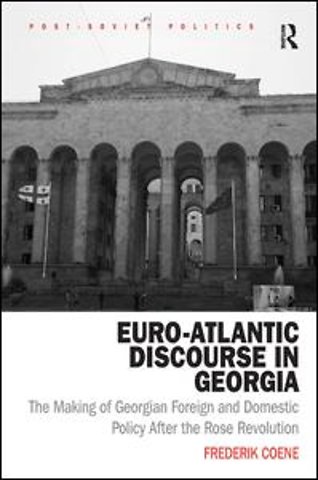
Euro-Atlantic Discourse in Georgia
The Making of Georgian Foreign and Domestic Policy After the Rose Revolution
Samenvatting
How have discourses of Euro-Atlanticism been used in domestic and international affairs by the political elite in Georgia? After the 2003 Rose Revolution, as relations with Russia soured, a Euro-Atlantic orientation portrayed as a single and coherent strategy became the cornerstone of Georgian foreign policy as well as a model for domestic reforms. This promise of a prosperous future offered new hope to the Georgian population. Scepticism or critical thinking towards President Saakashvili and his government were equated to pro-Russian treason and pro-western orientation and impressive reforms, promoted as being modelled along ’European standards’, emerged simultaneously with an outspoken rhetoric and active symbolism. References to Europe and the Euro-Atlantic structures became ubiquitous as European flags were brandished throughout the country. Addressing a gap in the existing literature the author examines a large volume of data extracted from news items from 20 different Georgian and International media channels over a ten-year period. Through this he identifies patterns in the discourse to explain the intentions of the Georgian elite and examines the effectiveness of the rhetoric.
Specificaties
Net verschenen
Rubrieken
- aanbestedingsrecht
- aansprakelijkheids- en verzekeringsrecht
- accountancy
- algemeen juridisch
- arbeidsrecht
- bank- en effectenrecht
- bestuursrecht
- bouwrecht
- burgerlijk recht en procesrecht
- europees-internationaal recht
- fiscaal recht
- gezondheidsrecht
- insolventierecht
- intellectuele eigendom en ict-recht
- management
- mens en maatschappij
- milieu- en omgevingsrecht
- notarieel recht
- ondernemingsrecht
- pensioenrecht
- personen- en familierecht
- sociale zekerheidsrecht
- staatsrecht
- strafrecht en criminologie
- vastgoed- en huurrecht
- vreemdelingenrecht