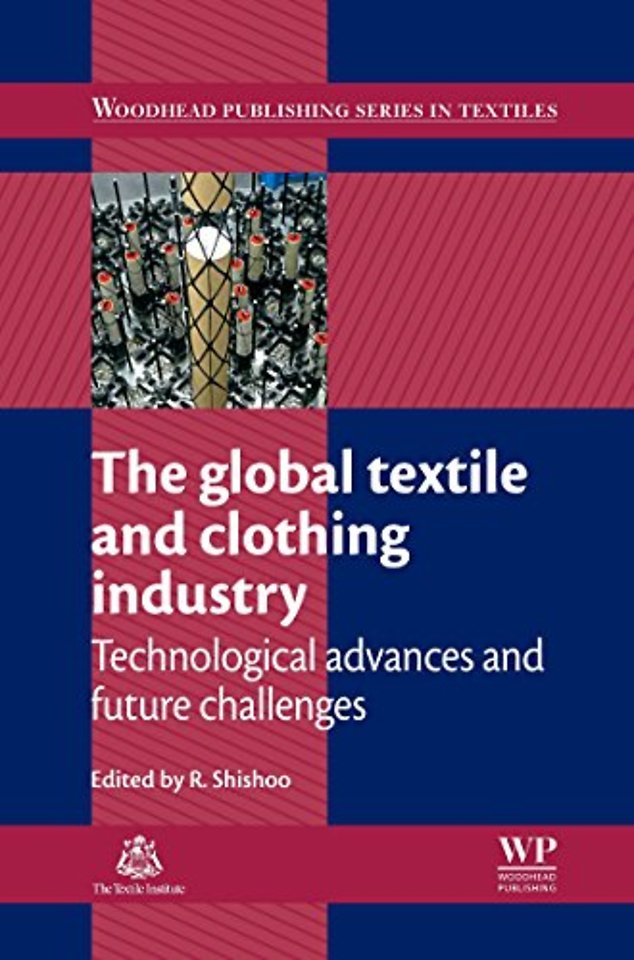
,

The Global Textile and Clothing Industry

Technological Advances and Future Challenges

Specificaties
Gebonden, blz. | Engels
Elsevier Science | e druk, 2012
ISBN13: 9781845699390
Rubricering
Juridisch :
Elsevier Science e druk, 2012 9781845699390
€ 211,00
Levertijd ongeveer 9 werkdagen
Gratis verzonden

Samenvatting

Advances in technology, combined with the ever-evolving needs of the global market, are having a strong impact on the textile and clothing sector. The global textile and clothing industry: Technological advances and future challenges provides an essential review of these changes, and considers their implications for future strategies concerning production and marketing of textile products.

Beginning with a review of trends in the global textile industry, the book goes on to consider the impact of environmental regulation on future textile products and processes. Following this, the importance of innovation-driven textile research and development, and the role of strategic technology roadmapping are highlighted. Both the present structure and future adaptation of higher education courses in textile science are reviewed, before recent advances in textile manufacturing technology, including joining techniques, 3D body scanning and garment design and explored in depth. Finally, The global textile and clothing industry concludes by considering automating textile preforming technology for the mass production of fibre-reinforced polymer (FRP) composites.

With its distinguished editor and international team of expert contributors, The global textile and clothing industry: Technological advances and future challenges is an essential guide to key challenges and developments in this industrial sector.

Specificaties

ISBN13:9781845699390
Taal:Engels
Bindwijze:Gebonden

Inhoudsopgave

<p>Contributor contact details</p> <p>Woodhead Publishing Series in Textiles</p> <p>Chapter 1: Introduction: trends in the global textile industry</p> <p>Abstract:</p> <p>1.1 Introduction</p> <p>1.2 Developments in the textile industry</p> <p>1.3 Current challenges in the textile industry</p> <p>1.4 About this book</p> <p>1.5 Conclusion</p> <p>Chapter 2: Trends in textile markets and their implications for textile products and processes</p> <p>Abstract:</p> <p>2.1 Introduction</p> <p>2.2 Looking back: textiles in the regime of extensive accumulation, 1989–2008</p> <p>2.3 Constraints for textiles in a new regime of intensive accumulation</p> <p>2.4 Understanding patterns of transformation</p> <p>2.5 Conclusions for managing the textile business</p> <p>Chapter 3: The impact of environmental regulation on future textile products and processes</p> <p>Abstract:</p> <p>3.1 Introduction</p> <p>3.2 Globalisation of the textile industry</p> <p>3.3 The current impact of the textile industry on the environment</p> <p>3.4 Holistic thinking – a step by step approach to reducing environmental impacts</p> <p>3.5 Future challenges for the dyeing industry</p> <p>3.6 Conclusions</p> <p>Chapter 4: The importance of innovation-driven textile research and development in the textile industry</p> <p>Abstract:</p> <p>4.1 Introduction</p> <p>4.2 Innovations in fibres</p> <p>4.3 Innovations in textile production technologies</p> <p>4.4 The role of textile universities and academic research institutes in the process of innovation</p> <p>4.5 European initiatives in innovation in textiles</p> <p>4.6 Future challenges for the textile industry</p> <p>Chapter 5: Strategic technology roadmapping in the textile industry</p> <p>Abstract:</p> <p>5.1 Introduction</p> <p>5.2 Technology roadmapping in the textile industry</p> <p>5.3 Global management</p> <p>5.4 Conclusions</p> <p>Chapter 6: Higher education courses in textile science: present and future</p> <p>Abstract:</p> <p>6.1 Introduction: higher education systems around the world</p> <p>6.2 Education systems of selected countries</p> <p>6.3 The Bologna Agreement and types of degree</p> <p>6.4 Career progression in the textile industry</p> <p>6.5 Conclusions and future trends</p> <p>Chapter 7: Recent advances in textile manufacturing technology</p> <p>Abstract:</p> <p>7.1 Introduction</p> <p>7.2 Advances in finishing, coating and digital printing technologies</p> <p>7.3 State-of-the-art nanotechnologies</p> <p>7.4 Protective textiles</p> <p>7.5 Bionics, modelling of textile structures, e-textiles and interactive fabrics</p> <p>Chapter 8: Recent advances in garment manufacturing technology: joining techniques, 3D body scanning and garment design</p> <p>Abstract:</p> <p>8.1 Introduction</p> <p>8.2 Drivers of bonding and welding technology for the apparel industry</p> <p>8.3 Welding technologies: thermoplastic adhesives and ultrasonic seam welding</p> <p>8.4 Other types of welding technology</p> <p>8.5 Opportunities afforded by 3D scanning and 3D design</p> <p>8.6 Future trends</p> <p>8.7 Sources of further information and advice</p> <p>8.8 Acknowledgements</p> <p>Chapter 9: Automating textile preforming technology for mass production of fibre-reinforced polymer (FRP) composites</p> <p>Abstract:</p> <p>9.1 Introduction</p> <p>9.2 Single-step preforming</p> <p>9.3 Multistep preforming</p> <p>9.4 Applications of fibre-reinforced composites in textiles</p> <p>9.5 Future trends and conclusions</p> <p>9.6 Acknowledgement</p> <p>Index</p>

Net verschenen

€ 211,00
Levertijd ongeveer 9 werkdagen
Gratis verzonden

Rubrieken

    Personen

      Trefwoorden

        The Global Textile and Clothing Industry