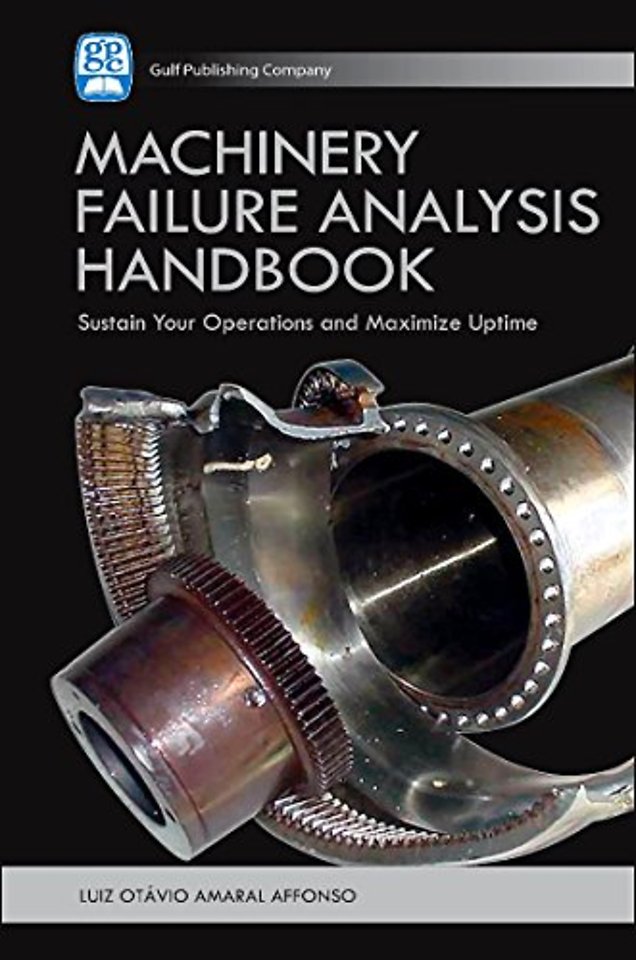
Luiz Octavio Amaral Affonso
Elsevier Science
e druk, 2006
9781933762081
Machinery Failure Analysis Handbook
Sustain Your Operations and Maximize Uptime
Specificaties
Gebonden, blz.
|
Engels
Elsevier Science |
e druk, 2006
ISBN13: 9781933762081
Rubricering
Juridisch
:
Levertijd ongeveer 9 werkdagen
Gratis verzonden
Samenvatting
Understanding why and how failures occur is critical to failure prevention, as even the slightest breakdown can lead to catastrophic loss of life and asset as well as widespread pollution. This book helps anyone involved with machinery reliability, whether in the design of new plants or the maintenance and operation of existing ones, to understand why process equipment fails and thereby prevent similar failures.
Specificaties
Inhoudsopgave
<br>Preface</br><br>Part I Introduction to Failure Analysis</br><br> 1 Fundamental Causes of Failures</br><br> 1.1 Design Failures</br><br> 1.2 Material Selection Deficiencies</br><br> 1.3 Material Imperfections</br><br> 1.4 Manufacturing Defects</br><br> 1.5 Assembly and Installation Errors</br><br> 1.6 Maintenance and Operation Errors</br><br> Conclusion</br><br> 2 Failure Analysis Practice</br><br> 2.1 Failure Analysis Objectives</br><br> 2.2 How Far Should We Go?</br><br> 2.3 Main Steps</br><br> 2.4 Reports and Databases</br><br> 3 Failure Prevention Efforts</br><br> 3.1 Types of Failure</br><br> 3.2 Prevention of Failures</br><br> 3.3 Machinery Monitoring and Anticipatory Action</br><br> 3.4 Operator’s Role in Machinery Reliability</br><br>Part II Failure Modes</br><br> 4 Ductile and Brittle Fractures</br><br> 4.1 Ductile Fracture Morphology</br><br> 4.2 Ductile Fracture Mechanism</br><br> 4.3 Brittle Fracture</br><br> 4.4 Brittle Fracture Morphology </br><br> 4.5 Brittle Fracture Mechanism</br><br> 5 Fatigue Fractures</br><br> 5.1 Fatigue Fracture Mechanism</br><br> 5.2 Fatigue Fracture Surface Morphology</br><br> 5.3 Factors That Influence Fatigue Strength</br><br> 6 Wear</br><br> 6.1 Sliding Wear</br><br> 6.2 Hard Particle Wear</br><br> 6.3 Liquid Impingement Wear</br><br> 6.4 Cavitation</br><br> 7 Corrosion</br><br> 7.1 Electrochemical Corrosion Mechanism</br><br> 7.2 Uniform Corrosion</br><br> 7.3 Corrosion Fatigue</br><br> 7.4 Pitting Corrosion</br><br> 7.5 Galvanic Corrosion</br><br> 7.6 Corrosion Erosion</br><br> 7.7 Stress Corrosion Cracking</br><br> 8 Incrustation</br><br> 8.1 Coke Deposition </br><br> 8.2 Salt Deposition </br><br> 8.3 Biological Incrustation</br><br> 9 Electric Discharge Damage</br><br>Part III Machinery Component Failures</br><br> 10 Shafts</br><br> 10.1 Stresses Acting on a Shaft</br><br> 10.2 Fatigue Failures</br><br> 10.3 Shaft Wear</br><br> 10.4 Shaft Distortion</br><br> 11 Hydrodynamic Bearings </br><br> 11.1 Operation of a Hydrodynamic Bearing</br><br> 11.2 Hydrodynamic Bearing Construction</br><br> 11.3 Hydrodynamic Bearing Failure Analysis</br><br> 11.4 Fatigue Failures</br><br> 11.5 Bearing Metal Wear</br><br> 11.6 Corrosion</br><br> 11.7 Effect of Hard Particles on Bearings</br><br> 11.8 Effect of Lubrication</br><br> 11.9 Effect of Temperature</br><br> 11.10 Effect of Overloads</br><br> 11.11 Assembly Deficiencies </br><br> 11.12 Electrical Discharge Damage</br><br> 11.13 Fabrication-related Failures</br><br> 11.14 Design-related Failures</br><br> 12 Antifriction Bearings</br><br> 12.1 Antifriction Bearing Lubrication</br><br> 12.2 Antifriction Bearing Design Life</br><br> 12.3 Contact Patterns on Bearing Races</br><br> 12.4 Antifriction Bearing Failure Analysis</br><br> 12.5 Types of Failure</br><br> 13 Mechanical Seals</br><br> 13.1 How a Mechanical Seal Works</br><br> 13.2 Seal Mechanical Design</br><br> 13.3 Seal Hydrodynamic Design</br><br> 13.4 P × V</br><br> 13.5 Sealing System</br><br> 13.6 Mechanical Seal Failure Analysis</br><br> 13.7 Face Contact Patterns</br><br> 13.8 Failure Mechanisms and Causes</br><br> 13.9 Corrosion of Seal Components </br><br> 13.10 Mechanical Damage</br><br> 13.11 Thermal Damage</br><br> 13.12 Design and Manufacturing Defects</br><br> 14 Bolts</br><br> 14.1 How a Bolt Works</br><br> 14.2 Application of the Preload</br><br> 14.3 Reusing Bolts</br><br> 14.4 Bolt Failure</br><br> 15 Gears</br><br> 15.1 Gear Tooth Contact and Lubrication</br><br> 15.2 Loads Acting on the Gear Teeth</br><br> 15.3 Gear Failure </br><br> 16 Reciprocating Compressor Valves</br><br> 16.1 How a Compressor Valve Works</br><br> 16.2 Valve Failure</br><br> 17 Belt Transmissions </br><br> 17.1 “V Belts</br><br> 17.2 Synchronized Belts</br><br> 18 Couplings</br><br> 18.1 Disc Coupling Couplings</br><br> 18.2 Grid Couplings </br><br> 18.3 Gear Couplings</br><br> 18.4 Coupling Standardization </br><br> 19 Turbomachinery Blades </br><br> 19.1 How a Turbomachinery Blade Works </br><br> 19.2 Blade Failure Analysis</br><br>Part IV Case Studies</br><br> 20 Failure Analysis Examples</br><br> 20.1 A Pump Failure Caused by Turbine Driver Overspeed</br><br> 20.2 Hydrogen Compressor Seal Failure</br><br> 20.3 Vibration-induced Fatigue Failures of Identical Reciprocating Compressors</br><br> 20.4 A Gearbox Failure from the Electrical Discharge Damage of a Bearing</br><br>Bibliography</br><br>Index</br>
Net verschenen
Rubrieken
- aanbestedingsrecht
- aansprakelijkheids- en verzekeringsrecht
- accountancy
- algemeen juridisch
- arbeidsrecht
- bank- en effectenrecht
- bestuursrecht
- bouwrecht
- burgerlijk recht en procesrecht
- europees-internationaal recht
- fiscaal recht
- gezondheidsrecht
- insolventierecht
- intellectuele eigendom en ict-recht
- management
- mens en maatschappij
- milieu- en omgevingsrecht
- notarieel recht
- ondernemingsrecht
- pensioenrecht
- personen- en familierecht
- sociale zekerheidsrecht
- staatsrecht
- strafrecht en criminologie
- vastgoed- en huurrecht
- vreemdelingenrecht