Urban Planning in the Global South
Conflicting Rationalities in Contested Urban Space
Samenvatting
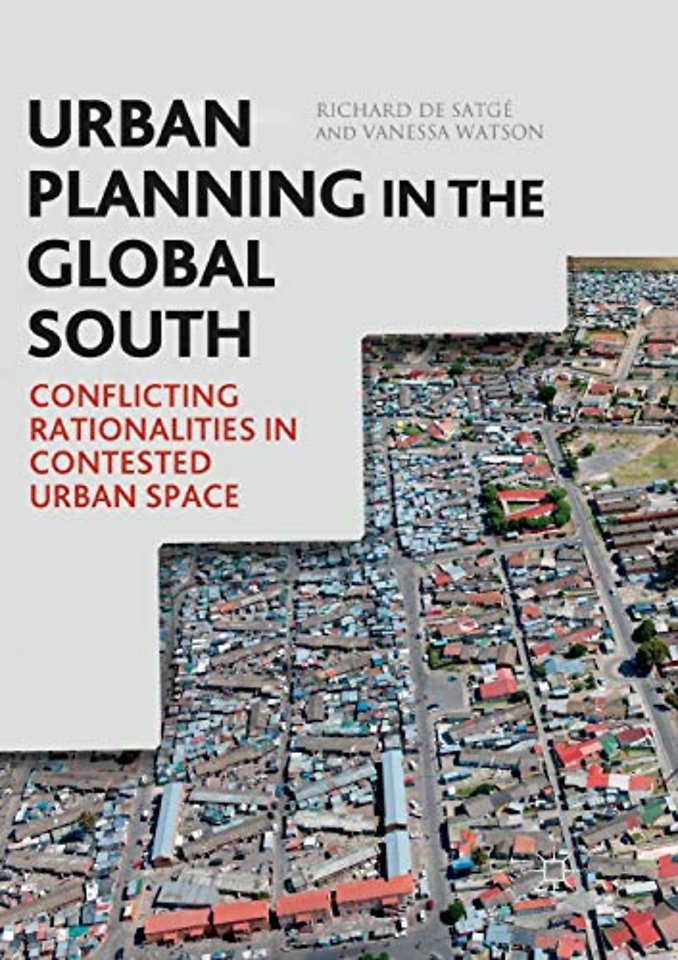
This book addresses the on-going crisis of informality in rapidly growing cities of the global South. The authors offer a Southern perspective on planning theory, explaining how the concept of conflicting rationalities complements and expands upon a theoretical tradition which still primarily speaks to global ‘Northern’ audiences. De Satgé and Watson posit that a significant change is needed in the makeup of urban planning theory and practice – requiring an understanding of the ‘conflict of rationalities’ between state planning and those struggling to survive in urban informal settlements – for social conditions to improve in the global South. Ethnography, as illustrated in the book’s case study – Langa, a township in Cape Town, South Africa – is used to arrive at this conclusion. The authors are thus able to demonstrate how power and conflict between the ambitions of state planners and shack-dwellers, attempting to survive in a resource-poor context, have permeated and shaped all state–society engagement in this planning process.
Specificaties
Inhoudsopgave
Net verschenen
Rubrieken
- aanbestedingsrecht
- aansprakelijkheids- en verzekeringsrecht
- accountancy
- algemeen juridisch
- arbeidsrecht
- bank- en effectenrecht
- bestuursrecht
- bouwrecht
- burgerlijk recht en procesrecht
- europees-internationaal recht
- fiscaal recht
- gezondheidsrecht
- insolventierecht
- intellectuele eigendom en ict-recht
- management
- mens en maatschappij
- milieu- en omgevingsrecht
- notarieel recht
- ondernemingsrecht
- pensioenrecht
- personen- en familierecht
- sociale zekerheidsrecht
- staatsrecht
- strafrecht en criminologie
- vastgoed- en huurrecht
- vreemdelingenrecht