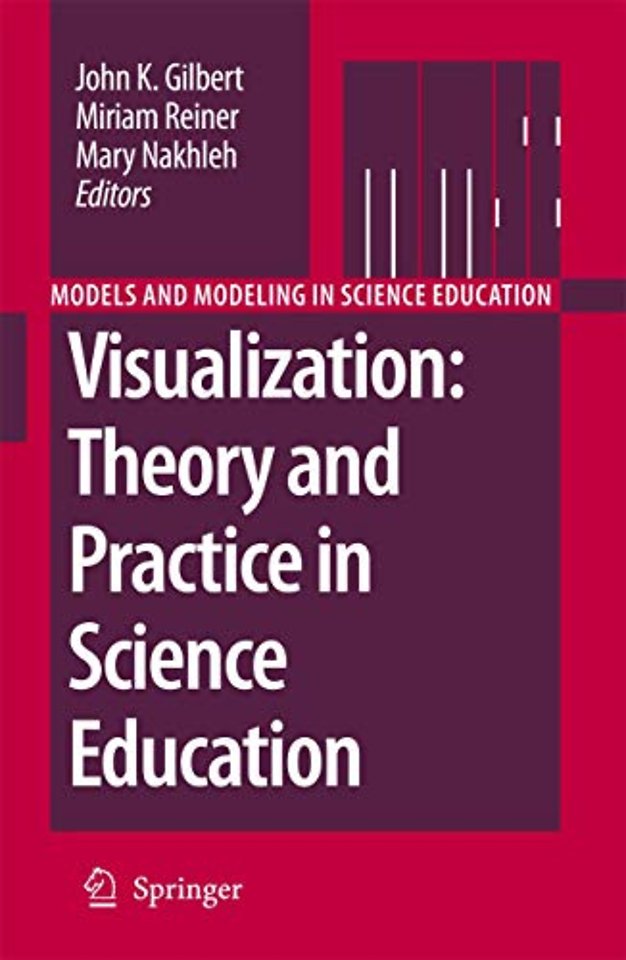
Visualization: Theory and Practice in Science Education
Samenvatting
External representations (pictures, diagrams, graphs, concrete models) have always been valuable tools for the science teacher. The formation of personal, internal, representations – visualizations – from them plays a key role in all learning, especially in that of science. The use of personal computers and sophisticated software has expanded into the areas of simulation, virtual reality, and animation, and students now engage in the creation of models, a key aspect of scientific methodology. Several academic disciplines underlie these developments, yet act independently of each other, to the detriment of an attainment of what is possible. This book brings together the insights of practicing scientists, science education researchers, computer specialists, and cognitive scientists, to produce a coherent overview. It links presentations about the cognitive theory of representation and visualization, its implications for science curriculum design, and for learning and teaching in classrooms and laboratories.
Specificaties
Inhoudsopgave
Anderen die dit kochten, kochten ook
-
 Pim Blom€ 23,50
 -
Gert Biesta€ 13,99
-
Japke-d. Bouma€ 16,99
-
Sandra van Thiel€ 40,50
-
Genieke Hertoghs€ 34,50
-
Eric van 't Zelfde€ 20,99





Net verschenen
Rubrieken
- aanbestedingsrecht
- aansprakelijkheids- en verzekeringsrecht
- accountancy
- algemeen juridisch
- arbeidsrecht
- bank- en effectenrecht
- bestuursrecht
- bouwrecht
- burgerlijk recht en procesrecht
- europees-internationaal recht
- fiscaal recht
- gezondheidsrecht
- insolventierecht
- intellectuele eigendom en ict-recht
- management
- mens en maatschappij
- milieu- en omgevingsrecht
- notarieel recht
- ondernemingsrecht
- pensioenrecht
- personen- en familierecht
- sociale zekerheidsrecht
- staatsrecht
- strafrecht en criminologie
- vastgoed- en huurrecht
- vreemdelingenrecht