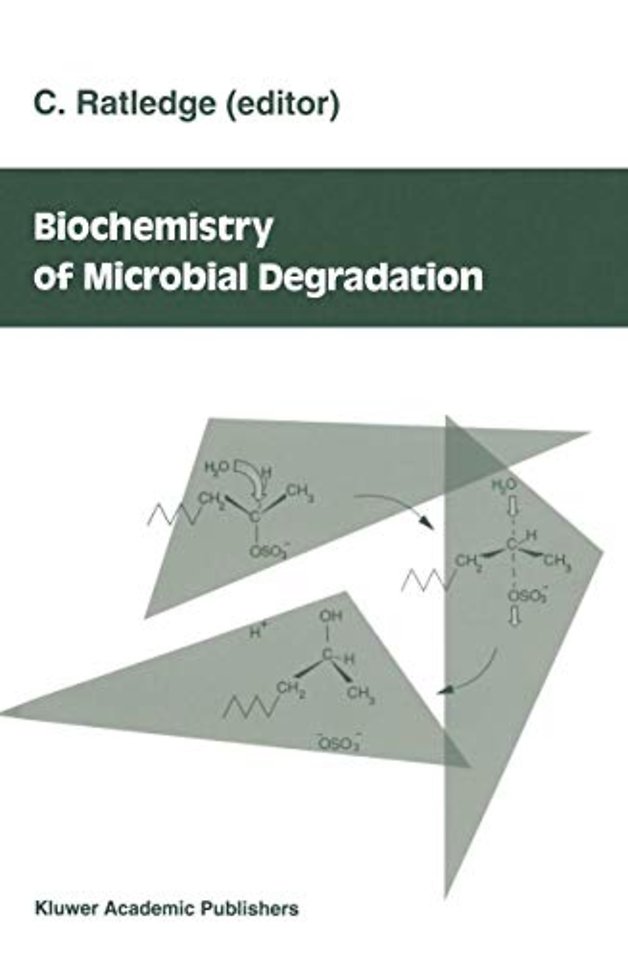
Biochemistry of microbial degradation
Samenvatting
Life on the planet depends on microbial activity. The recycling of carbon, nitrogen, sulphur, oxygen, phosphate and all the other elements that constitute living matter are continuously in flux: microorganisms participate in key steps in these processes and without them life would cease within a few short years. The comparatively recent advent of man-made chemicals has now challenged the environment: where degradation does not occur, accumulation must perforce take place. Surprisingly though, even the most recalcitrant of molecules are gradually broken down and very few materials are truly impervious to microbial attack. Microorganisms, by their rapid growth rates, have the most rapid turn-over of their DNA of all living cells. Consequently they can evolve altered genes and therefore produce novel enzymes for handling "foreign" compounds - the xenobiotics - in a manner not seen with such effect in other organisms. Evolution, with the production of micro-organisms able to degrade molecules hitherto intractable to breakdown, is therefore a continuing event. Now, through the agency of genetic manipulation, it is possible to accelerate this process of natural evolution in a very directed manner. The time-scale before a new microorganism emerges that can utilize a recalcitrant molecule has now been considerably shortened by the application of well-understood genetic principles into microbiology. However, before these principles can be successfully used, it is essential that we understand the mechanism by which molecules are degraded, otherwise we shall not know where best to direct these efforts.
Specificaties
Inhoudsopgave
Net verschenen
Rubrieken
- aanbestedingsrecht
- aansprakelijkheids- en verzekeringsrecht
- accountancy
- algemeen juridisch
- arbeidsrecht
- bank- en effectenrecht
- bestuursrecht
- bouwrecht
- burgerlijk recht en procesrecht
- europees-internationaal recht
- fiscaal recht
- gezondheidsrecht
- insolventierecht
- intellectuele eigendom en ict-recht
- management
- mens en maatschappij
- milieu- en omgevingsrecht
- notarieel recht
- ondernemingsrecht
- pensioenrecht
- personen- en familierecht
- sociale zekerheidsrecht
- staatsrecht
- strafrecht en criminologie
- vastgoed- en huurrecht
- vreemdelingenrecht