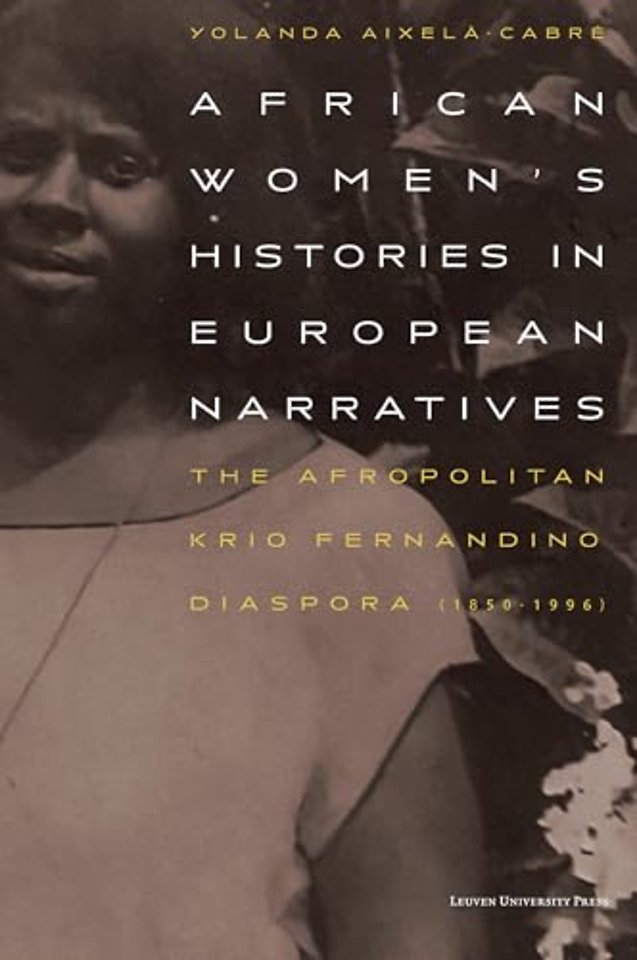
African Women’s Histories in European Narratives
The Afropolitan Krio Fernandino Diaspora (1850-1996)
Samenvatting
Little is known about the African women who came to Europe from the 1870s onwards, nor do we dare to imagine them as wealthy, elegantly dressed individuals with refined tastes and fluent in several languages. The Krio Fernandino represented a multisited, multilocal, transnational, transcontinental and Afropolitan community that lived between Africa and Europe from the late 19th century onwards. This book explains how the Krio Fernandino, and particularly their women, transcended the barriers of race and gender in colonial Africa and in Spain. Aixelà-Cabré highlights a fascinating journey across cultures and continents, unearthing a compelling narrative of African women’s empowerment in their home continent and in Catalonia. This research highlights a women’s history that resonates on regional, national and transcontinental levels; a genuine Euro-African and Afro-European legacy to be preserved for future generations.
Specificaties
Inhoudsopgave
1.1. Premise
1.2. Hypothesis
1.3. Academic aims and state of the art
1.4. Methodology
Chapter 2. Fernandino women in colonial Santa Isabel and independent Malabo
2.1. The African context and Europe: English and Spanish presence in Fernando Poo and Santa Isabel
2.2. The Krio Fernandino community and Amelia Barleycorn de Vivour
2.3. Everyday life in Santa Isabel
2.4. Tensions and conflicts: surviving under colonial repression
2.5. The connection between Malabo and Barcelona since 1968: Equatorial Guinean exile
2.6. Conclusions
Chapter 3. The Fernandino in Barcelona during colonisation and post-independence
3.1. Barcelona and Santa Isabel
3.2. Amelia Barleycorn heading to Europe
3.3. Life in Barcelona
3.4. The Krio Fernandino: trade, health and social life
3.5. Barcelona, missionary actions and student intake aimed at Equatorial Guineans
3.6. Krio Fernandino intersectionality: class, gender and race
3.7. Spain’s collective amnesia post-1968 and the onset of racism during the 1990s
3.8. Conclusions
Chapter 4. Decolonising the African past from a gender perspective
4.1. Amelia Barleycorn de Vivour v. Spanish Government (1911): marriage, nationality, gender and religion
4.2. Fernandino women: between bourgeois elitism and colonial power
4.3. The domestic service used by the Krio Fernandino community or how to (de)racialise class from intersectionality
4.4. The status and social presentation of the body as a formula of distinction Fernandino
4.5. Fernandino women mixing cultures and continents (Africa, America and Europe)
4.6. The impact of Spanish colonialism and Fernandino decline
4.7. Conclusion
Chapter 5. A past forged in the present : the collective memory of Krio Fernandino women – Closing notes
Notes
Primary and secondary sources
Primary sources
Secondary sources
Index
Vaak samen gekocht
Anderen die dit kochten, kochten ook
-
 Maarten Van Ginderachter€ 29,99
 -
Federico Kukso€ 26,99
-
Wim Daniëls€ 22,99
-
John Scheid€ 29,99
-
David M Carballo€ 44,90
-
Simon Morrison€ 39,99



Net verschenen
Rubrieken
- aanbestedingsrecht
- aansprakelijkheids- en verzekeringsrecht
- accountancy
- algemeen juridisch
- arbeidsrecht
- bank- en effectenrecht
- bestuursrecht
- bouwrecht
- burgerlijk recht en procesrecht
- europees-internationaal recht
- fiscaal recht
- gezondheidsrecht
- insolventierecht
- intellectuele eigendom en ict-recht
- management
- mens en maatschappij
- milieu- en omgevingsrecht
- notarieel recht
- ondernemingsrecht
- pensioenrecht
- personen- en familierecht
- sociale zekerheidsrecht
- staatsrecht
- strafrecht en criminologie
- vastgoed- en huurrecht
- vreemdelingenrecht