Gary Kessler
McGraw-Hill Education
3e druk, 2007
9780073386591
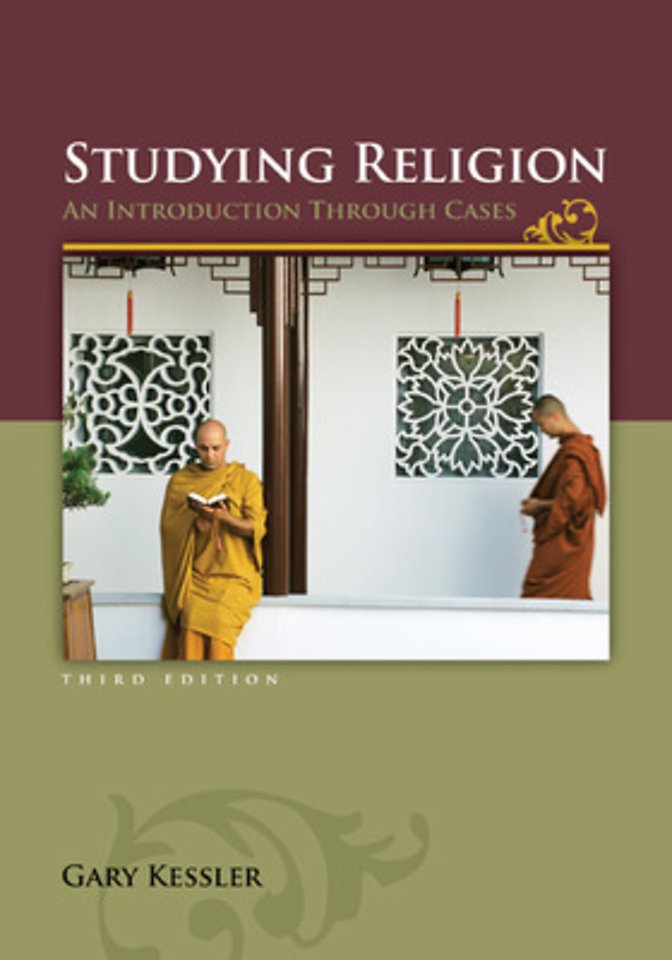
Studying Religion: An Introduction Through Cases
Specificaties
Paperback, blz.
|
Engels
McGraw-Hill Education |
3e druk, 2007
ISBN13: 9780073386591
Rubricering
Juridisch
:
Levertijd ongeveer 11 werkdagen
Gratis verzonden
Samenvatting
Through the use of thought-provoking case studies, summaries, and review questions, this introductory level text shows students how to engage in the academic, objective study of religion and helps instructors address some of the typical problems they encounter when introducing students to the study of religion. Kessler guides students through an unbiased and varied study of religious beliefs and practices such as sacred power, myths and rituals, religious art, the problem of evil, and the relationship between religion and morality. The text also addresses issues of gender and religious institutionalization.
Specificaties
Inhoudsopgave
<h3>Preface<H3>Chapter 1: Thinking about Being a Student of Religion <H4>1.1 Insider's and Outsider's Perspectives<H4>1.2 Qualities Worth Having<H4>1.3 Why Study Religion?<H4>Review Questions<H4>Explorations<H4>Suggestions for Further Reading<H4>Internet Resources<H3>Chapter 2: On Defining and Studying Religion<H4>2.1 Marks of a Good Definition<H4>2.2 Two Definitions<H4>2.3 Is Secular Humanism a Religion?<h4>2.4 A Simple Map of the Field<H4>2.5 Goals and Methods<H4>2.6 Fieldwork<H4>2.7 Controversy<H4>Review Questions<H4>Explorations<H4>Suggestions for Further Reading<H4>Internet Resources<H3>Chapter 3: Sacred Power<H4>3.1 Two Case Studies<H4>3.2 Comparison<H4>3.3 Forms of Sacred Power<H4>3.4 Agnosticism and Atheism<H4>Review Questions<H4>Research Case: Ganesha<h4>Questions on the Case of Ganesha<H4>Suggestions for Further Reading<H4>Internet Resources<H3>Chapter 4: Myth as Sacred Story<H4>4.1 Two Case Studies<H4>4.2 Comparison<H4>4.3 Types and Functions<H4>4.4 Theories of Myth<H4>4.5 Myth and Science<H4>Review Questions<H4>Research Case: The Primal Man<h4>Questions on the Case of the Primal Man<H4>Suggestions for Further Reading<H4>Internet Resources<H3>Chapter 5: Ritual as Sacred Action<H4>5.1 Two Case Studies<H4>5.2 Comparison<H4>5.3 Types and Functions<H4>5.4 Sacrifice and Violence<h4>5.5 Magic, Performatives, and Ritual<H4>5.6 Myth and Ritual<H4>Review Questions<H4>Research Case: Seder<h4>Questions on the Case of the Seder<H4>Suggestions for Further Reading<H4>Internet Resources<H3>Chapter 6: Sacred Space, Time, and Art<H4>6.1 Two Case Studies<h4>6.2 Comparison<H4>6.3 Features of Sacred Space and Time<H4>6.4 Glimpsing the Sacred<H4>Review Questions<H4>Research Case: The Cathedral of St. Andrew<h4>Questions on the Case of the Cathedral of St. Andrew<H4>Suggestions for Further Reading<H4>Internet Resources<H3>Chapter 7: Experiencing the Sacred<H4>7.1 Two Case Studies<H4>7.2 Comparison<H4>7.3 Debates about the Nature of Religious Experiences<H4>7.4 Shamanic Ecstasy<H4>7.5 Mystical Techniques and States<H4>7.6 Psychoanalytic Theories<H4>Review Questions<H4>Research Case: St. Teresa of Avila<h4>Questions on the Case of St. Teresa of Avila<H4>Suggestions for Further Reading<H4>Internet Resources<H3>Chapter 8: Explaining Evil<H4>8.1 Two Case Studies<H4>8.2 Comparison<H4>8.3 Types of Theodicies<H4>8.4 The Theological Problem of Evil<H4>8.5 How Theodicies Work<H4>Review Questions<H4>Research Case: Manichaeism<h4>Questions on the Case of Manichaeism<H4>Suggestions for Further Reading<H4>Internet Resources<H3>Chapter 9: Religion and Morality<H4>9.1 Two Case Studies<H4>9.2 Comparison<H4>9.3 Identifying and Legitimating Moral Norms<H4>9.4 What are the Elements of a Religious Morality?<H4>9.5 Retribution: Overcoming Moral Failure<H4>Review Questions<H4>Research Case: Jain Nonviolence<h4>Questions on the Case of Jain Nonviolence<H4>Suggestions for Further Reading<H4>Internet Resources<H3>Chapter 10: Religion and Politics<H4>10.1 Two Case Studies<H4>10.2 Comparison<H4>10.3 Patterns of Political Engagement<H4>Review Questions<H4>Research Case: Shinto<h4>Questions on the Case of Shinto<H4>Suggestions for Further Reading<H4>Internet Resources<H3>Chapter 11: Organizing the Sacred<H4>11.1 Two Case Studies<H4>11.2 Comparison<H4>11.3 Types of Religious Organizations<H4>11.4 The Dilemmas of Institutionalization<H4>11.5 Types of Authority<H4>11.6 Scripture<H4>11.7 Gender<H4>11.8 Civil Religion<H4>Review Questions<H4>Research Case: Shinto<h4>Questions on the Case of Shinto<H4>Suggestions for Further Reading<H4>Internet Resources<H3>Chapter 12: Human Existence and Destiny<H4>12.1 Two Case Studies<H4>12.2 Comparison<H4>12.3 Religions of Salvation and Society<H4>12.4 What Is Wrong with Human Existence?<H4>12.5 Three Paths to Salvation<H4>12.6 Where Are We Going?<H4>Review Questions<H4>Research Case: Zen Buddhism<h4>Questions on the Case of Zen Buddhism<H4>Suggestions for Further Reading<H4>Internet Resources<H3>Chapter 13: Religious Diversity and Truth<H4>13.1 Why Can't We All Get Along?<H4>13.2 Exclusivism, Inclusivism, and More<H4>13.3 What Is Truth?<H4>13.4 Critical Tolerance and the Principle of Charity<H4>Review Questions<H4>Research Case: Baha'i<h4>Questions on the Case of Baha'i<H4>Suggestions for Further Reading<H4>Internet Resources<p><h3>Notes<H3>Glossary<h3>Index
Net verschenen
Rubrieken
- aanbestedingsrecht
- aansprakelijkheids- en verzekeringsrecht
- accountancy
- algemeen juridisch
- arbeidsrecht
- bank- en effectenrecht
- bestuursrecht
- bouwrecht
- burgerlijk recht en procesrecht
- europees-internationaal recht
- fiscaal recht
- gezondheidsrecht
- insolventierecht
- intellectuele eigendom en ict-recht
- management
- mens en maatschappij
- milieu- en omgevingsrecht
- notarieel recht
- ondernemingsrecht
- pensioenrecht
- personen- en familierecht
- sociale zekerheidsrecht
- staatsrecht
- strafrecht en criminologie
- vastgoed- en huurrecht
- vreemdelingenrecht