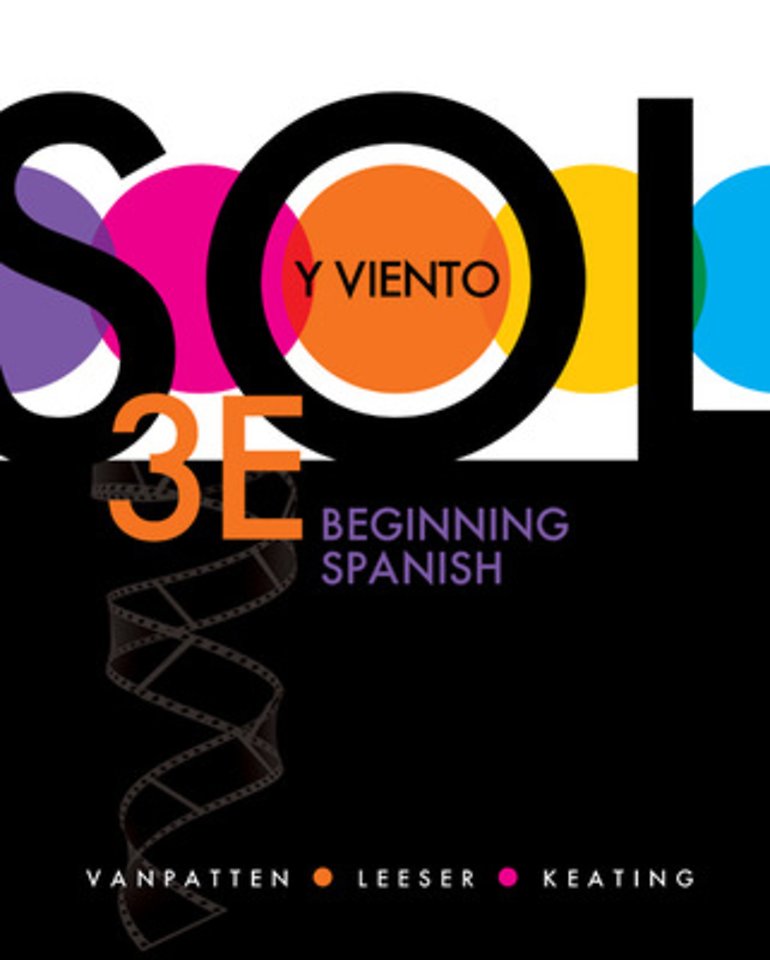
Audio CD Program part 1 for SOL Y VIENTO
Samenvatting
Sol y viento integrates the latest in second language acquisition research with the highest quality, Hollywood caliber feature film available for the Introductory Spanish classroom. The Sol y viento program creates a distinct and captivating cultural experience that motivates students to develop their communication skills. Created specifically for beginning language learners, Sol y viento tells the story of a Chilean family and their winery, and of a young U.S. Latino businessman who finds himself intricately involved with the family as his company tries to buy their land. Mystery, romance, and the unexplainable forces of nature all play a part in this spellbinding story, drawing students in and compelling them to want to communicate about the film and its themes.
Sol y viento 3/e is available with CENTRO, a portal learning management system, which offers a diagnostic tool that provides students with tailored learning plans to address their specific learning needs. This integrated technology platform delivers a variety of digital components including Quia workbooks, laboratory manuals and an interactive e-book with voice board, allowing professors to deliver a seamless learning experience to students in both seated and virtual sections.
Specificaties
Inhoudsopgave
Vamos al extranjero</h3><h4>Primera parte</h4><h5><li>Vocabulario: Para hacer viajes</h5><br>Talking About Taking Trips and Traveling: Travel Vocabulary</br><h5><li>Gramática: Vuelva Ud. mañana.</h5><br>Giving Instructions: Affirmative Formal Commands</br><h4>Segunda parte</h4><h5><li>Vocabulario: ¿Cómo llego?</h5><br>Getting Around Town: Giving and Receiving Directions</br><h5><li>Gramática: ¡No vuelvan tarde!</h5><br>More on Giving Instructions: Negative Formal Commands</br><h4>Tercera parte</h4><h5><li>Vocabulario: En el restaurante</h5><br>Ordering Meals in a Restaurant: Dining Out</br><h5><li>Gramática: ¡Lo he pasado muy bien!</h5><br>Taking About What Has Happened: Introduction to the Present Perfect</br><p><h3>Lección 6B: La naturaleza y el medio ambiente</h3><h4>Primera parte</h4><h5><li>Vocabulario: ¿Cómo es el paisaje?</h5><br>Talking About the Natural World: Geography and Geographical Features</br><h5><li>Gramática: ¡Ten paciencia!</h5><br>More on Giving Instructions: Affirmative Informal Commands</br><h4>Segunda parte</h4><h5><li>Vocabulario: El medio ambiente</h5><br>Talking About the Environment: Environmental and Ecological Matters</br><h5><li>Gramática: ¡No me hables!</h5><br> Telling Someone What Not to Do: Negative Informal Commands</br><h4>Tercera parte</h4><h5><li>Vocabulario: De vacaciones</h5><br>More on Talking About Trips: Activities to Do While on Vacation</br><h5><li>Gramática: Es el más guapo de todos.</h5><br>Expressing The Most and The Least: Superlatives</br><p><h2>Episodio 7: Bajo el sol</h2><h3>Lección 7A: ¿Cómo te sientes?</h3><h4>Primera parte</h4><h5><li>Vocabulario: Estoy tenso.</h5><br>Talking About Feelings and Mental Conditions: Describing Emotions</br><h5><li>Gramática: ¿Cómo se siente?</h5><br>Talking About Reactions and Changes of Emotion: Pseudo-Reflexive Verbs</br><h4>Segunda parte</h4><h5><li>Vocabulario: Algunas partes del cuerpo.</h5><br>Talking about Health: Parts of the Body and Physical Health</br><h5><li>Gramática: Estaban contentos, ¿no?</h5><br>More on Talking About States of Being in the Past: Review of the Imperfect</br><h4>Tercera parte</h4><h5><li>Vocabulario: Me duele la garganta.</h5><br>Telling the Doctor How You Feel: In the Doctor’s Office</br><h5><li>Gramática: Hace dos años que se me rompió el brazo.</h5><br>Talking About When Something Happened: Hacer in Expressions of Time</br><p><h3>Lección 7B: Los demás y yo</h3><h4>Primera parte</h4><h5><li>Vocabulario: Te tengo mucho cariño.</h5><br>Talking About How You Feel About Someone: Feelings</br><h5><li>Gramática: Se conocen bien.</h5><br>Talking About What People Do to and for Each Other: Reciprocal Reflexives</br><h4>Segunda parte</h4><h5><li>Vocabulario: Eres muy romántico.</h5><br>More on Describing People’s Traits: Describing People</br><h5><li>Gramática: Espero que sea divertido.</h5><br>Talking About Your Wishes and Desires: Introduction to the Subjunctive</br><h4>Tercera parte</h4><h5><li>Vocabulario: ¡Me engañó!</h5><br>Talking About Good and Bad Relationships: More on Relationships</br><h5><li>Gramática: A menos que no quieras…</h5><br>Talking About Contingencies and Conditions: Obligatory Subjunctive</br><p><h2>Episodio 8: Sin alternativa</h2><h3>Lección 8A: El dinero y las finanzas</h3><h4>Primera parte</h4><h5><li>Vocabulario: ¿Cómo manejas el dinero?</h5><br>Talking About Money: Your Personal Finances</br><h5><li>Gramática: Ver es creer.</h5><br>Using Verbs As Nouns: Progressive Versus Infinitives</br><h4>Segunda parte</h4><h5><li>Vocabulario: Las deudas</h5><br>Talking About Payments, Loans, and Debts: More on Personal Finances</br><h5><li>Gramática: ¿Qué harías?</h5><br>Talking About What You Would Do: Introduction to the Conditional</br><h4>Tercera parte</h4><h5><li>Vocabulario: La economía</h5><br>Talking About the Economy: Local and World Markets</br><h5><li>Gramática: Si tuviera más dinero…</h5><br>Expressing Hypothetical Events: Hypothetical Statements; Introduction to the Imperfect Subjunctive</br><p><h3>Lección 8B: Los medios de comunicación</h3><h4>Primera parte</h4><h5><li>Vocabulario: ¿Cómo te informas?</h5><br> Talking About Current Events: Getting Information</br><h5><li>Gramática: Te llamó por teléfono.</h5><br>Talking About How You Do Something: Por and para: A Summary</br><h4>Segunda parte</h4><h5><li>Vocabulario: ¿Qué hay en la televisión?</h5><br>Talking About What’s on TV: Types of Programming</br><h5><li>Gramática: Dudo que lo sepa.</h5><br>Expressing Disbelief: Subjunctive of Doubt, Denial, and Uncertainty</br><h4>Tercera parte</h4><h5><li>Vocabulario: La responsabilidad cívica</h5><br>Talking About Being a Valuable Member of Society: Civic Duty and Citizenship</br><h5><li>Gramática: ¿Qué quieres que haga?</h5><br>Talking About What You Want to Happen: Subjunctive of Volition and Desire</br><p><h2>Episodio 9: Un brindis por el futuro</h2><h3>Lección final: Lo que nos espera</h3><h4>Primera parte</h4><h5><li>Vocabulario: Las profesiones</h5><br>Talking About Jobs and Professions: Vocabulary Related to Professions</br><h5><li>Gramática: ¿Qué pasará?</h5><br>Talking About the Future: Introduction to the Future Tense</br><h4>Segunda parte</h4><h5><li>Vocabulario: Características necesarias y preferidas en el mundo laboral</h5><br>Talking About Traits Needed for Professions: Required and Preferred Characteristics in the Workplace</br><h5><li>Gramática: Buscamos alguien que sea empresario…</h5><Indefinite and Negative Antecedents</br><h4>Tercera parte</h4><h5><li>Vocabulario: Mis metas personales</h5><br>Talking About Goals and Aspirations: Future Aspirations</br><h5><li> Gramática: No estaré contento hasta que…</h5><br>More on Talking About the Future: Subjunctive with Future Time Events</br>
Net verschenen
Rubrieken
- aanbestedingsrecht
- aansprakelijkheids- en verzekeringsrecht
- accountancy
- algemeen juridisch
- arbeidsrecht
- bank- en effectenrecht
- bestuursrecht
- bouwrecht
- burgerlijk recht en procesrecht
- europees-internationaal recht
- fiscaal recht
- gezondheidsrecht
- insolventierecht
- intellectuele eigendom en ict-recht
- management
- mens en maatschappij
- milieu- en omgevingsrecht
- notarieel recht
- ondernemingsrecht
- pensioenrecht
- personen- en familierecht
- sociale zekerheidsrecht
- staatsrecht
- strafrecht en criminologie
- vastgoed- en huurrecht
- vreemdelingenrecht