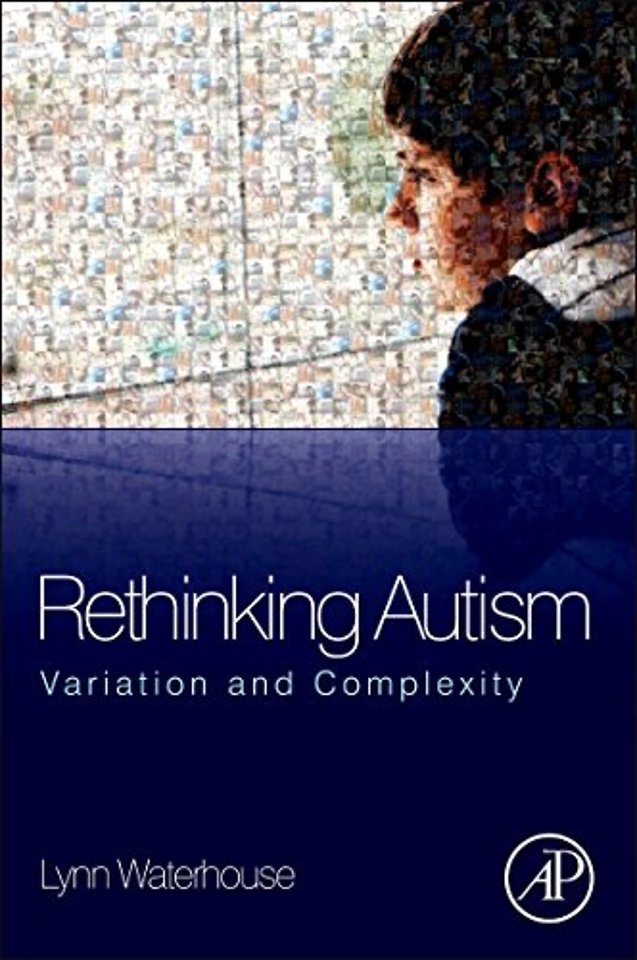
Rethinking Autism
Variation and Complexity
Samenvatting
The media, scientific researchers, and the Diagnostic and Statistical Manual all refer to "autism" as if it were a single disorder or a single disorder over a spectrum. However, autism is unlike any single disorder in a variety of ways. No single brain deficit is found to cause it, no single drug is found to affect it, and no single cause or cure has been found despite tremendous research efforts to find same. Rethinking Autism reviews the scientific research on causes, symptomology, course, and treatment done to date…and draws the potentially shocking conclusion that "autism" does not exist as a single disorder. The conglomeration of symptoms exists, but like fever, those symptoms aren’t a disease in themselves, but rather a result of some other cause(s). Only by ceasing to think of autism as a single disorder can we ever advance research to more accurately parse why these symptoms occur and what the different and varied causes may be.
Specificaties
Inhoudsopgave
Net verschenen
Rubrieken
- aanbestedingsrecht
- aansprakelijkheids- en verzekeringsrecht
- accountancy
- algemeen juridisch
- arbeidsrecht
- bank- en effectenrecht
- bestuursrecht
- bouwrecht
- burgerlijk recht en procesrecht
- europees-internationaal recht
- fiscaal recht
- gezondheidsrecht
- insolventierecht
- intellectuele eigendom en ict-recht
- management
- mens en maatschappij
- milieu- en omgevingsrecht
- notarieel recht
- ondernemingsrecht
- pensioenrecht
- personen- en familierecht
- sociale zekerheidsrecht
- staatsrecht
- strafrecht en criminologie
- vastgoed- en huurrecht
- vreemdelingenrecht