Gratis boekenweekgeschenk bij een bestelling boven de €17,50 (geldt alleen voor Nederlandstalige boeken)

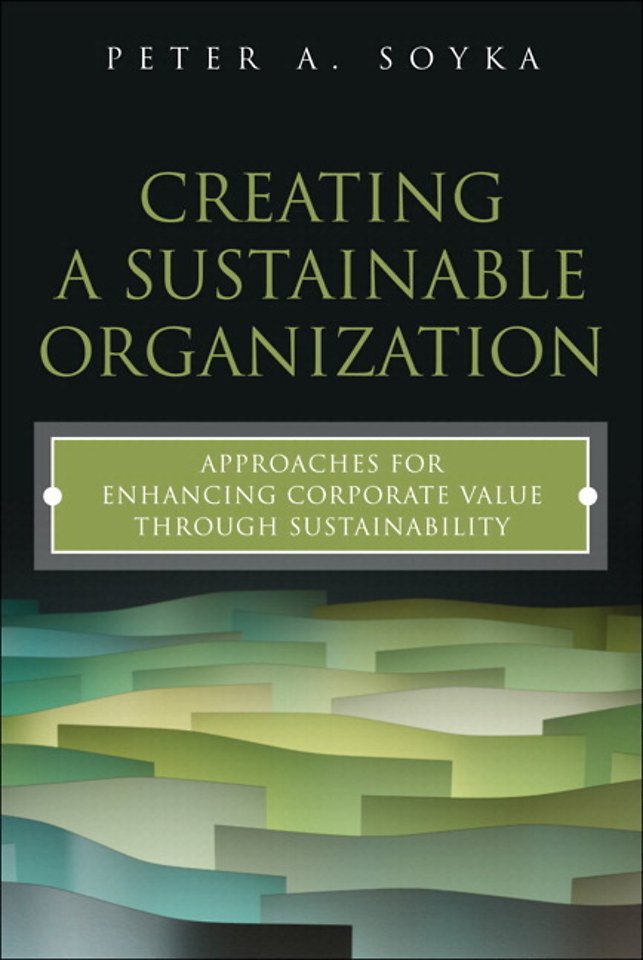
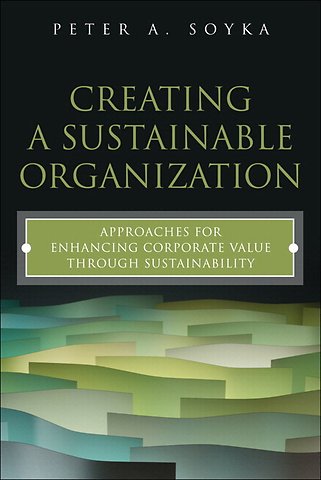
Creating a Sustainable Organization

Approaches for Enhancing Corporate Value Through Sustainability

Specificaties
Paperback, blz. | Engels
Pearson Education | e druk, 2014
ISBN13: 9780133886573
Rubricering
Juridisch :
Pearson Education e druk, 2014 9780133886573
€ 76,54
Levertijd ongeveer 9 werkdagen
Gratis verzonden

Samenvatting

“With investors increasingly concerned about whether they have appropriately priced ESG-related fat tail risks in their portfolios, Peter’s book provides a timely explanation as to why financial markets care about how companies manage their material sustainability issues, set performance targets for them, and then embed ESG principles into their core business.”

–Abyd Karmali, Managing Director and Global Head of Carbon Markets, Bank of America Merrill Lynch


“Soyka brings a fresh and grounded view of corporate sustainability that understands the critical need to bridge the environmental and financial worlds. He makes it clear that sustainability is multidisciplinary and that leadership companies align it with core business drivers and metrics. Creating a Sustainable Organization  is a valuable work that should be required for any professional seeking to align sustainability with business success.”

–Joel Makower, Chairman and Executive Editor, GreenBiz Group; author, Strategies for the Green Economy


“In Creating a Sustainable Organization, Peter Soyka has woven together a wealth of personal experience, industry commentary, data, and academic analysis to present a compelling argument in favor of promoting corporate sustainability. But he doesn’t stop there–his primary accomplishment is in establishing a guide for present and future sustainability practitioners to pursue sustainability as an engine for value creation within their firms. Peter has given us insightful–and in some cases, uncomfortable–analysis. Those of us in the business of evaluating companies from the outside have as much to learn from Peter as those on the inside.”

–Mark E. Bateman, President, Segue Point LLC; Director of Research, IW Financial

Sustainability and socially responsible investing (SRI) are each attracting growing attention from financial institutions, nongovernmental organizations (NGOs), private investors, citizens, and policymakers. In Creating a Sustainable Organization, Peter A. Soyka links these trends, showing how to use organizational sustainability to drive greater value for shareholders and other corporate stakeholders.


Soyka employs the powerful construct of Environmental, Social, and Governance (ES&G) posture and performance, showing how it integrates environmental, health, safety, and social issues with governance. You’ll learn how ES&G compares with Corporate Social Responsibility (CSR) and the “triple bottom line,” and how and when to use it to improve (or evaluate) a company’s performance and investment potential.


Environmental, Health, and Safety (EHS) and sustainability professionals will gain a deeper understanding of how the financial community operates, what its members value, what motivates its behavior, and the basis of its growing interest in corporate sustainability. At the same time, investors and investment analysts will develop broader and deeper insight into how sustainability issues affect companies’ performance and prospects, and which sustainability practices create the foundation for long-term value creation.


Covers all this and more:

• How sustainability affects enterprise value: the latest data

• Barriers to corporate sustainability—and how they can be overcome

• The surprising ways key financial players are now promoting sustainability

• Responding to the growing diversity and sophistication of EHS stakeholders

• Managing sustainability more successfully throughout the organization

• Defining, measuring, and reporting on sustainability more effectively

• Tracking sustainability performance from the investor’s viewpoint

• Bridging the viewpoints of EHS and the financial/investment community

• Becoming a more effective and influential EHS/sustainability professional


Specificaties

ISBN13:9780133886573
Taal:Engels
Bindwijze:Paperback

Inhoudsopgave

<p style="margin:0px;">&nbsp; </p> <p style="margin:0px;">Chapter 1 Introduction&nbsp;&nbsp;&nbsp; 1</p> <p style="margin:0px;">Major Themes and Messages in This Book&nbsp;&nbsp;&nbsp;&nbsp; 4</p> <p style="margin:0px;">A Few Disclosures and Caveats&nbsp;&nbsp;&nbsp;&nbsp; 9</p> <p style="margin:0px;">Endnotes&nbsp;&nbsp;&nbsp;&nbsp; 12</p> <p style="margin:0px;">Chapter 2 Background and Context &nbsp;&nbsp;&nbsp;&nbsp;15</p> <p style="margin:0px;">What Is Sustainability, and Why Is It Important to Business?&nbsp;&nbsp;&nbsp;&nbsp; 16</p> <p style="margin:0px;">Why Sustainability Is and Will Remain Important to U.S. Corporations&nbsp;&nbsp;&nbsp;&nbsp; 22</p> <p style="margin:0px;">Where We’ve Been and What We’ve Learned&nbsp;&nbsp;&nbsp;&nbsp; 29</p> <p style="margin:0px;">What ESG/Sustainability Investing Is and Why You May Never Have Heard of It&nbsp;&nbsp;&nbsp;&nbsp; 42</p> <p style="margin:0px;">Major Factors, Actors, and Trends&nbsp;&nbsp;&nbsp;&nbsp; 44</p> <p style="margin:0px;">ES&amp;G Concerns as Key Requirements and Determinants of Long-Term Business Success&nbsp;&nbsp;&nbsp;&nbsp; 47</p> <p style="margin:0px;">Implications for Sustainability Professionals and Others Working on Corporate Sustainability Issues&nbsp;&nbsp;&nbsp;&nbsp; 52</p> <p style="margin:0px;">Endnotes&nbsp;&nbsp;&nbsp;&nbsp; 54</p> <p style="margin:0px;">Chapter 3 ES&amp;G Issues and How They Affect the Business Enterprise&nbsp;&nbsp;&nbsp; 57</p> <p style="margin:0px;">Environmental, Health and Safety, and Social Equity Laws and Regulations&nbsp;&nbsp;&nbsp;&nbsp; 57</p> <p style="margin:0px;">An Abridged History&nbsp;&nbsp;&nbsp;&nbsp; 58</p> <p style="margin:0px;">Corporate ES&amp;G Obligations&nbsp;&nbsp;&nbsp;&nbsp; 70</p> <p style="margin:0px;">Legal Liability&nbsp;&nbsp;&nbsp;&nbsp; 80</p> <p style="margin:0px;">Stakeholder Expectations and Nonlegal Requirements&nbsp;&nbsp;&nbsp;&nbsp; 82</p> <p style="margin:0px;">Costs and Cost Structure&nbsp;&nbsp;&nbsp;&nbsp; 89</p> <p style="margin:0px;">Revenue Impacts&nbsp;&nbsp;&nbsp;&nbsp; 93</p> <p style="margin:0px;">Organizational Strength and Capability&nbsp;&nbsp;&nbsp;&nbsp; 96</p> <p style="margin:0px;">Endnotes&nbsp;&nbsp;&nbsp;&nbsp; 106</p> <p style="margin:0px;">Chapter 4 Stakeholder Interests and Influences and the Social License to Operate&nbsp;&nbsp;&nbsp; 109</p> <p style="margin:0px;">The Social License to Operate&nbsp;&nbsp;&nbsp;&nbsp; 111</p> <p style="margin:0px;">Major Company Stakeholders&nbsp;&nbsp;&nbsp;&nbsp; 115</p> <p style="margin:0px;">Typical Stakeholder Involvement in and Influence on Corporate Behavior&nbsp;&nbsp;&nbsp;&nbsp; 129</p> <p style="margin:0px;">Endnotes&nbsp;&nbsp;&nbsp;&nbsp; 147</p> <p style="margin:0px;">Chapter 5 Managing ES&amp;G Issues Within the Organization&nbsp;&nbsp;&nbsp; 149</p> <p style="margin:0px;">Relationships Among and Between EHS, Social, and Governance Issues&nbsp;&nbsp;&nbsp;&nbsp; 150</p> <p style="margin:0px;">Effective ES&amp;G Management Structures and Practices&nbsp;&nbsp;&nbsp;&nbsp; 154</p> <p style="margin:0px;">Integrating Sustainability into the Company’s “Organizational DNA”&nbsp;&nbsp;&nbsp;&nbsp; 178</p> <p style="margin:0px;">Endnotes&nbsp;&nbsp;&nbsp;&nbsp; 185</p> <p style="margin:0px;">Chapter 6 Investors and the Power of Markets&nbsp;&nbsp;&nbsp; 187</p> <p style="margin:0px;">Market Theory and Underlying Assumptions&nbsp;&nbsp;&nbsp;&nbsp; 188</p> <p style="margin:0px;">Who Investors Are and What They Care About&nbsp;&nbsp;&nbsp;&nbsp; 194</p> <p style="margin:0px;">Size and Composition of U.S. Capital Markets&nbsp;&nbsp;&nbsp;&nbsp; 197</p> <p style="margin:0px;">Disclosure&nbsp;&nbsp;&nbsp;&nbsp; 201</p> <p style="margin:0px;">Institutional Investors and Fiduciary Duty&nbsp;&nbsp;&nbsp;&nbsp; 209</p> <p style="margin:0px;">Traditional and Emerging Security Evaluation Methods&nbsp;&nbsp;&nbsp;&nbsp; 214</p> <p style="margin:0px;">Socially Responsible Investing (SRI) and ES&amp;G Investing&nbsp;&nbsp;&nbsp;&nbsp; 227</p> <p style="margin:0px;">ES&amp;G Evaluation and Investing Methods&nbsp;&nbsp;&nbsp;&nbsp; 232</p> <p style="margin:0px;">Barriers to ES&amp;G Investing&nbsp;&nbsp;&nbsp;&nbsp; 239</p> <p style="margin:0px;">International Situation and Trends&nbsp;&nbsp;&nbsp;&nbsp; 247</p> <p style="margin:0px;">Analysts, Rating Agencies, Data Providers, and Other Intermediaries&nbsp;&nbsp;&nbsp;&nbsp; 251</p> <p style="margin:0px;">Trends and Potential Game-Changers&nbsp;&nbsp;&nbsp;&nbsp; 254</p> <p style="margin:0px;">Summary and Implications&nbsp;&nbsp;&nbsp;&nbsp; 261</p> <p style="margin:0px;">Endnotes&nbsp;&nbsp;&nbsp;&nbsp; 263</p> <p style="margin:0px;">Chapter 7 The Financial Impact of Effective (or Ineffective) ES&amp;G/Sustainability Management &nbsp;&nbsp;&nbsp;&nbsp;267</p> <p style="margin:0px;">Insights from the Literature&nbsp;&nbsp;&nbsp;&nbsp; 268</p> <p style="margin:0px;">Surveys of Corporate and Investor Attitudes and Beliefs&nbsp;&nbsp;&nbsp;&nbsp; 289</p> <p style="margin:0px;">Summary and Implications&nbsp;&nbsp;&nbsp;&nbsp; 299</p> <p style="margin:0px;">Endnotes&nbsp;&nbsp;&nbsp;&nbsp; 305</p> <p style="margin:0px;">Chapter 8 Defining, Measuring, and Reporting ES&amp;G Performance&nbsp;&nbsp;&nbsp; 307</p> <p style="margin:0px;">Why Performance Measurement and Reporting Are Crucial&nbsp;&nbsp;&nbsp;&nbsp; 308</p> <p style="margin:0px;">ES&amp;G Data, Information, Knowledge, and Insight&nbsp;&nbsp;&nbsp;&nbsp; 308</p> <p style="margin:0px;">Major ES&amp;G Data Types and Sources&nbsp;&nbsp;&nbsp;&nbsp; 310</p> <p style="margin:0px;">Creating Knowledge and Insight from Corporate and Industry ES&amp;G Information&nbsp;&nbsp;&nbsp;&nbsp; 314</p> <p style="margin:0px;">Key Needs and Gaps&nbsp;&nbsp;&nbsp;&nbsp; 321</p> <p style="margin:0px;">Sustainability Reporting: Extent of Use&nbsp;&nbsp;&nbsp;&nbsp; 323</p> <p style="margin:0px;">Evaluation of Current ES&amp;G Reporting Practices, Limitations, and Trends&nbsp;&nbsp;&nbsp;&nbsp; 327</p> <p style="margin:0px;">ES&amp;G Research and Analysis Firms&nbsp;&nbsp;&nbsp;&nbsp; 339</p> <p style="margin:0px;">Potential Improvements&nbsp;&nbsp;&nbsp;&nbsp; 351</p> <p style="margin:0px;">Endnotes&nbsp;&nbsp;&nbsp;&nbsp; 356</p> <p style="margin:0px;">Chapter 9 Making It Happen in Your Organization&nbsp;&nbsp;&nbsp; 359</p> <p style="margin:0px;">Creating Sustainable Value for the Enterprise&nbsp;&nbsp;&nbsp;&nbsp; 360</p> <p style="margin:0px;">Implications for Sustainability Professionals&nbsp;&nbsp;&nbsp;&nbsp; 369</p> <p style="margin:0px;">What It Takes&nbsp;&nbsp;&nbsp;&nbsp; 372</p> <p style="margin:0px;">Closing Thoughts&nbsp;&nbsp;&nbsp;&nbsp; 380</p> <p style="margin:0px;">Endnotes&nbsp;&nbsp;&nbsp;&nbsp; 380</p> <p style="margin:0px;">References&nbsp;&nbsp;&nbsp; 381</p> <p style="margin:0px;">Index&nbsp;&nbsp;&nbsp; 393</p>

Net verschenen

€ 76,54
Levertijd ongeveer 9 werkdagen
Gratis verzonden

Rubrieken

    Personen

      Trefwoorden

        Creating a Sustainable Organization