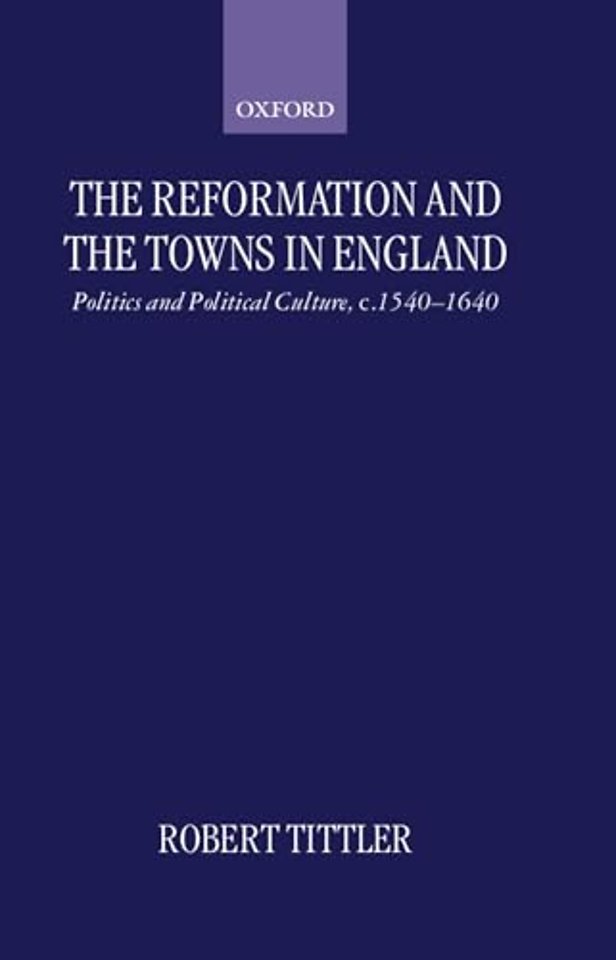
The Reformation and the Towns in England
Politics and Political Culture, c.1540-1640
Samenvatting
This analysis of the secular impact of the Reformation examines the changes within English towns over the period c.1540-1640. All over England wholesale shifts of urban land and resources, coupled with increased statutory responsibilities, allowed a surprising number of towns to strengthen their financial and political positions. The Reformation had already begun to destroy much of the doctrine-based political culture which traditionally sustained provincial governments. As a result, the ruling elites in many towns not only extended their holdings and acquired greater autonomy; they also gained much greater institutional authority over their inhabitants - part of a growing movement away from communal values towards rule by oligarchy. These elites sought to legitimize their new authority by various means: civic portraiture and regalia, the building of town-halls, the writing of local histories, and the creation of new forms of worship. An altered civic ethos emerged, marking a significant new phase in urban history.
Specificaties
Net verschenen
Rubrieken
- aanbestedingsrecht
- aansprakelijkheids- en verzekeringsrecht
- accountancy
- algemeen juridisch
- arbeidsrecht
- bank- en effectenrecht
- bestuursrecht
- bouwrecht
- burgerlijk recht en procesrecht
- europees-internationaal recht
- fiscaal recht
- gezondheidsrecht
- insolventierecht
- intellectuele eigendom en ict-recht
- management
- mens en maatschappij
- milieu- en omgevingsrecht
- notarieel recht
- ondernemingsrecht
- pensioenrecht
- personen- en familierecht
- sociale zekerheidsrecht
- staatsrecht
- strafrecht en criminologie
- vastgoed- en huurrecht
- vreemdelingenrecht