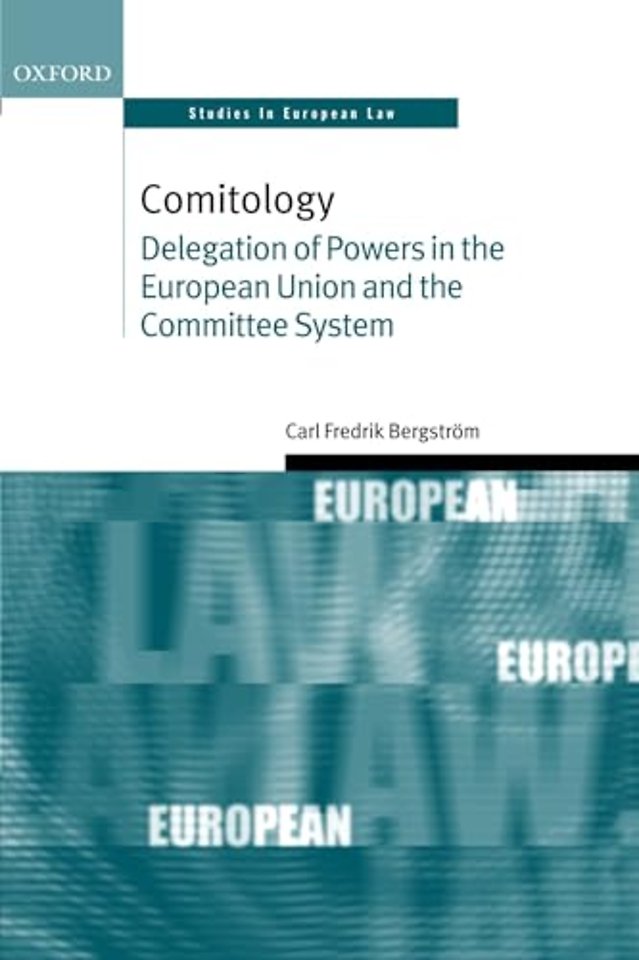
Comitology
Delegation of Powers in the European Union and the Committee System
Samenvatting
In almost all fields of cooperation that are covered by the EC Treaty, the formal competence to adopt legislation has been assigned to the Council (which must normally collaborate with the European Parliament), and in order to separate powers, the formal competence to prepare the necessary proposals (the right to initiate legislation), has been assigned to the European Commission. Over the years, however, it has become clear that the reality is far more complex. This book examines the fact that the Council is now passing an increasing part of the responsibility for adopting legislation to the Commission, subject to the requirement that it has to collaborate with a vast number of committees that consist of representatives of the various national administrations. This is known as comitology.
Comitology provides the Council and the national governments with a mechanism for controlling the Commission, and so comitology is often thought to manifest a conflict of interests. Bergström argues that, despite much support in principle for this assumption; in practice, comitology does not give rise to the kinds of conflicts many expect or fear. He contends that in fact it appears to be a fruitful cooperation between the national administrations and the Commission. Against this background, Bergström explains how and why comitology has developed, explores the nature of comitology and examines its present and future place in the legal order of the European Union.
Specificaties
Anderen die dit kochten, kochten ook
-
 Jan Rotmans€ 30,00
 -
Martin Visser€ 24,90
-
Bob Hardus€ 22,99
-
Philip J. Idenburg€ 29,95
-
Jitske Kramer€ 27,50
-
Gert Biesta€ 13,99



Net verschenen
Rubrieken
- aanbestedingsrecht
- aansprakelijkheids- en verzekeringsrecht
- accountancy
- algemeen juridisch
- arbeidsrecht
- bank- en effectenrecht
- bestuursrecht
- bouwrecht
- burgerlijk recht en procesrecht
- europees-internationaal recht
- fiscaal recht
- gezondheidsrecht
- insolventierecht
- intellectuele eigendom en ict-recht
- management
- mens en maatschappij
- milieu- en omgevingsrecht
- notarieel recht
- ondernemingsrecht
- pensioenrecht
- personen- en familierecht
- sociale zekerheidsrecht
- staatsrecht
- strafrecht en criminologie
- vastgoed- en huurrecht
- vreemdelingenrecht