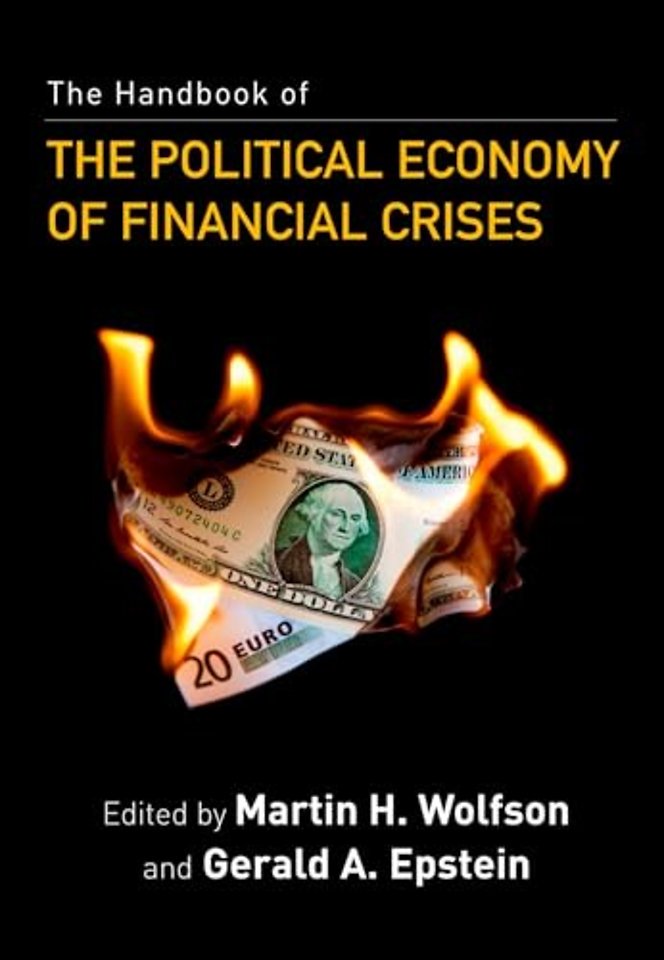
The Handbook of the Political Economy of Financial Crises
Samenvatting
The Great Financial Crisis that began in 2007-2008 reminds us with devastating force that financial instability and crises are endemic to capitalist economies that lack powerful and dynamically changing financial regulations that can keep the powerful forces of leverage and credit within sustainable bounds. Economists from Marx to Keynes, and Minsky to Kindleberger have well understood this profoundly important fact, yet the dominant mainstream economics of "rational expectations", "efficient markets" and "laissez-faire" that rationalized widespread financial liberalization and still dominates the economics profession has gotten it, literally, "dead wrong". This Handbook of The Political Economy of Financial Crises describes the theoretical, institutional, and historical factors that can help us understand the forces that create financial crises - with an emphasis on the crisis of 2007- 2008 - and the strengths and weaknesses of varying theoretical perspectives and policy approaches that have tried to comprehend and limit these financial tsunamis.
Specificaties
Net verschenen
Rubrieken
- aanbestedingsrecht
- aansprakelijkheids- en verzekeringsrecht
- accountancy
- algemeen juridisch
- arbeidsrecht
- bank- en effectenrecht
- bestuursrecht
- bouwrecht
- burgerlijk recht en procesrecht
- europees-internationaal recht
- fiscaal recht
- gezondheidsrecht
- insolventierecht
- intellectuele eigendom en ict-recht
- management
- mens en maatschappij
- milieu- en omgevingsrecht
- notarieel recht
- ondernemingsrecht
- pensioenrecht
- personen- en familierecht
- sociale zekerheidsrecht
- staatsrecht
- strafrecht en criminologie
- vastgoed- en huurrecht
- vreemdelingenrecht