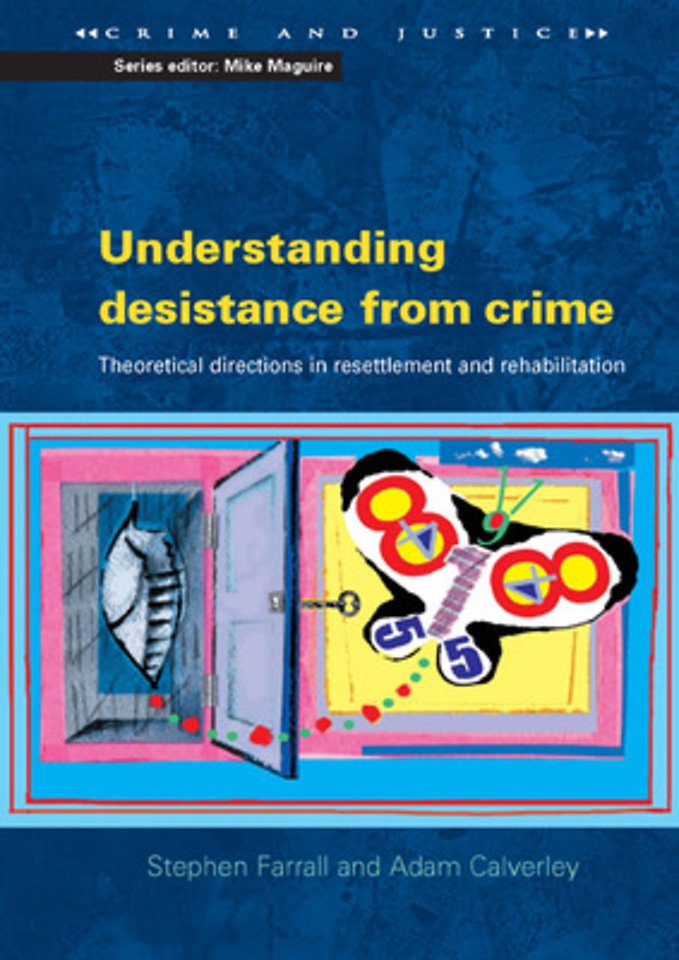
Understanding Desistance from Crime
Samenvatting
Why do people stop offending?What are the processes they undergo in stopping?What can be done to help more people who have offended put their pasts behind them?The growth of interest in why people stop offending and how they are resettled following punishment has been remarkable. Once a marginal topic in criminology, it is now a central topic of research and theorising amongst those studying criminal careers.
This book is both an introduction to research on desistance, and the report on a follow-up of two hundred probationers sentenced to supervision in the late 1990s. The reader is introduced to some of the wider issues and debates surrounding desistance via a consideration of the criminal careers of a group of ex-offenders. This lively engagement with both data and theoretical matters makes the book a useful tool for both academics and students.
The book will appeal to undergraduates, postgraduates and academics studying criminology, criminal justice, sociology, social work, social policy and psychology, as well as trainee probation officers.
Specificaties
Inhoudsopgave
Net verschenen
Rubrieken
- aanbestedingsrecht
- aansprakelijkheids- en verzekeringsrecht
- accountancy
- algemeen juridisch
- arbeidsrecht
- bank- en effectenrecht
- bestuursrecht
- bouwrecht
- burgerlijk recht en procesrecht
- europees-internationaal recht
- fiscaal recht
- gezondheidsrecht
- insolventierecht
- intellectuele eigendom en ict-recht
- management
- mens en maatschappij
- milieu- en omgevingsrecht
- notarieel recht
- ondernemingsrecht
- pensioenrecht
- personen- en familierecht
- sociale zekerheidsrecht
- staatsrecht
- strafrecht en criminologie
- vastgoed- en huurrecht
- vreemdelingenrecht