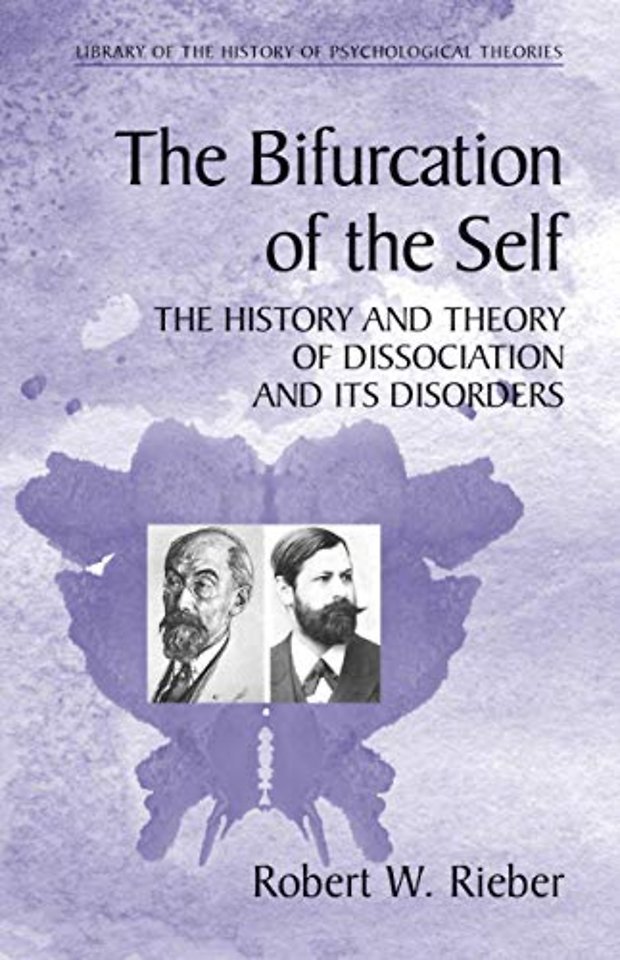
The Bifurcation of the Self
The History and Theory of Dissociation and Its Disorders
Samenvatting
For more than a hundred years, dissociative states, sometimes referred to as multiple personality disorder, have fascinated the public as well as scientists. The precise nature of this disorder is a controversial one, dividing clinicians, theorists, and researchers. Challenging the conventional wisdom on all sides, Robert Rieber’s Bifurcation of the Self traces the clinical and social history of dissociation in a provocative examination of this widely debated phenomenon.
At the core of this history is a trio of related evolutions—hypnosis, concepts of identity, and dissociation—beginning with nineteenth-century "hysterics" and culminating in the modern boom in Dissociative Identity Disorder (DID) diagnoses and the parallel rise in childhood abuse/repressed memory cases. Rieber does not argue the non-existence of DID; rather he asserts that it is a rare disorder exaggerated by dissociation advocates and exploited by the media. In doing so, he takes on some of the most difficult questions in the field:
- How crucial is memory to a person’s identity?
- Can two or more autonomous personalities actually exist in the same body?
- If trauma causes dissociation, why aren’t there more DID cases?
- Why are DID cases prevalent in some eras but not in others?
- Does dissociative disorder belong in the DSM?
The book is rigorously illustrated with two centuries’ worth of famous cases including Christine Beauchamp, Ansel Bourne, Eve Black/Eve White, and most notably the woman known as "Sybil", whose story is covered in depth with newly revealed manuscripts. And Rieber reviews the current state of DID-related controversy, from the professionals who feel that the condition is underreported to those who consider it a form of malingering, so that readers may draw their own conclusions.
Specificaties
Inhoudsopgave
Net verschenen
Rubrieken
- aanbestedingsrecht
- aansprakelijkheids- en verzekeringsrecht
- accountancy
- algemeen juridisch
- arbeidsrecht
- bank- en effectenrecht
- bestuursrecht
- bouwrecht
- burgerlijk recht en procesrecht
- europees-internationaal recht
- fiscaal recht
- gezondheidsrecht
- insolventierecht
- intellectuele eigendom en ict-recht
- management
- mens en maatschappij
- milieu- en omgevingsrecht
- notarieel recht
- ondernemingsrecht
- pensioenrecht
- personen- en familierecht
- sociale zekerheidsrecht
- staatsrecht
- strafrecht en criminologie
- vastgoed- en huurrecht
- vreemdelingenrecht