Bhupendra G Prajapati,
Bhupendra G. Prajapati,
Bhupendra Prajapati,
Dinesh Kumar Chellappan,
Prakash Kendre
e.a.
Elsevier Science
e druk, 2023
9780443132056
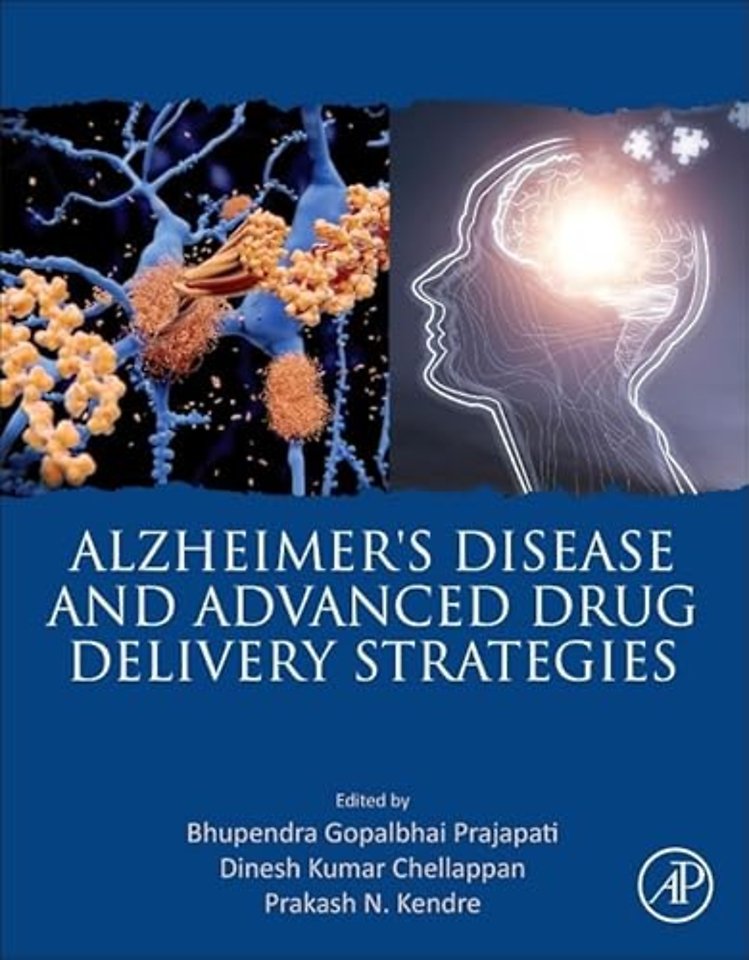
Alzheimer's Disease and Advanced Drug Delivery Strategies
Specificaties
Paperback, blz.
|
Engels
Elsevier Science |
e druk, 2023
ISBN13: 9780443132056
Rubricering
Juridisch
:
Levertijd ongeveer 9 werkdagen
Gratis verzonden
Samenvatting
Alzheimer's Disease and Advanced Drug Delivery Strategies compiles under a single volume the most recent advances in drug delivery to the brain as related to AD treatment. The book's editors recruited scientists from around the world to produce high quality chapters covering not only nanotechnological approaches, but also microsphere, niosomes, and liposomes. Among the topics covered are synthetic molecules, nobiletin, nose to brain delivery, natural biomaterials, cationic nanoformulations, dendrimers, microbubbles, and more. This book represents a complete reference for academic and corporate pharma researchers investigating targeted drug delivery to the brain.
Specificaties
Inhoudsopgave
Contributors<br>About the editors<br>Preface <br>Acknowledgments<br><br>1. Etiology, pathogenesis of Alzheimer’s disease and amyloid beta hypothesis<br>SARIKA MARUTI KAMBLE, KALPESH RAMDAS PATIL AND AMAN B. UPAGANLAWAR<br><br>1. Introduction <br>2. Etiology of Alzheimer’s disease <br>3. Pathogenesis of Alzheimer’s disease <br>4. Diagnosis of AD <br>5. Amyloid beta protein hypothesis <br>6. Consequences of amyloid beta (Ab) formation <br>7. Genetic factors responsible for the Alzheimer’s disease <br>References <br><br>2. Neuroinflammation in Alzheimer’s disease<br>MOHIT AGRAWAL, MANMOHAN SINGHAL, BHUPENDRA GOPALBHAI PRAJAPATI, HEMA CHAUDHARY, YASH JASORIA, BHAVNA KUMAR, MANDEEP KUMAR ARORA AND JAGANNATH SAHOO<br><br>1. Introduction<br>2. History of neuroinflammation in AD <br>3. The concept of neuroinflammation in AD <br>4. Neuroinflammation: Causes and consequences of Alzheimer’s disease <br>5. BBB integrity and neuroinflammation <br>6. Role of cellular players <br>7. Role of mediators and modulators in neuroinflammation <br>8. Role of intracellular signaling pathway <br>9. Genetic studies <br>10. Imaging of neuroinflammation in AD <br>11. Possible intervention of neuroinflammation in AD <br>12. Factors associated with neuroinflammation <br>13. Development of therapeutic potential <br>14. Conclusion <br>References <br><br>3. Recent updates in chemistry of Alzheimer’s: Synthetic molecules<br>DEEPAK K. LOKWANI, SANGITA R. CHAVAN, VINOD G. UGALE, PRAKASH N. KENDRE AND SHIRISH P. JAIN<br><br>1. Introduction<br>2. MTDL approach associated with following scaffold or structures<br>3. Conclusion<br>References<br><br>4. Blood brain barrier and its significance in drug delivery to brain in Alzheimer disease<br>DHWANI RANA, SAGAR SALAVE, DIGNESH KHUNT AND DERAJRAM BENIVAL<br><br>1. Introduction <br>2. Blood brain barrier <br>3. Current treatments for AD <br>4. Emerging therapies for AD <br>5. Nanotherapeutics for AD <br>6. Other approaches for crossing BBB <br>7. Conclusion and future perspective <br>References<br><br>5. Nose to brain delivery for the treatment of Alzheimer’s disease<br>DIGNESH KHUNT, SAGAR SALAVE, DHWANI RANA, DERAJRAM BENIVAL, BHAVIN GAYAKVAD AND BHUPENDRA GOPALBHAI PRAJAPATI<br><br>1. Introduction <br>2. The nose-to-brain (N2B) pathway <br>3. AZD and current treament <br>4. Development of N2B delivery for AZD <br>5. Approaches to modulation of N2B delivery in AZD <br>6. Advantages of N2B delivery for AZD <br>7. Conclusion and future directions <br>References <br><br>6. Amyloid cascade hypothesis, tau synthesis, and role of oxidative stress in AD<br>JIGAR VYAS, NENSI RAYTTHATHA AND BHUPENDRA GOPALBHAI PRAJAPATI<br><br>1. Introduction to the amyloid (amyloid-beta peptide) <br>2. Biogenesis of amyloid-beta <br>3. Amyloid cascade hypothesis (ACH) <br>4. Pros and cons of the ACH <br>5. Therapeutic targeting for amyloid-beta in Alzheimer’s pathogenesis <br>6. Tau protein <br>7. Role of oxidative stress in AD <br>8. Corelation of amyloid B protein, tau process, and oxidative stress in AD <br>References <br><br>7. New biologicals and biomaterials in the therapy of Alzheimer’s disease<br>VIPUL PRAJAPATI, SHRADDHA SHINDE, PRINCY SHRIVASTAV AND BHUPENDRA GOPALBHAI PRAJAPATI<br><br>1. Introduction<br>2. Potential target for Alzheimer’s disease therapy<br>3. Biologicals used in therapy of Alzheimer’s disease<br>4. Biomaterials used in therapy of Alzheimer’s disease<br>5. Nanoparticles in the therapy of Alzheimer’s disease <br>6. Metal nanoparticles for Alzheimer’s disease treatment<br>7. Other NPs<br>8. Systems based on biomaterials for mass production of therapeutic cells<br>9. Challenges of biomaterial-based drug delivery approach in Alzheimer’s disease<br>10. Conclusion<br>References<br><br>8. Roles of nano medicine in diagnosis of Alzheimer’s disease<br>MONA AMIT KAUSHAL, NIKITA A. PATEL, GAURAVI XAVIER AND BHUPENDRA GOPALBHAI PRAJAPATI<br><br>1. Introduction<br>2. Diagnostic tools for AD<br>3. Future perspective of nano medicine and their effectiveness<br>4. Conclusion and limitations<br>References<br><br>9. Nanotechnology-based delivery for CRISPR-Cas 9 cargo in Alzheimer’s disease<br>SHRUTI RAWAL, AKRUTI KHODAKIYA AND BHUPENDRA GOPALBHAI PRAJAPATI<br><br>1. Introduction <br>2. Genome editing by CRISPR-Cas system<br>3. Genome editing targets and scope of CRISPR-Cas 9 technology in Alzheimer’s disease<br>4. Barriers and challenges to CRISPR-Cas 9 delivery <br>5. Synergizing nano and CRISPR: Nanocarriermediated delivery <br>6. Conclusions and prospects <br>References <br><br>10. Liposomes as carrier for drug delivery in Alzheimer’s disease<br>RAVISH J. PATEL, AMIT A. PATEL, NIDHI TRIVEDI, VIDHI PANDYA, AMIT ALEXANDER, VIRAL PATEL, BHUPENDRA GOPALBHAI PRAJAPATI AND PUNIT B. PAREJIYA<br><br>1. Introduction<br>2. Liposomes as nanocarrier system for drug delivery <br>3. Liposome preparation materials and process <br>4. Modification of liposomes<br>5. Liposome’s potential as drug delivery for AD<br>6. Conclusion<br>Acknowledgment<br>References<br><br>11. PLGA mediated drug delivery for Alzheimer’s disease<br>TOSHA PANDYA, MANGESH KULKARNI, SHEETAL ACHARYA AND BHUPENDRA GOPALBHAI PRAJAPATI<br><br>1. Introduction<br>2. PLGA in Alzheimer’s disease<br>3. Applications of PLGA in treatment of AD<br>4. Animal models for testing AD targeted PLGA formulations<br>5. Patents<br>6. Conclusion and future prospective<br>References<br><br>12. Regulatory and ethical concerns in the use of nanomaterials<br>NAKSHEE MEHTA, SRISHTI SHETTY, BHUPENDRA GOPALBHAI PRAJAPATI AND SARITHA SHETTY<br><br>1. Introduction<br>2. Nanomaterials<br>3. Existing regulations on nanomaterials<br>4. Regulatory concerns involved with the use of nanomaterials<br>5. Nanomaterials in formulations and drug delivery systems to treat Alzheimer (AD)<br>6. Ethical concerns involved with the use of nanomaterials<br>7. Future challenges and policies<br>References<br><br>13. Symptoms and conventional treatments of Alzheimer’s disease<br>MEHUL R. CHORAWALA, AAYUSHI C. SHAH, AANSHI J. PANDYA, NIRJARI R. KOTHARI AND BHUPENDRA GOPALBHAI PRAJAPATI<br><br>1. Introduction<br>2. Recent neuropathological aspects<br>3. Clinical presentation<br>4. Conventional therapeutic approaches<br>5. Hardships faced by caregivers<br>6. Need of treatments although AD is incurable<br>7. Recent advances in AD treatments<br>8. Conclusion and outlooks<br>References<br><br>14. Dendrimers in the management of Alzheimer’s disease<br>CHETNA MODI, BHUPENDRA GOPALBHAI PRAJAPATI, SUDARSHAN SINGH, ADITYA SINGH AND SHUBHRAT MAHESHWARI<br><br>1. Introduction<br>2. Synthesis method of dendrimers<br>3. Types of dendrimers<br>4. Method of drug loading in dendrimers<br>5. Properties of dendrimers<br>6. Characterization of dendrimers<br>7. Animal models: In vitro and in vivo studies<br>8. Applications in treatment of Alzheimer’s disease<br>9. Clinical trials <br>10. Patents <br>11. Conclusion <br>References <br><br>15. Precision medicines for the treatment of Alzheimer’s disease<br>SANGAMESHWAR B. KANTHALE, PRAKASH N. KENDRE, SOMNATH K. VIBHUTE, SHIRISH P. JAIN AND SHRADHA S. TIWARI<br><br>1. Introduction <br>2. Background <br>3. Comprehensive risk determination <br>4. Intervention design <br>5. Methodology <br>6. System biology method for AD research <br>7. Role of genetics in precision medicine <br>8. Nanoparticles as precision medicines in AD <br>9. Discovery, development, and validation of pathophysiological biomarker candidates in AD <br>10. Challenges in AD risk reduction <br>11. Next step and future directions <br>12. Conclusion <br>References <br><br>16. Nanoformulations targeting Alzheimer’s disease<br>DEVESH KAPOOR, DEEPAK SHARMA, YASHWANT PATHAK, BHUPENDRA GOPALBHAI PRAJAPATI AND BHAVIK SATANI<br><br>1. Introduction <br>2. Overview of BBB and B-CSFB <br>3. Obstacles in drug delivery to BBB/B-CSF in ADs <br>4. Nanocarrier based nanoformulations to combat AD’s <br>5. Carbon dots (CDs) <br>6. Nanodiamonds (NDs) <br>7. Fullerene <br>8. Nanotubes <br>9. Conclusion <br>References<br><br>17. Lipid nanoparticles in targeting Alzheimer’s disease<br>PRAKASH N. KENDRE, AJINKYA POTE, RASIKA BHALKE, BHUPENDRA GOPALBHAI PRAJAPATI, SHIRISH P. JAIN AND DEVESH KAPOOR<br><br>1. Introduction <br>2. Different types of LNs used in AD<br>3. Lipids nanoparticles (LNs) and AD <br>4. Limitations of LNs in CNS diseases<br>5. Regulatory considerations of LNs <br>6. Future prospective and conclusion <br>References<br><br>18. Novel therapeutic approaches for targeting Alzheimer’s disease<br>AKRUTI KHODAKIYA, SUNITA CHAUDHARY, ANKIT CHAUDHARY AND BHUPENDRA GOPALBHAI PRAJAPATI<br><br>1. Alzheimer’s disease: Scope of new therapeutic approaches<br>2. FDA approved drugs for Alzheimer’s disease<br>3. Novel therapeutic approaches<br>4. Conclusion and future perspectives<br>References<br><br>19. Micro and nanoemulsion as drug carriers in Alzheimer’s disease<br>AMI PATEL, HIMANSHU PALIWAL, KRUTIKA SAWANT AND BHUPENDRA GOPALBHAI PRAJAPATI<br><br>1. Introduction <br>2. Microemulsion and nanoemulsion formulation <br>3. Physicochemical characterization of formulations<br>4. Applications, current research and patent landscape of microemulsions and nanoemulsion<br>5. Pharmacokinetics and pharmacodynamic of developed NE/ME for AD <br>6. Conclusion and future perspectives <br>References<br><br>20. Targeted nanotechnology-based formulations<br>ANGELA CHINASA ANI, STEPHEN CHIJIOKE EMENCHETA, KOSARACHI JENNIFER ORAH, AMAN B. UPAGANLAWAR, BHUPENDRA GOPALBHAI PRAJAPATI, CHUKWUKA KANAYO ORANU AND CHUKWUEMEZUE PRAISES ONYEKWE<br><br>1. Introduction <br>2. Nanomaterials <br>3. Targeted nanotechnology-based formulations (TNbF) <br>4. Applications of targeted nanoformulations<br>5. Concerns in the design and application of nanoformulations <br>6. Clinical data<br>7. Prospects in the design of targeted nanoformulation<br>8. Conclusion<br>References<br><br>21. Drug delivery for Alzheimer’s disease using nanotechnology: Challenges and advancements<br>BINDIYA CHAUHAN, SHIVANI PATEL, BHUPENDRA GOPALBHAI PRAJAPATI AND SUDARSHAN SINGH<br><br>1. Introduction <br>2. Drug delivery strategies for Alzheimer diseases <br>3. Alzheimer’s disease clinical requirement and drug delivery challenges <br>4. Nanomedicine as future aspect in treatment of Alzheimer diseases <br>5. Nonmicellar based formulation <br>6. Dendrimers <br>7. Nanogels <br>8. Alzheimer diseases treatment with lipid-based nanoparticles <br>9. Metallic nanoparticles <br>10. Nanoparticulate-chelation-based Alzheimer diseases therapy <br>11. Nanomedicine theranostics formulations <br>12. Protein-coated nanoparticles <br>13. Antibody decorated nanoparticles <br>14. Novel biomarkers used in diagnosis of Alzheimer diseases <br>15. Conclusion and future perspective <br>References <br><br>22. Current trends and updates in the treatment of Alzheimer’s disease<br>NISHA H. PARIKH, PALAK K. PARIKH, HETANSH J. RAO, KASHISH SHAH, BHAVARTH P. DAVE AND BHUPENDRA GOPALBHAI PRAJAPATI<br><br>1. Introduction<br>2. Pathophysiology and multifactorial nature of AD <br>3. Current treatment approaches for AD <br>4. Potential therapeutic strategies for AD <br>5. Conclusion and perspective <br>References <br><br>23. Pharmacokinetics and pharmacodynamics of various novel formulations targeting Alzheimer’s disease<br>ASHWINI GAWADE, SATISH POLSHETTIWAR, HETAL HINGALAJIA, BHUPENDRA GOPALBHAI PRAJAPATI AND ADITYA SINGH<br><br>1. Introduction<br>2. Alzheimer’s disease<br>3. Currently available drug molecules for the management for AD<br>4. Treatments for AD in the CNS: Clinical pharmacokinetics and pharmacodynamics<br>5. Nanoparticle delivery system for the management of AD and their PK PD<br>6. Conclusion<br>References<br><br>24. Microbubbles-based drug delivery for antiAlzheimer’s drugs<br>MEENAKSHI PATEL, BHUPENDRA GOPALBHAI PRAJAPATI AND M.R. YADAV<br><br>1. Introduction<br>2. Ultrasound mediated microbubble therapy to overcome BBB for treating Alzheimer’s patients<br>3. Drug loaded lipid based microbubbles for AD<br>4. In vitro cell models of BBB for AD and microbubble-mediated drug delivery<br>5. Clinical trials of microbubble-based drug delivery for treatment of AD<br>6. Challenges and toxicity concerns of microbubble-based drug delivery for AD<br>7. Future aspects and conclusion<br>References<br><br>25. Neurotoxicity with the use of nanomaterials<br>SACHIN P. BORIKAR, SHIRISH P. JAIN, DEEPALI N. TAPRE, DEBARSHI KAR MAHAPATRA, ASAVARI V. MAHAJAN, DIPAK S. SONAWANE AND PRAKASH N. KENDRE<br><br>1. Introduction <br>2. Toxicity associated with nanomaterials <br>3. Brain as nanoparticles target <br>4. Properties of nanoparticles that influence toxicities <br>5. Mechanisms of neurotoxicity <br>6. Mitochondrial dysfunction due to nanoparticles <br>7. DNA damage due to nanoparticles <br>8. Endocrine dysfunction due to nanoparticles <br>9. Conclusion <br>References <br><br>26. Combinatorial therapy in Alzheimer’s disease<br>MAHENDRA GIRI, PRAKASH N. KENDRE, RASIKA BHALKE, VISHAL PANDE, KALYANI AUTADE AND RAJASHRI SUMBE<br><br>1. Introduction<br>2. Diagnostic criteria for Alzheimer’s disease <br>3. Combinatorial treatment strategies for Alzheimer’s disease<br>4. On-going clinical trialon AD <br>5. Summary <br>References <br><br>Index
Net verschenen
Rubrieken
- aanbestedingsrecht
- aansprakelijkheids- en verzekeringsrecht
- accountancy
- algemeen juridisch
- arbeidsrecht
- bank- en effectenrecht
- bestuursrecht
- bouwrecht
- burgerlijk recht en procesrecht
- europees-internationaal recht
- fiscaal recht
- gezondheidsrecht
- insolventierecht
- intellectuele eigendom en ict-recht
- management
- mens en maatschappij
- milieu- en omgevingsrecht
- notarieel recht
- ondernemingsrecht
- pensioenrecht
- personen- en familierecht
- sociale zekerheidsrecht
- staatsrecht
- strafrecht en criminologie
- vastgoed- en huurrecht
- vreemdelingenrecht