Aage R. Moller,
Berthold Langguth,
Goran Hajak,
Tobias Kleinjung,
Anthony Cacace
e.a.
Elsevier Science
e druk, 2007
9780444531674
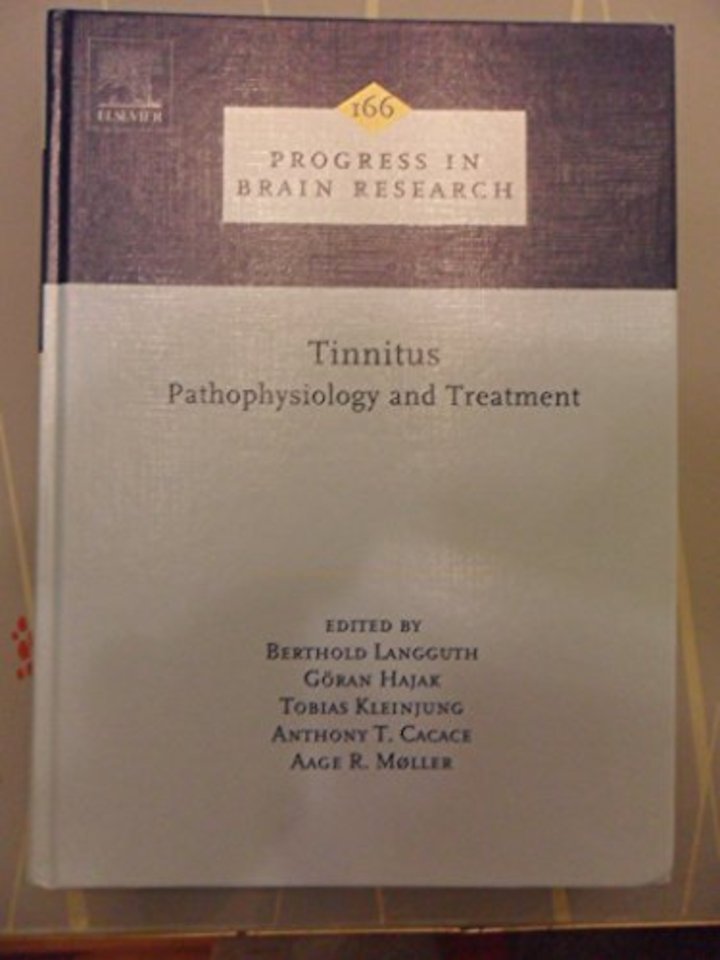
Tinnitus: Pathophysiology and Treatment
Specificaties
Gebonden, blz.
|
Engels
Elsevier Science |
e druk, 2007
ISBN13: 9780444531674
Rubricering
Juridisch
:
Onderdeel van serie
Progress in Brain Research
Levertijd ongeveer 9 werkdagen
Gratis verzonden
Samenvatting
Understanding tinnitus and treating patients with tinnitus must involve many disciplines of basic science and clinical practice. The book provides comprehensive coverage of a wide range of topics related to tinnitus including its pathophysiology, etiology and treatment. The chapters are written by researchers and clinicians who are active in the areas of basic science such as neurophysiology and neuroanatomy and in clinical specialties of psychology, psychiatry, audiology and otolaryngology.
Specificaties
Inhoudsopgave
Foreword<br>General introduction<br>Tinnitus: Presence and future<br>Consensus statements: <br><br>SECTION I PATHOPHYSIOLOGY<br>1. Genetics of chronic tinnitus<br>2. The role of neural plasticity in tinnitus<br>3. Pathophysiology of tinnitus<br>4. Applications of magnetic resonance spectroscopy to tinnitus research:<br>5. Abnormal FMRI activation in the auditory midbrain of people with tinnitus<br>6. Functional imaging of chronic tinnitus: the use of positron emission tomography<br>7. The sound of silence - decrypting the neural code of tinnitus<br>8. Tinnitus and Pain ? similarities and differences<br><br>SECTION II ANIMAL MODELS<br>1. The role of the dorsal cochlear nucleus<br>2. Neural mechanisms underlying somatic tinnitus<br>3. Behavioral tests for the detection of tinnitus in animals<br>4. Role of cochlear NMDA receptors in salicylate induced tinnitus<br><br>SECTION III EPIDEMIOLOGY<br>1. Tinnitus, hyperacusis, sound annoyance and loudness hypersensitivity in children<br>2. Classification and epidemiology of tinnitus<br><br>SECTION IV DIAGNOSIS AND EVALUATION OF TINNITUS<br>1.Clinical diagnosis of tinnitus<br>2. Evoked potentials in diagnosis of tinnitus.<br>3. Myofascial trigger points: another way of modulating tinnitus<br>4. Can somatic testing identify subjects whose tinnitus can be suppressed by specific treatments?<br>5. Assessment of temporomandibular joint disorders and cervical muscular dysbalance in tinnitus patients<br>6. Tinnitus severity, depression and personality<br>7. Insomnia in Tinnitus patients<br><br>SECTION V TREATMENT<br>Tinnitus treatment - State of the Art<br>A. Drug treatment of tinnitus<br>1. Pharmacological treatment of tinnitus<br>2. Intratympanic drugs for the treatment of tinnitus<br>3. Accamprosate <br>4. Zinc <br>5. Aprazolam<br>6. Gabapentin<br>7. Misoprostol<br>8. Botox<br>9. Antioxidants, metals, vitamins and herbal remedies in tinnitus therapy<br>B. Hearing Devices<br>1. Hearing aids for the treatment of Tinnitus<br>2. Implantable Hearing aids for the treatment of Tinnitus<br>3. Cochlea Implants<br>C. Electrical and magnetic stimulation<br>1. TMS for treatment of chronic tinnitus - clinical effects<br>2. TMS for treatment of chronic tinnitus - neurobiological effects<br>3. Electrical brain stimulation for tinnitus<br>4. TENS for treatment of Tinnitus<br>D. Cognitive Behavioral Therapy<br>1. Tinitus Retraining Therapy<br>2. Auditory and visual attention process training for tinnitus treatment<br>3. An extinction training for tinnitus<br>4. Auditory discrimination therapy (adt) for tinnitus management: clinical trial<br>5. Neurofeedback for treating tinnitus<br><br>Section VI ASSESSMENTS OF TREATMENT RESULTS<br>1. Considerations for the design of clinical trials for tinnitus<br>2. Randomized, double blind studies<br>3. Tinnitus assessment instruments<br>
Net verschenen
Rubrieken
- aanbestedingsrecht
- aansprakelijkheids- en verzekeringsrecht
- accountancy
- algemeen juridisch
- arbeidsrecht
- bank- en effectenrecht
- bestuursrecht
- bouwrecht
- burgerlijk recht en procesrecht
- europees-internationaal recht
- fiscaal recht
- gezondheidsrecht
- insolventierecht
- intellectuele eigendom en ict-recht
- management
- mens en maatschappij
- milieu- en omgevingsrecht
- notarieel recht
- ondernemingsrecht
- pensioenrecht
- personen- en familierecht
- sociale zekerheidsrecht
- staatsrecht
- strafrecht en criminologie
- vastgoed- en huurrecht
- vreemdelingenrecht