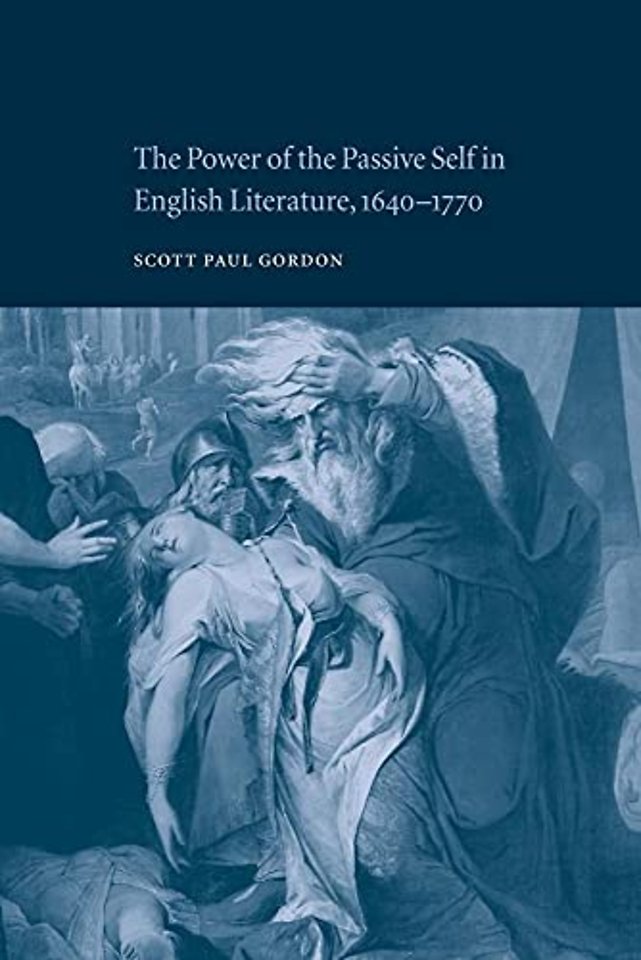
The Power of the Passive Self in English Literature, 1640–1770
Samenvatting
Challenging recent work that contends that seventeenth-century English discourses privilege the notion of a self-enclosed, self-sufficient individual, The Power of the Passive Self in English Literature recovers a counter-tradition that imagines selves as more passively prompted than actively choosing. This tradition - which Scott Paul Gordon locates in seventeenth-century religious discourse, in early eighteenth-century moral philosophy, in mid eighteenth-century acting theory, and in the emergent novel - resists autonomy and defers agency from the individual to an external 'prompter'. Gordon argues that the trope of passivity aims to guarantee a disinterested self in a culture that was increasingly convinced that every deliberate action involves calculating one's own interest. Gordon traces the origins of such ideas from their roots in the non-conformist religious tradition to their flowering in one of the central texts of eighteenth-century literature, Samuel Richardson's Clarissa.
Specificaties
Inhoudsopgave
Net verschenen
Rubrieken
- aanbestedingsrecht
- aansprakelijkheids- en verzekeringsrecht
- accountancy
- algemeen juridisch
- arbeidsrecht
- bank- en effectenrecht
- bestuursrecht
- bouwrecht
- burgerlijk recht en procesrecht
- europees-internationaal recht
- fiscaal recht
- gezondheidsrecht
- insolventierecht
- intellectuele eigendom en ict-recht
- management
- mens en maatschappij
- milieu- en omgevingsrecht
- notarieel recht
- ondernemingsrecht
- pensioenrecht
- personen- en familierecht
- sociale zekerheidsrecht
- staatsrecht
- strafrecht en criminologie
- vastgoed- en huurrecht
- vreemdelingenrecht