Voice and the Victorian Storyteller
Samenvatting
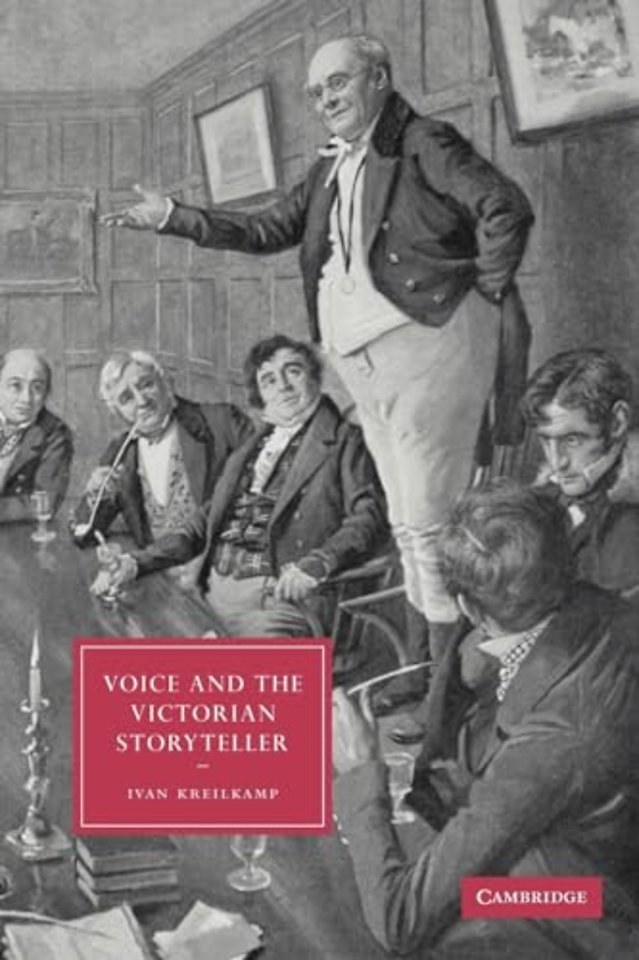
The nineteenth-century novel has always been regarded as a literary form pre-eminently occupied with the written word, but Ivan Kreilkamp shows it was deeply marked by and engaged with vocal performances and the preservation and representation of speech. He offers a detailed account of the many ways Victorian literature and culture represented the human voice, from political speeches, governesses' tales, shorthand manuals, and staged authorial performances in the early- and mid-century, to mechanically reproducible voice at the end of the century. Through readings of Charlotte Brontë, Browning, Carlyle, Conrad, Dickens, Disraeli and Gaskell, Kreilkamp re-evaluates critical assumptions about the cultural meanings of storytelling, and shows that the figure of the oral storyteller, rather than disappearing among readers' preference for printed texts, persisted as a character and a function within the novel. This 2005 study will change the way readers consider the Victorian novel and its many ways of telling stories.
Specificaties
Inhoudsopgave
Net verschenen
Rubrieken
- aanbestedingsrecht
- aansprakelijkheids- en verzekeringsrecht
- accountancy
- algemeen juridisch
- arbeidsrecht
- bank- en effectenrecht
- bestuursrecht
- bouwrecht
- burgerlijk recht en procesrecht
- europees-internationaal recht
- fiscaal recht
- gezondheidsrecht
- insolventierecht
- intellectuele eigendom en ict-recht
- management
- mens en maatschappij
- milieu- en omgevingsrecht
- notarieel recht
- ondernemingsrecht
- pensioenrecht
- personen- en familierecht
- sociale zekerheidsrecht
- staatsrecht
- strafrecht en criminologie
- vastgoed- en huurrecht
- vreemdelingenrecht