Bilingualism in the Spanish-Speaking World
Linguistic and Cognitive Perspectives
Samenvatting
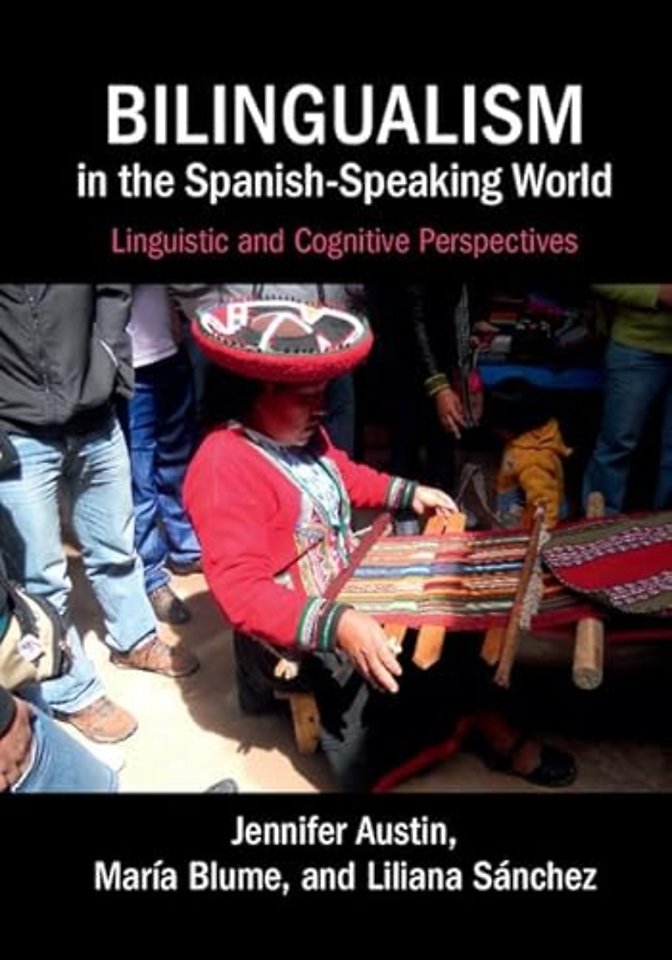
Bilingualism has given rise to significant changes in Spanish-speaking countries. In the US, the increasing importance of Spanish has engendered an English-only movement; in Peru, contact between Spanish and Quechua has brought about language change; and in Iberia, speakers of Basque, Galician and Catalan have made their languages a compulsory part of school curricula and local government. This book provides an introduction to bilingualism in the Spanish-speaking world, looking at topics such as language contact, bilingual societies, bilingualism in schools, code-switching, language transfer, the emergence of new varieties of Spanish, and language choice - and how all of these phenomena affect the linguistic and cognitive development of the speaker. Using examples and case studies drawn primarily from Spanish/English bilinguals in the US, Spanish/Quechua bilinguals in Peru and Spanish/Basque bilinguals in Spain, it provides diverse perspectives on the experience of being bilingual in distinct cultural, political and socioeconomic contexts.
Specificaties
Inhoudsopgave
Net verschenen
Rubrieken
- aanbestedingsrecht
- aansprakelijkheids- en verzekeringsrecht
- accountancy
- algemeen juridisch
- arbeidsrecht
- bank- en effectenrecht
- bestuursrecht
- bouwrecht
- burgerlijk recht en procesrecht
- europees-internationaal recht
- fiscaal recht
- gezondheidsrecht
- insolventierecht
- intellectuele eigendom en ict-recht
- management
- mens en maatschappij
- milieu- en omgevingsrecht
- notarieel recht
- ondernemingsrecht
- pensioenrecht
- personen- en familierecht
- sociale zekerheidsrecht
- staatsrecht
- strafrecht en criminologie
- vastgoed- en huurrecht
- vreemdelingenrecht