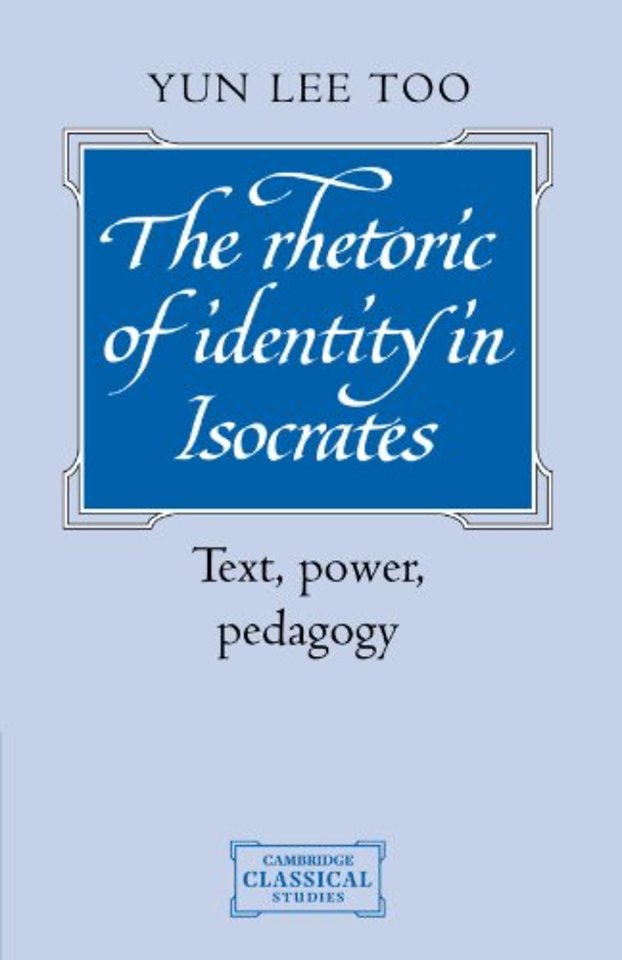
The Rhetoric of Identity in Isocrates
Text, Power, Pedagogy
Samenvatting
The Rhetoric of Identity in Isocrates offers a sustained interpretation of the Isocratean corpus, showing that rhetoric is a language which the author uses to create a political identity for himself in fourth-century Athens. Dr Too examines how Isocrates' discourse addresses anxieties surrounding the written word in a democratic culture which values the spoken word as the privileged means of political expression. Isocrates makes written culture the basis for a revisionary Athenian politics and of a rhetoric of Athenian hegemony. In addition, Isocrates takes issue with the popular image of the professional teacher in the age of the sophist, combating the negative stereotype of the greedy sophist who corrupts the city's youth in his portrait of himself as teacher of rhetoric. He daringly reinterprets the pedagogue as a figure who produces a discourse which articulates political authority.
Specificaties
Inhoudsopgave
Net verschenen
Rubrieken
- aanbestedingsrecht
- aansprakelijkheids- en verzekeringsrecht
- accountancy
- algemeen juridisch
- arbeidsrecht
- bank- en effectenrecht
- bestuursrecht
- bouwrecht
- burgerlijk recht en procesrecht
- europees-internationaal recht
- fiscaal recht
- gezondheidsrecht
- insolventierecht
- intellectuele eigendom en ict-recht
- management
- mens en maatschappij
- milieu- en omgevingsrecht
- notarieel recht
- ondernemingsrecht
- pensioenrecht
- personen- en familierecht
- sociale zekerheidsrecht
- staatsrecht
- strafrecht en criminologie
- vastgoed- en huurrecht
- vreemdelingenrecht