Knowledge, Discovery and Imagination in Early Modern Europe
The Rise of Aesthetic Rationalism
Samenvatting
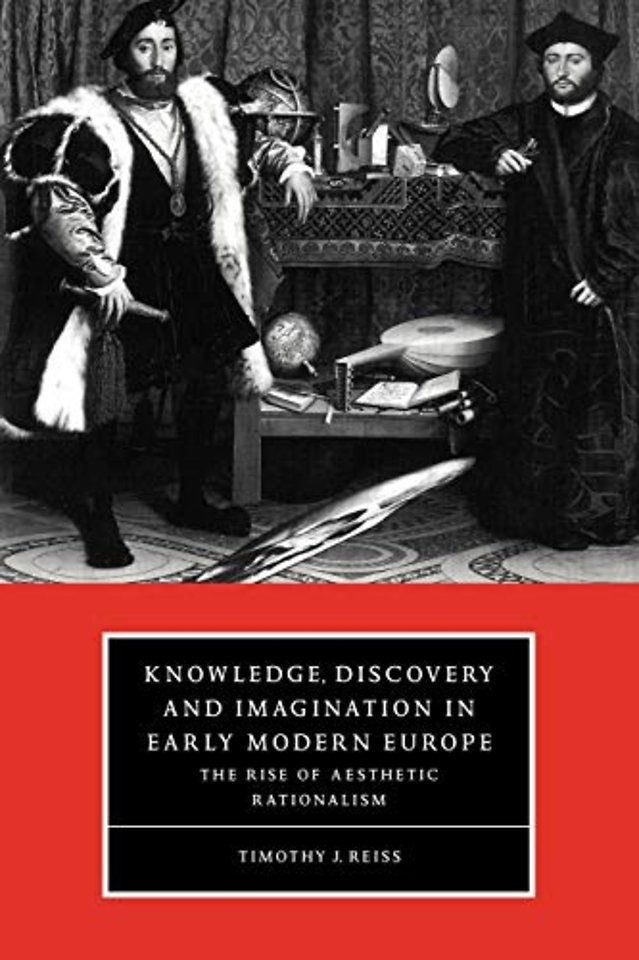
Recent explanations of changes in early modern European thought speak much of a move from orality and emphasis on language to print culture and a 'spatial' way of thinking. Timothy J. Reiss offers a more complex explanation for the massive changes that occurred. He describes how by the late fifteenth century the language arts of the trivium had come to seem useful only for communication, teaching and public debate, and how humanists turned to the mathematical arts of the quadrivium - including music - to enable new means and methods of discovery. Reiss goes on to argue that the new 'mathematical' ideal formed the basis of wide sociocultural renewal; he analyses Northern vernacular grammars, examines the work of French and Italian mathematicians, musicians and philosophers including Descartes, and censures such modern commonplaces as the supposed impact of print and 'spatial' thinking. He ends by exploring the broad impact of this 'mathematisation' of the Western imagination.
Specificaties
Inhoudsopgave
Net verschenen
Rubrieken
- aanbestedingsrecht
- aansprakelijkheids- en verzekeringsrecht
- accountancy
- algemeen juridisch
- arbeidsrecht
- bank- en effectenrecht
- bestuursrecht
- bouwrecht
- burgerlijk recht en procesrecht
- europees-internationaal recht
- fiscaal recht
- gezondheidsrecht
- insolventierecht
- intellectuele eigendom en ict-recht
- management
- mens en maatschappij
- milieu- en omgevingsrecht
- notarieel recht
- ondernemingsrecht
- pensioenrecht
- personen- en familierecht
- sociale zekerheidsrecht
- staatsrecht
- strafrecht en criminologie
- vastgoed- en huurrecht
- vreemdelingenrecht