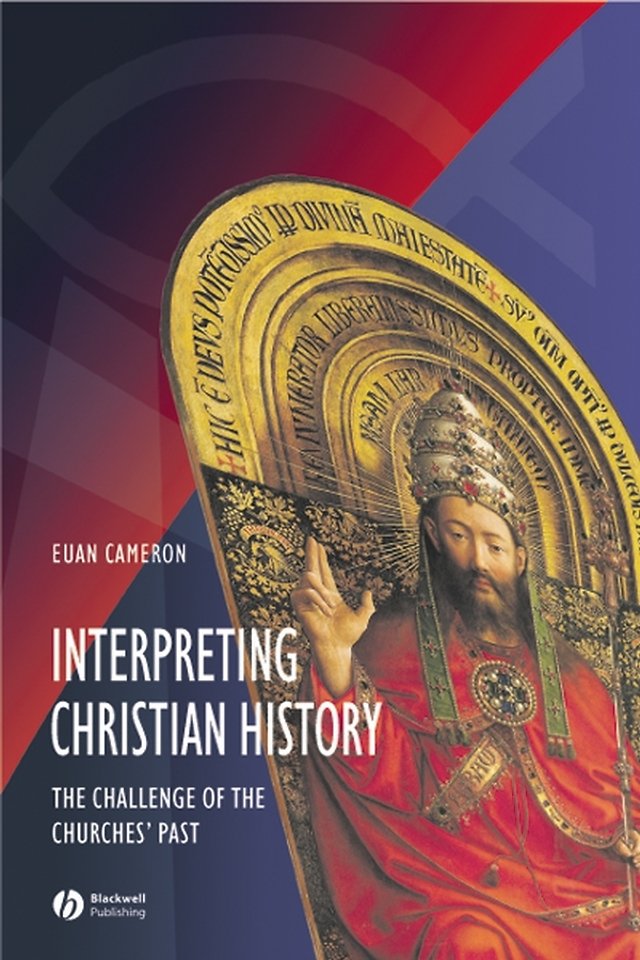
Interpreting Christian History

The Challenge of the Churches′ Past

Specificaties
Gebonden, 308 blz. | Engels
John Wiley & Sons | e druk, 2005
ISBN13: 9780631215226
Rubricering
Juridisch :
John Wiley & Sons e druk, 2005 9780631215226
Levertijd ongeveer 9 werkdagen
Gratis verzonden

Samenvatting

This book explores the theological lessons to be learnt from 2000 years of Christian Church history.

An exploration of the theological lessons to be learnt from the difficult history of the Christian churches over the past 2,000 years
Opens with an introductory essay on the whole of Church history, making the book suitable for lay readers as well as students
Combines historical, historiographical and theological analysis
Reunites the disciplines of theology and Church history
Concludes that we can only ever perceive a facet of Christianity given our historical and cultural conditioning
Written by a distinguished Church historian.

Specificaties

ISBN13:9780631215226
Taal:Engels
Bindwijze:gebonden
Aantal pagina's:308

Inhoudsopgave

Preface.
<p>Introduction.</p>
<p>Diversities of Belief, Practice, and Priorities.</p>
<p>History and Diversity.</p>
<p>Steering Between Two Extremes.</p>
<p>The Compass and Structure of the Book.</p>
<p>History and Theory.</p>
<p>1 The Unfolding of Christian History: a Sketch.</p>
<p>Christianity: a Jewish Heresy Spreads Across the Eastern Empire.</p>
<p>Greek and Latin, East and West.</p>
<p>Persecution, Legal Establishment, Empowerment, and Retreat.</p>
<p>The Eastern Church, the Spread of Islam, and Expansion Northwards.</p>
<p>The Western Church of Late Antiquity and the Early Middle Ages.</p>
<p>Disputes over Control, and the Rise of a Continental Church.</p>
<p>The High Medieval Synthesis.</p>
<p>Later Middle Ages: the Era of Fragmentation.</p>
<p>Challenges and Ruptures: Renaissance and Reformation.</p>
<p>The Age of Competing Orthodoxies.</p>
<p>Challenges to Orthodoxy: Reason, Enlightenment, and Revolution.</p>
<p>The Era of Romanticism and its Implications.</p>
<p>The Multiple Crises of the Twentieth Century.</p>
<p>Reflecting on the Process of Historical Development.</p>
<p>2 Constantly Shifting Emphases in Christian History.</p>
<p>Means to Holiness Become Ultimate Goals.</p>
<p>Asceticism: Giving Things Up for God.</p>
<p>Expecting Miracles.</p>
<p>Martyrdom.</p>
<p>Sacrament and Sacrifice: the Eucharistic Church.</p>
<p>The Company of Heaven: the Communion of Saints.</p>
<p>Purity of Doctrine and Instruction: the School of Faith.</p>
<p>The Christian Community and its Membership.</p>
<p>Reflections on Shifting Priorities.</p>
<p>3 Church Historians Responses to Change and Diversity.</p>
<p>The Early Church: Eusebius of Caesarea.</p>
<p>Early Medieval Church History: Bede.</p>
<p>The High Middle Ages: A Monastic Chronicle.</p>
<p>Renaissance Historiography: Rhetoric and Skepticism.</p>
<p>The Reformation and the Rise of a Sense of History.</p>
<p>The Rise of Reformed Schools of Church History.</p>
<p>Confessional Histories in the Age of Orthodoxy.</p>
<p>Writing Christian History in the Shadow of the Enlightenment.</p>
<p>Toward Modern Histories of Christianity.</p>
<p>Postmodern and Liberation–oriented Approaches to Christian History.</p>
<p>Summary and Conclusions.</p>
<p>4 Some Theologians Reflect on the Historical Problem.</p>
<p>The Historical Background to Historical–critical Theology.</p>
<p>The Challenge of Ludwig Feuerbach to Modernizing Theology.</p>
<p>German Liberal Protestant Theology of the Nineteenth and Twentieth Century.</p>
<p>Responses to Liberalism in the Twentieth Century.</p>
<p>Thomism, Mysticism, and Neo–liberalism: Some Roman Catholic Responses.</p>
<p>Cultural Diversity, Liberation, Postliberalism, and Postmodernity.</p>
<p>Drawing the Threads Together.</p>
<p>Conclusion.</p>
<p>Notes.</p>
<p>Index</p>

Net verschenen

Rubrieken

    Personen

      Trefwoorden

        Interpreting Christian History