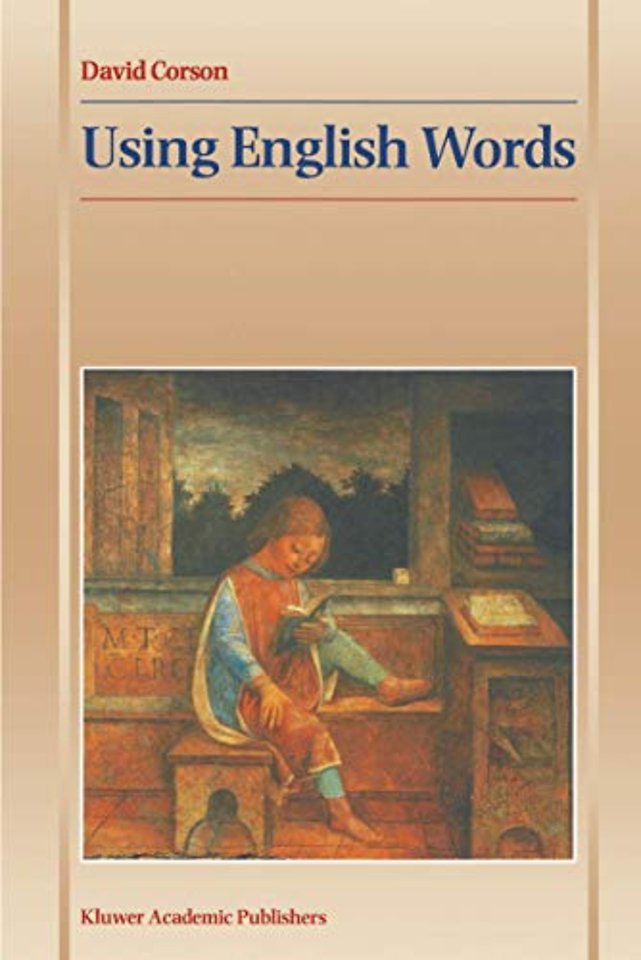
Using English Words
Samenvatting
Using English Words examines the impact that the life histories of people have on their vocabulary. Its starting point is the taken-for-granted fact that the vocabulary of English falls into two very different sections. Randolph Quirk mentions this striking incompatibility between the Anglo Saxon and the Latinate elements in English: "the familiar homely-sounding and typically very short words" that we learn very early in life and use for most everyday purposes; and "the more learned, foreign-sounding and characteristically rather long words" (1974, p. 138). It is mainly the second type of word that native speakers start learning relatively late in their use of English, usually in the adolescent years of education, and keep on learning. It is mainly the one type of word, rather than the other, that ESL/ EFL students have more difficulty with, depending on their language background. This book shows how discursive relations, outside education, 'position' people through their vocabularies. Some are prepared for easy entry into lifetime prospects of relative privilege and educational success, while others are denied entry. In writing this book, I share an aim with other writers who observe the many discontinuities that exist between discursive practices in communities outside schools, and the discursive demands that schools make (e. g. Hamilton et a1. [19931, Heath [1983], Luke [19941, Philips [1983], Romaine [1984], Scollon & Scollon [1981]).
Specificaties
Inhoudsopgave
Anderen die dit kochten, kochten ook
-
 Marianne Heemskerk€ 29,95
 -
Bram Schaper€ 24,99
-
Jitske Kramer€ 27,50
-
Dirk De Wachter€ 24,99
-
Jo Caudron€ 34,99
-
Babette Porcelijn€ 24,99


Net verschenen
Rubrieken
- aanbestedingsrecht
- aansprakelijkheids- en verzekeringsrecht
- accountancy
- algemeen juridisch
- arbeidsrecht
- bank- en effectenrecht
- bestuursrecht
- bouwrecht
- burgerlijk recht en procesrecht
- europees-internationaal recht
- fiscaal recht
- gezondheidsrecht
- insolventierecht
- intellectuele eigendom en ict-recht
- management
- mens en maatschappij
- milieu- en omgevingsrecht
- notarieel recht
- ondernemingsrecht
- pensioenrecht
- personen- en familierecht
- sociale zekerheidsrecht
- staatsrecht
- strafrecht en criminologie
- vastgoed- en huurrecht
- vreemdelingenrecht