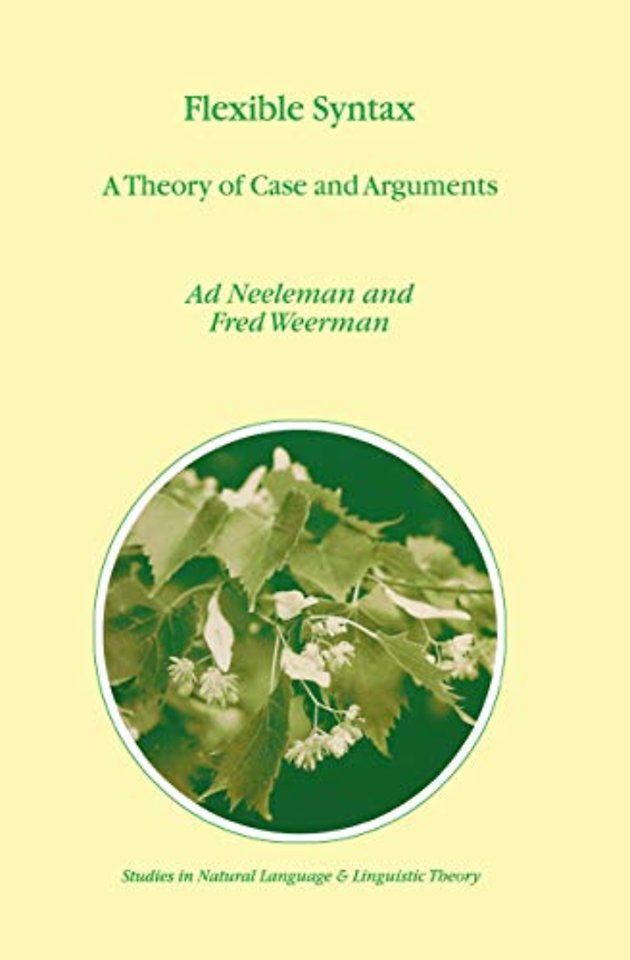
Flexible Syntax
A Theory of Case and Arguments
Samenvatting
Most linguistic theories assume that each grammatical relation is established in a unique structural configuration. Neeleman and Weerman take issue with this view, arguing for a more flexible approach on the basis of conceptual considerations and data taken mostly, but not exclusively, from the Germanic languages. In-depth analyses of word order phenomena as well as diachronic and typological generalizations motivate a re-evaluation of the role of case in the projection of arguments. Case is shown to provide a syntactic foothold for thematic interpretation, something which is necessary in a grammar that does not allow fixed theta-positions. Thus, this study does not only offer a genuine alternative to many standard assumptions, it also explains why there should be such a thing as case in natural language.
Specificaties
Inhoudsopgave
Net verschenen
Rubrieken
- aanbestedingsrecht
- aansprakelijkheids- en verzekeringsrecht
- accountancy
- algemeen juridisch
- arbeidsrecht
- bank- en effectenrecht
- bestuursrecht
- bouwrecht
- burgerlijk recht en procesrecht
- europees-internationaal recht
- fiscaal recht
- gezondheidsrecht
- insolventierecht
- intellectuele eigendom en ict-recht
- management
- mens en maatschappij
- milieu- en omgevingsrecht
- notarieel recht
- ondernemingsrecht
- pensioenrecht
- personen- en familierecht
- sociale zekerheidsrecht
- staatsrecht
- strafrecht en criminologie
- vastgoed- en huurrecht
- vreemdelingenrecht