Over Mark de Haas
Mark L. Haas is Assistant Professor of Political Science at Duquesne University.


Mark L. Haas is Assistant Professor of Political Science at Duquesne University.
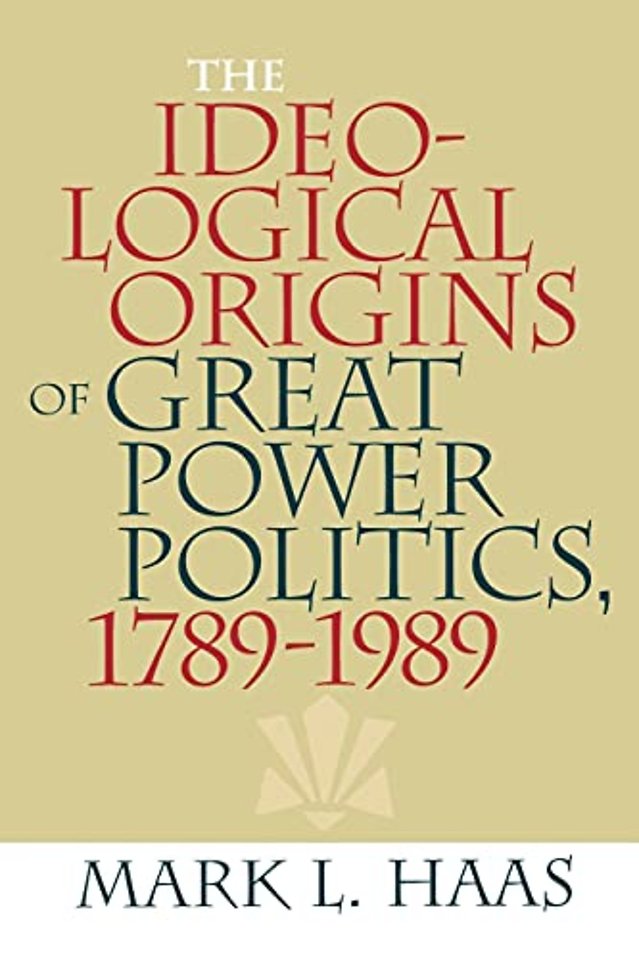
Meer over Mark de HaasHow do leaders perceive threat levels in world politics, and what effects do those perceptions have on policy choices? Mark L. Haas focuses on how ideology shapes perception. He does not delineate the content of particular ideologies, but rather the degree of difference among them.
Degree of ideological difference is, he believes, the crucial factor as leaders decide which nations threaten and which bolster their state's security and their own domestic power. These threat perceptions will in turn impel leaders to make particular foreign-policy choices. Haas examines great-power relations in five periods: the 1790s in Europe, the Concert of Europe (1815-1848), the 1930s in Europe, Sino-Soviet relations from 1949 to 1960, and the end of the Cold War.
In each case he finds a clear relationship between the degree of ideological differences that divided state leaders and those leaders' perceptions of threat level (and so of appropriate foreign-policy choices). These relationships held in most cases, regardless of the nature of the ideologies in question, the offense-defense balance, and changes in the international distribution of power.




Een AI-book is niet een boek dat geschreven is door AI maar een boek dat verrijkt is met AI. Het maakt de inhoud van een boek interactief via WhatsApp, zodat je ermee kunt chatten. Zie het als een razend slimme assistent die het boek perfect begrijpt en er alles uit onthouden heeft. Jij kunt deze assistent alles vragen. Vraag bijvoorbeeld hoe je iets kunt toepassen op jouw persoonlijke situatie, om een korte samenvatting, of wat de belangrijkste inzichten zijn. AI-books zijn alleen te gebruiken via WhatsApp, je hoeft er geen aparte app voor te installeren.
Meer informatie over AI-books