
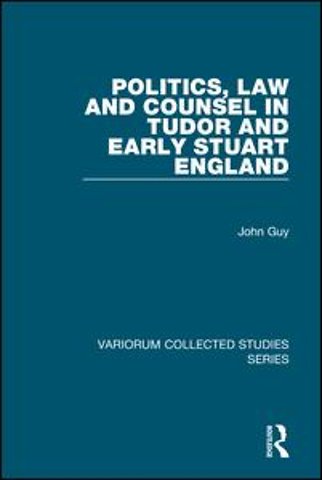
Politics, Law and Counsel in Tudor and Early Stuart England
Samenvatting
This book investigates the norms and values of Tudor and early-Stuart politics, which are considered in the contexts of law and the Reformation, legal and administrative institutions, and classical and legal humanism. Main themes include 'imperial' monarchy and the theory of 'counsel', Parliament and the royal supremacy, conciliar politics and organization, the relationship of law and equity, and the jurisdictional rivalry between the courts of common law and canon law. The author argues that norms of Tudor England were sufficiently pluralist to satisfy both 'absolutist' and 'constitutionalist' aspirations, whereas by 1628 they proved no longer effective as a mechanism for the orderly conduct of politics. The clash between two conflicting sets of values was translated into a clash of ideologies.
Specificaties
Net verschenen
Rubrieken
- aanbestedingsrecht
- aansprakelijkheids- en verzekeringsrecht
- accountancy
- algemeen juridisch
- arbeidsrecht
- bank- en effectenrecht
- bestuursrecht
- bouwrecht
- burgerlijk recht en procesrecht
- europees-internationaal recht
- fiscaal recht
- gezondheidsrecht
- insolventierecht
- intellectuele eigendom en ict-recht
- management
- mens en maatschappij
- milieu- en omgevingsrecht
- notarieel recht
- ondernemingsrecht
- pensioenrecht
- personen- en familierecht
- sociale zekerheidsrecht
- staatsrecht
- strafrecht en criminologie
- vastgoed- en huurrecht
- vreemdelingenrecht