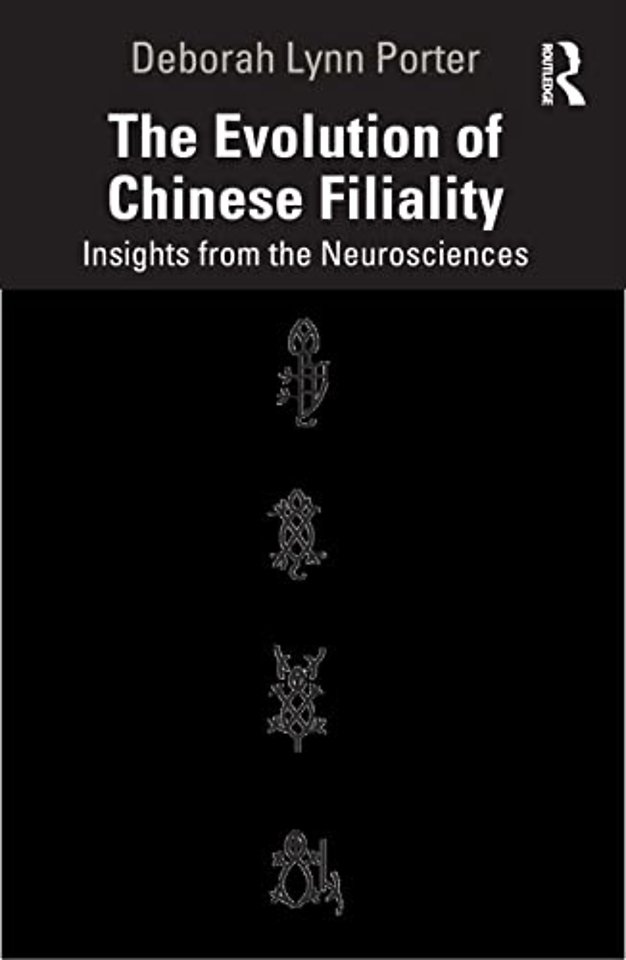
Evolution of Chinese Filiality
Insights from the Neurosciences
Samenvatting
This unique book brings a fresh interdisciplinary approach to the analysis of ancient Chinese history, creating a historical model for the emergence of cultural mainstays by applying recent dramatic findings in the fields of neuroscience and cultural evolution.
The centrality in Chinese culture of a deep reverence for the lives of preceding generations, filial piety, is conventionally attributed to Confucius (551-479 B.C.), who viewed hierarchical family relations as foundational for social order. Here, Porter argues that Confucian conceptions of filiality themselves evolved from a systemized set of behaviors and thoughts, a mental structure, which descended from a specific Neolithic mindset, and that this psychological structure was contoured by particular emotional conditions experienced by China’s earliest farmers. Using case study analysis from Neolithic sky observers to the dynastic cultures of the Shang and Western Zhou, the book shows how filial piety evolved as a structure of feeling, a legacy of a cultural predisposition toward particular moods and emotions that were inherited from the ancestral past. Porter also brings new urgency to the topic of ecological grief, linking the distress central to the evolution of the filial structure to its catalyst in an environmental crisis.
With a blended multidisciplinary approach combining social neuroscience, cultural evolution, cognitive archaeology, and historical analysis, this book is ideal for students and researchers in neuropsychology, religion, and Chinese culture and history.
Specificaties
Net verschenen
Rubrieken
- aanbestedingsrecht
- aansprakelijkheids- en verzekeringsrecht
- accountancy
- algemeen juridisch
- arbeidsrecht
- bank- en effectenrecht
- bestuursrecht
- bouwrecht
- burgerlijk recht en procesrecht
- europees-internationaal recht
- fiscaal recht
- gezondheidsrecht
- insolventierecht
- intellectuele eigendom en ict-recht
- management
- mens en maatschappij
- milieu- en omgevingsrecht
- notarieel recht
- ondernemingsrecht
- pensioenrecht
- personen- en familierecht
- sociale zekerheidsrecht
- staatsrecht
- strafrecht en criminologie
- vastgoed- en huurrecht
- vreemdelingenrecht