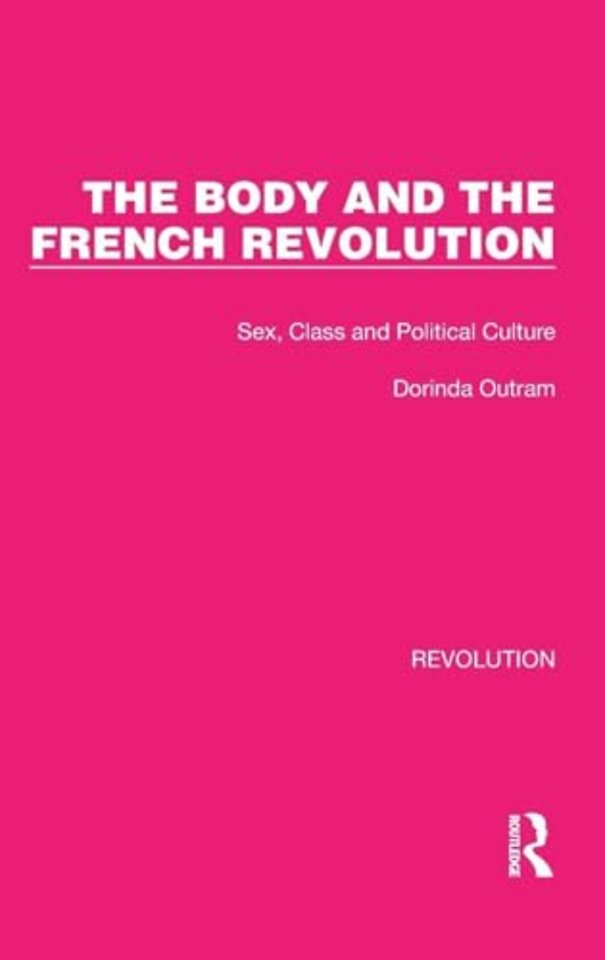
Body and the French Revolution
Sex, Class and Political Culture
Samenvatting
This book, first published in 1989, is an analysis of what changed in 1789 with the French Revolution and what contemporary life owes to the event. It was not simply a series of events with worldwide repercussions, but also represented the foundation of the middle-class domination of social, cultural and political space, which survives today and is the site of major crises of public culture. One such site is the body. In spite of its prominence in consumer culture as an object of adornment and beautification, the human body retains none of its historic dignity and authority. The argument of this book is that the French Revolution played a crucial part in this diminution of the body. It traces revolutionary models of behaviour around the body and public life, and explains how such myths as the division between public and private, male and female worlds, and such masculine values as ‘objectivity’ were an integral part of the new public world created by the revolutionary middle class.
Specificaties
Net verschenen
Rubrieken
- aanbestedingsrecht
- aansprakelijkheids- en verzekeringsrecht
- accountancy
- algemeen juridisch
- arbeidsrecht
- bank- en effectenrecht
- bestuursrecht
- bouwrecht
- burgerlijk recht en procesrecht
- europees-internationaal recht
- fiscaal recht
- gezondheidsrecht
- insolventierecht
- intellectuele eigendom en ict-recht
- management
- mens en maatschappij
- milieu- en omgevingsrecht
- notarieel recht
- ondernemingsrecht
- pensioenrecht
- personen- en familierecht
- sociale zekerheidsrecht
- staatsrecht
- strafrecht en criminologie
- vastgoed- en huurrecht
- vreemdelingenrecht