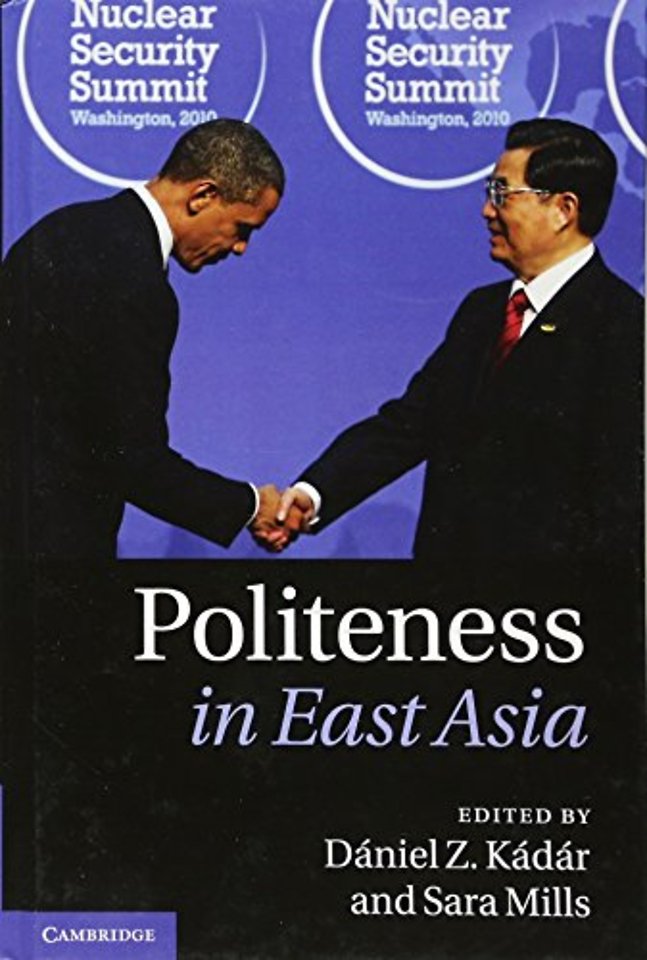
Politeness in East Asia
Samenvatting
We use politeness every day when interacting with other people. Yet politeness is an impressively complex linguistic process, and studying it can tell us a lot about the social and cultural values of social groups or even a whole society, helping us to understand how humans 'encode' states of mind in their words. The traditional, stereotypical view is that people in East Asian cultures are indirect, deferential and extremely polite - sometimes more polite than seems necessary. This revealing book takes a fresh look at the phenomenon, showing that the situation is far more complex than these stereotypes would suggest. Taking examples from Japanese, Korean, Chinese, Vietnamese and Singaporean Chinese, it shows how politeness differs across countries, but also across social groups and subgroups. This book is essential reading for those interested in intercultural communication, linguistics and East Asian languages.
Specificaties
Inhoudsopgave
Net verschenen
Rubrieken
- aanbestedingsrecht
- aansprakelijkheids- en verzekeringsrecht
- accountancy
- algemeen juridisch
- arbeidsrecht
- bank- en effectenrecht
- bestuursrecht
- bouwrecht
- burgerlijk recht en procesrecht
- europees-internationaal recht
- fiscaal recht
- gezondheidsrecht
- insolventierecht
- intellectuele eigendom en ict-recht
- management
- mens en maatschappij
- milieu- en omgevingsrecht
- notarieel recht
- ondernemingsrecht
- pensioenrecht
- personen- en familierecht
- sociale zekerheidsrecht
- staatsrecht
- strafrecht en criminologie
- vastgoed- en huurrecht
- vreemdelingenrecht