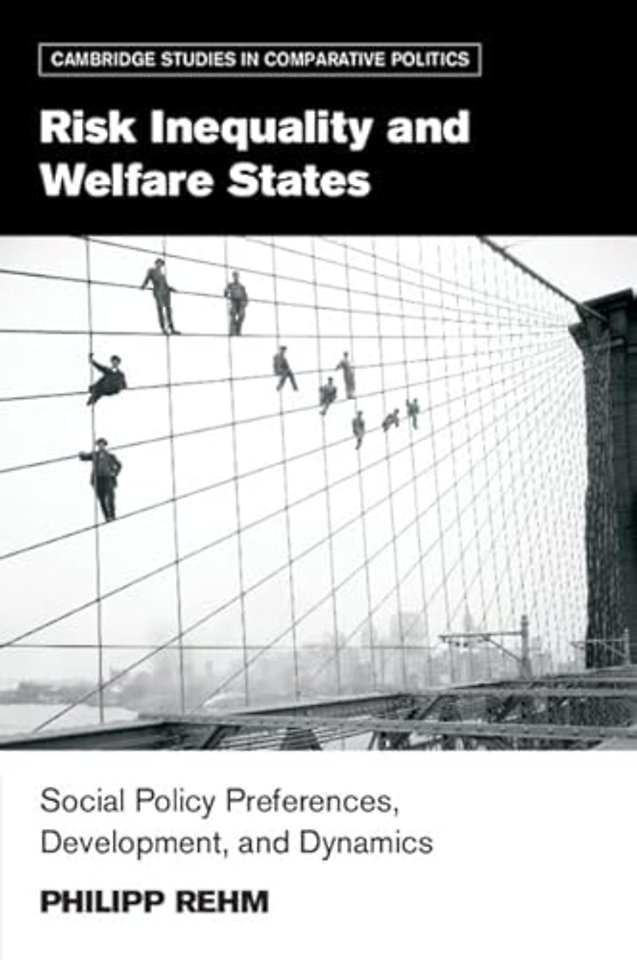
Risk Inequality and Welfare States
Samenvatting
The transformation of night-watchman states into welfare states is one of the most notable societal developments in recent history. In 1880, not a single country had a nationally compulsory social policy program. A few decades later, every single one of today's rich democracies had adopted programs covering all or almost all of the main risks people face: old age, sickness, accident, and unemployment. These programs rapidly expanded in terms of range, reach, and resources. Today, all rich democracies cover all main risks for a vast majority of citizens, with binding public or mandatory private programs. Three aspects of this remarkable transformation are particularly fascinating: the trend (the transformation to insurance states happened in all rich democracies); differences across countries (the generosity of social policy varies greatly across countries); and the dynamics of the process. This book offers a theory that not only explains this remarkable transition but also explains cross-national differences and the role of crises for social policy development.
Specificaties
Inhoudsopgave
Net verschenen
Rubrieken
- aanbestedingsrecht
- aansprakelijkheids- en verzekeringsrecht
- accountancy
- algemeen juridisch
- arbeidsrecht
- bank- en effectenrecht
- bestuursrecht
- bouwrecht
- burgerlijk recht en procesrecht
- europees-internationaal recht
- fiscaal recht
- gezondheidsrecht
- insolventierecht
- intellectuele eigendom en ict-recht
- management
- mens en maatschappij
- milieu- en omgevingsrecht
- notarieel recht
- ondernemingsrecht
- pensioenrecht
- personen- en familierecht
- sociale zekerheidsrecht
- staatsrecht
- strafrecht en criminologie
- vastgoed- en huurrecht
- vreemdelingenrecht