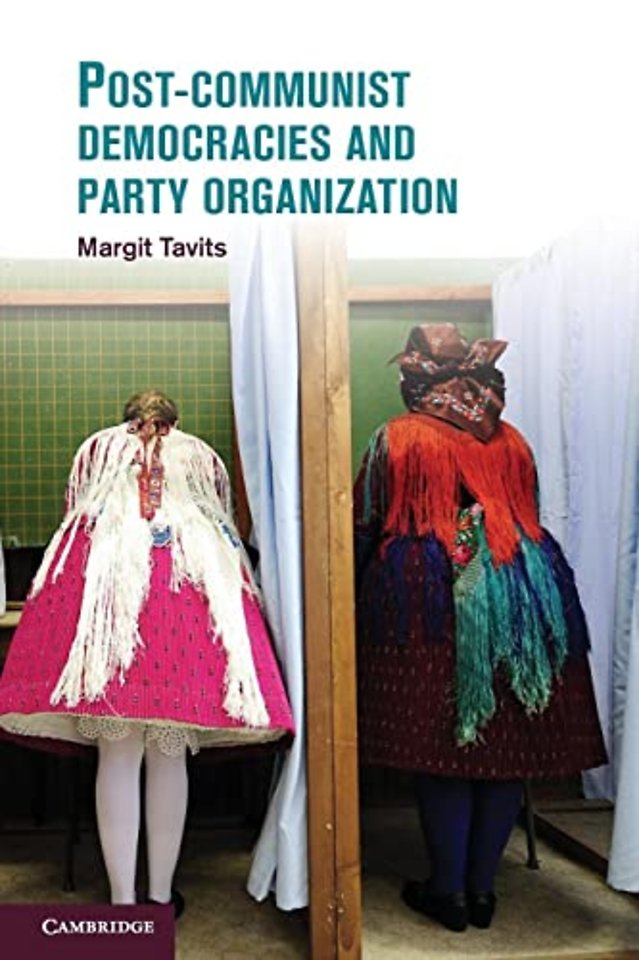
Post-Communist Democracies and Party Organization
Samenvatting
Scholars of post-communist politics often argue that parties in new democracies lack strong organizations - sizable membership, local presence, and professional management - because they do not need them to win elections and they may hinder a party's flexibility and efficiency in office. Post-Communist Democracies and Party Organization explains why some political parties are better able than others to establish themselves in new democracies and why some excel at staying unified in parliament, whereas others remain dominated by individuals. Focusing on the democratic transitions in post-communist Europe from 1990 to 2010, Margit Tavits demonstrates that the successful establishment of a political party in a new democracy crucially depends on the strength of its organization. Yet not all parties invest in organization development. This book uses data from ten post-communist democracies, including detailed analysis of parties in the Czech Republic, Estonia, Hungary, and Poland.
Specificaties
Inhoudsopgave
Net verschenen
Rubrieken
- aanbestedingsrecht
- aansprakelijkheids- en verzekeringsrecht
- accountancy
- algemeen juridisch
- arbeidsrecht
- bank- en effectenrecht
- bestuursrecht
- bouwrecht
- burgerlijk recht en procesrecht
- europees-internationaal recht
- fiscaal recht
- gezondheidsrecht
- insolventierecht
- intellectuele eigendom en ict-recht
- management
- mens en maatschappij
- milieu- en omgevingsrecht
- notarieel recht
- ondernemingsrecht
- pensioenrecht
- personen- en familierecht
- sociale zekerheidsrecht
- staatsrecht
- strafrecht en criminologie
- vastgoed- en huurrecht
- vreemdelingenrecht