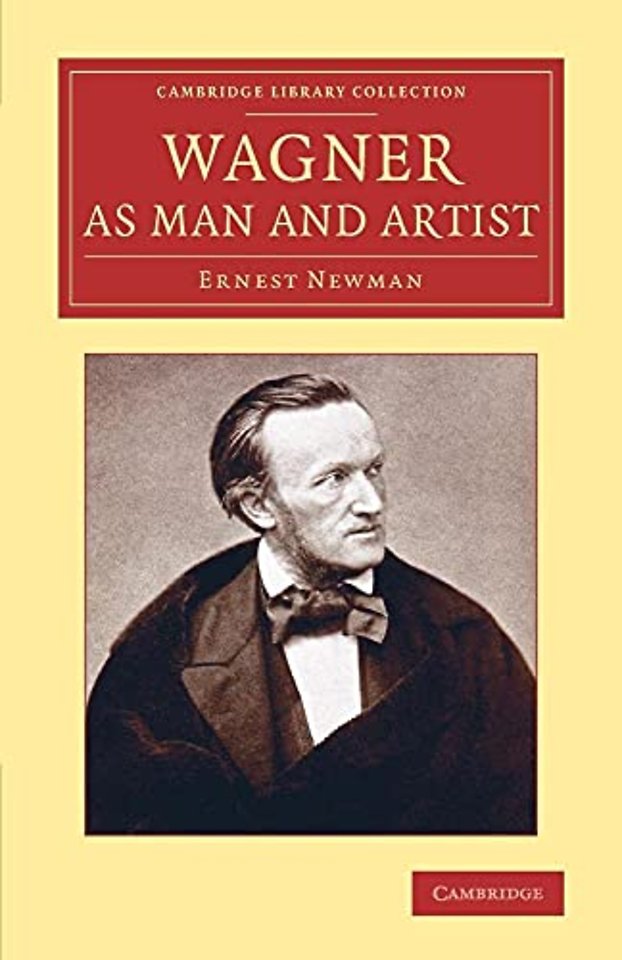
Wagner as Man and Artist
Samenvatting
Ernest Newman (1868–1959) was undoubtedly the greatest Wagnerian critic of his age. (His magisterial four-volume Life of Richard Wagner is also reissued in this series.) In this 1914 work, he attempts 'a complete and impartial psychological estimate' of a complex and frequently misinterpreted genius. He notes that such an attempt would have been impossible before the publication in 1911 of Wagner's autobiographical Mein Leben, but in his opening chapter he also warns against a naïve reading of that work, and of others by people 'who combine the maximum of good intentions with the minimum of critical insight'. He is clear-sighted about the strengths of Wagner the artist, not least his need to be 'the central sun of his universe', which of course led to Wagner the man behaving pettily, selfishly and frequently as a tyrant. This lucid account richly deserves its place in the history of Wagner studies.
Specificaties
Inhoudsopgave
Net verschenen
Rubrieken
- aanbestedingsrecht
- aansprakelijkheids- en verzekeringsrecht
- accountancy
- algemeen juridisch
- arbeidsrecht
- bank- en effectenrecht
- bestuursrecht
- bouwrecht
- burgerlijk recht en procesrecht
- europees-internationaal recht
- fiscaal recht
- gezondheidsrecht
- insolventierecht
- intellectuele eigendom en ict-recht
- management
- mens en maatschappij
- milieu- en omgevingsrecht
- notarieel recht
- ondernemingsrecht
- pensioenrecht
- personen- en familierecht
- sociale zekerheidsrecht
- staatsrecht
- strafrecht en criminologie
- vastgoed- en huurrecht
- vreemdelingenrecht