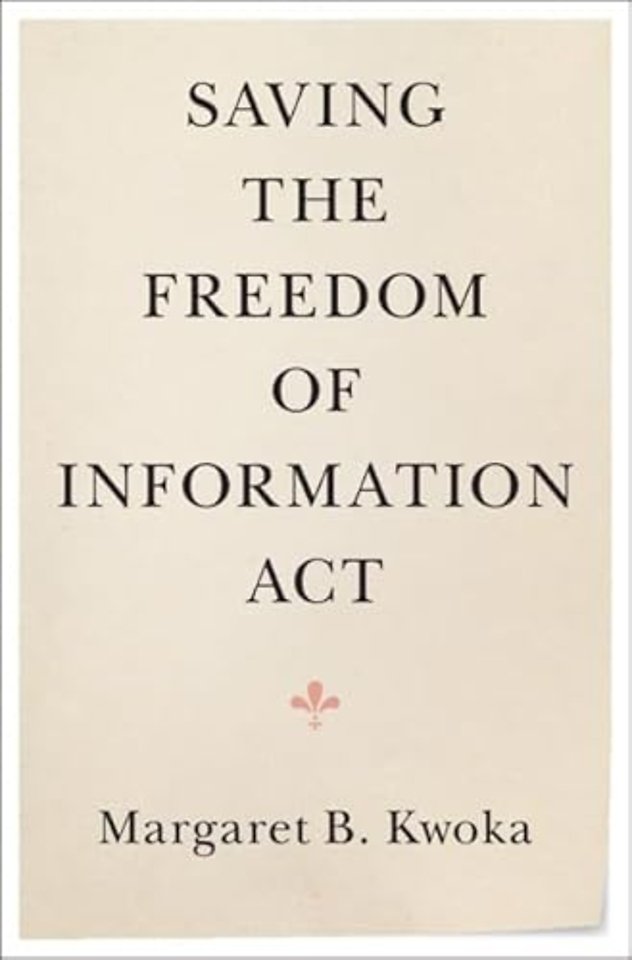
Saving the Freedom of Information Act
Samenvatting
Enacted in 1966, The Freedom of Information Act (or FOIA) was designed to promote oversight of governmental activities, under the notion that most users would be journalists. Today, however, FOIA is largely used for purposes other than fostering democratic accountability. Instead, most requesters are either individuals seeking their own files, businesses using FOIA as part of commercial enterprises, or others with idiosyncratic purposes like political opposition research. In this sweeping, empirical study, Margaret Kwoka documents how agencies have responded to the large volume of non-oversight requesters by creating new processes, systems, and specialists, which in turn has had a deleterious impact on journalists and the media. To address this problem, Kwoka proposes a series of structural solutions aimed at shrinking FOIA to re-center its oversight purposes.
Specificaties
Inhoudsopgave
Net verschenen
Rubrieken
- aanbestedingsrecht
- aansprakelijkheids- en verzekeringsrecht
- accountancy
- algemeen juridisch
- arbeidsrecht
- bank- en effectenrecht
- bestuursrecht
- bouwrecht
- burgerlijk recht en procesrecht
- europees-internationaal recht
- fiscaal recht
- gezondheidsrecht
- insolventierecht
- intellectuele eigendom en ict-recht
- management
- mens en maatschappij
- milieu- en omgevingsrecht
- notarieel recht
- ondernemingsrecht
- pensioenrecht
- personen- en familierecht
- sociale zekerheidsrecht
- staatsrecht
- strafrecht en criminologie
- vastgoed- en huurrecht
- vreemdelingenrecht