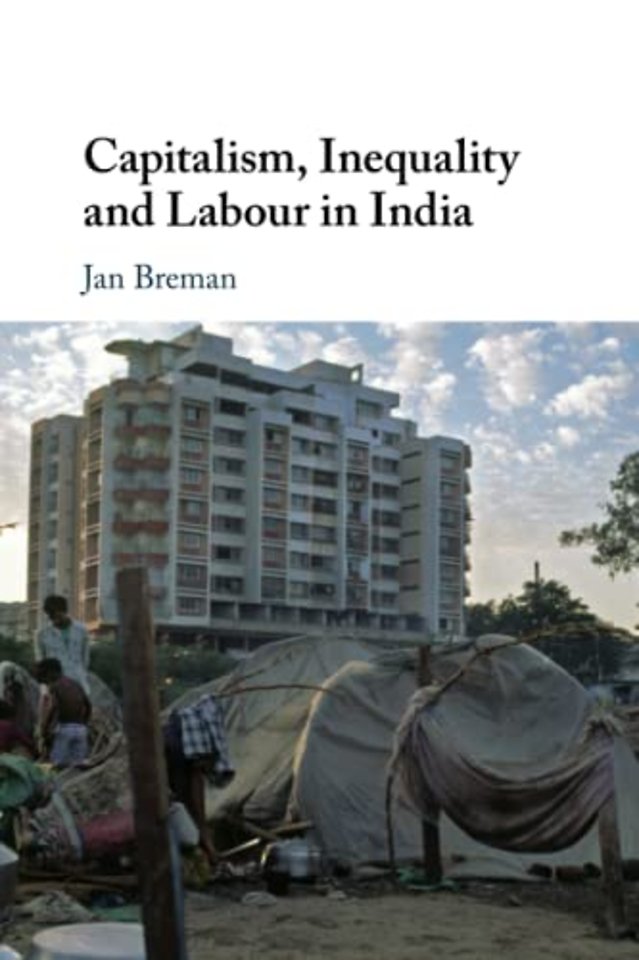
Capitalism, Inequality and Labour in India
Samenvatting
Jan Breman takes dispossession as his central theme in this ambitious analysis of labour bondage in India's changing political economy from 1962 to 2017. When, in a remote past, tribal and low-caste communities were attached to landowning households, their lack of freedom was framed as subsistence-oriented dependency. Breman argues that with colonial rule came the intrusion of capitalism into India's agrarian economy, leading to a decline in the idea of patronage in the relationship between bonded labour and landowner. Instead, servitude was reshaped as indebtedness. As labour became transformed into a commodity, peasant workers were increasingly pushed out of agriculture and the village but remained adrift in the wider economy. This footloose workforce is subjected to exploitation when their labour power is required and is left in a state of exclusion when it is surplus to demand. The outcome is progressive inequality that is thoroughly capitalist in nature.
Specificaties
Inhoudsopgave
Net verschenen
Rubrieken
- aanbestedingsrecht
- aansprakelijkheids- en verzekeringsrecht
- accountancy
- algemeen juridisch
- arbeidsrecht
- bank- en effectenrecht
- bestuursrecht
- bouwrecht
- burgerlijk recht en procesrecht
- europees-internationaal recht
- fiscaal recht
- gezondheidsrecht
- insolventierecht
- intellectuele eigendom en ict-recht
- management
- mens en maatschappij
- milieu- en omgevingsrecht
- notarieel recht
- ondernemingsrecht
- pensioenrecht
- personen- en familierecht
- sociale zekerheidsrecht
- staatsrecht
- strafrecht en criminologie
- vastgoed- en huurrecht
- vreemdelingenrecht