Felony and the Guilty Mind in Medieval England
Samenvatting
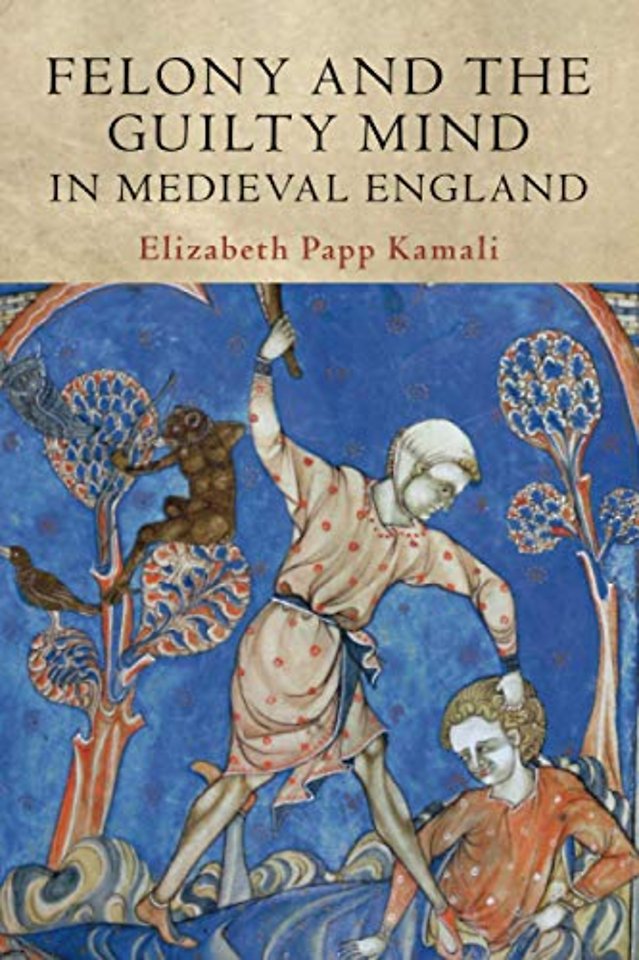
This book explores the role of mens rea, broadly defined as a factor in jury assessments of guilt and innocence from the early thirteenth through the fourteenth century - the first two centuries of the English criminal trial jury. Drawing upon evidence from the plea rolls, but also relying heavily upon non-legal textual sources such as popular literature and guides for confessors, Elizabeth Papp Kamali argues that issues of mind were central to jurors' determinations of whether a particular defendant should be convicted, pardoned, or acquitted outright. Demonstrating that the word 'felony' itself connoted a guilty state of mind, she explores the interplay between social conceptions of guilt and innocence and jury behavior. Furthermore, she reveals a medieval understanding of felony that involved, in its paradigmatic form, three essential elements: an act that was reasoned, was willed in a way not constrained by necessity, and was evil or wicked in its essence.
Specificaties
Inhoudsopgave
Net verschenen
Rubrieken
- aanbestedingsrecht
- aansprakelijkheids- en verzekeringsrecht
- accountancy
- algemeen juridisch
- arbeidsrecht
- bank- en effectenrecht
- bestuursrecht
- bouwrecht
- burgerlijk recht en procesrecht
- europees-internationaal recht
- fiscaal recht
- gezondheidsrecht
- insolventierecht
- intellectuele eigendom en ict-recht
- management
- mens en maatschappij
- milieu- en omgevingsrecht
- notarieel recht
- ondernemingsrecht
- pensioenrecht
- personen- en familierecht
- sociale zekerheidsrecht
- staatsrecht
- strafrecht en criminologie
- vastgoed- en huurrecht
- vreemdelingenrecht