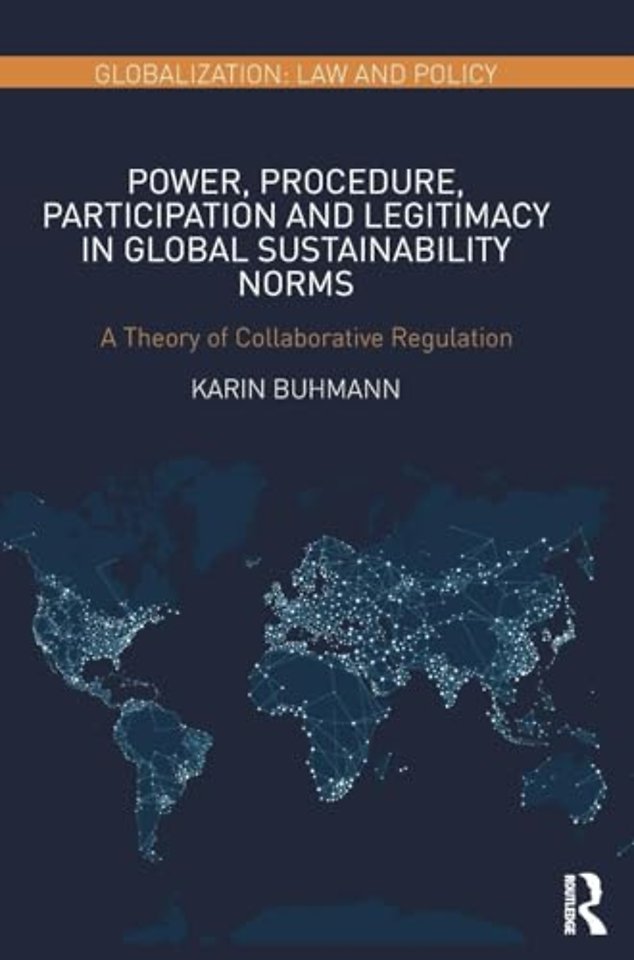
Power, Procedure, Participation and Legitimacy in Global Sustainability Norms
A Theory of Collaborative Regulation
Samenvatting
Globalisation of the market, law and politics contributes to a diversity of transnational sustainability problems whose solutions exceed the territorial jurisdictional limits of nation states in which their effects are generated or occur. The rise of the business sector as a powerful global actor with a claim to participation and potential contributions as well as adverse impacts sustainability complicates the regulatory challenge. Recent decades’ efforts to govern transitions towards sustainability through public or hybrid regulation display mixed records of support and results. In combination, these issues highlight the need for insights on what conditions multi-stakeholder regulation for a process that balances stakeholder power and delivers results perceived as legitimate by participants and broader society.
This book responds to that need. Based on empirical experience on public-private regulation of global sustainability concerns and theoretical perspectives on transnational regulation, the book proposes a new theory on collaborative regulation. This theory sets out a procedural approach for multi-stakeholder regulation of global sustainability issues in a global legal and political order to provide for legitimacy of process and results. It takes account of the claims to participation of the private sector as well as civil society organisations and the need to balance power disparities.
Specificaties
Net verschenen
Rubrieken
- aanbestedingsrecht
- aansprakelijkheids- en verzekeringsrecht
- accountancy
- algemeen juridisch
- arbeidsrecht
- bank- en effectenrecht
- bestuursrecht
- bouwrecht
- burgerlijk recht en procesrecht
- europees-internationaal recht
- fiscaal recht
- gezondheidsrecht
- insolventierecht
- intellectuele eigendom en ict-recht
- management
- mens en maatschappij
- milieu- en omgevingsrecht
- notarieel recht
- ondernemingsrecht
- pensioenrecht
- personen- en familierecht
- sociale zekerheidsrecht
- staatsrecht
- strafrecht en criminologie
- vastgoed- en huurrecht
- vreemdelingenrecht