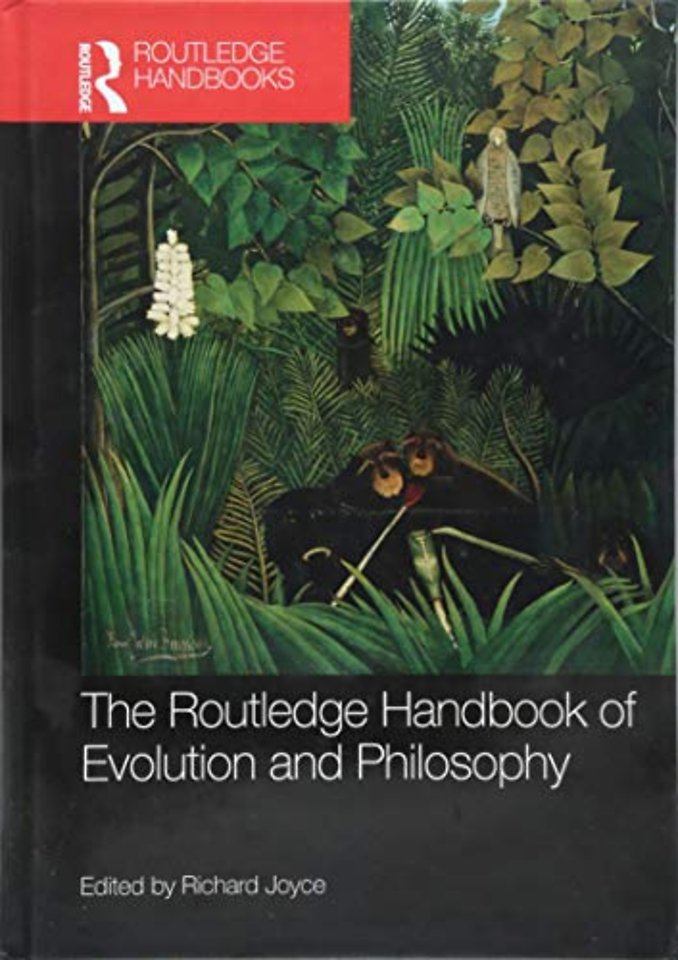

Routledge Handbook of Evolution and Philosophy
Samenvatting
In recent years, the relation between contemporary academic philosophy and evolutionary theory has become ever more active, multifaceted, and productive. The connection is a bustling two-way street. In one direction, philosophers of biology make significant contributions to theoretical discussions about the nature of evolution (such as "What is a species?"; "What is reproductive fitness?"; "Does selection operate primarily on genes?"; and "What is an evolutionary function?"). In the other direction, a broader group of philosophers appeal to Darwinian selection in an attempt to illuminate traditional philosophical puzzles (such as "How could a brain-state have representational content?"; "Are moral judgments justified?"; "Why do we enjoy fiction?"; and "Are humans invariably selfish?"). In grappling with these questions, this interdisciplinary collection includes cutting-edge examples from both directions of traffic. The thirty contributions, written exclusively for this volume, are divided into six sections: The Nature of Selection; Evolution and Information; Human Nature; Evolution and Mind; Evolution and Ethics; and Evolution, Aesthetics, and Art. Many of the contributing philosophers and psychologists are international leaders in their fields.
Specificaties
Net verschenen
Rubrieken
- aanbestedingsrecht
- aansprakelijkheids- en verzekeringsrecht
- accountancy
- algemeen juridisch
- arbeidsrecht
- bank- en effectenrecht
- bestuursrecht
- bouwrecht
- burgerlijk recht en procesrecht
- europees-internationaal recht
- fiscaal recht
- gezondheidsrecht
- insolventierecht
- intellectuele eigendom en ict-recht
- management
- mens en maatschappij
- milieu- en omgevingsrecht
- notarieel recht
- ondernemingsrecht
- pensioenrecht
- personen- en familierecht
- sociale zekerheidsrecht
- staatsrecht
- strafrecht en criminologie
- vastgoed- en huurrecht
- vreemdelingenrecht