Petrus C. van Duyne,
Jackie H. Harvey,
Liliya Y. Gelemerova
Palgrave Macmillan
e druk, 2020
9781349706648
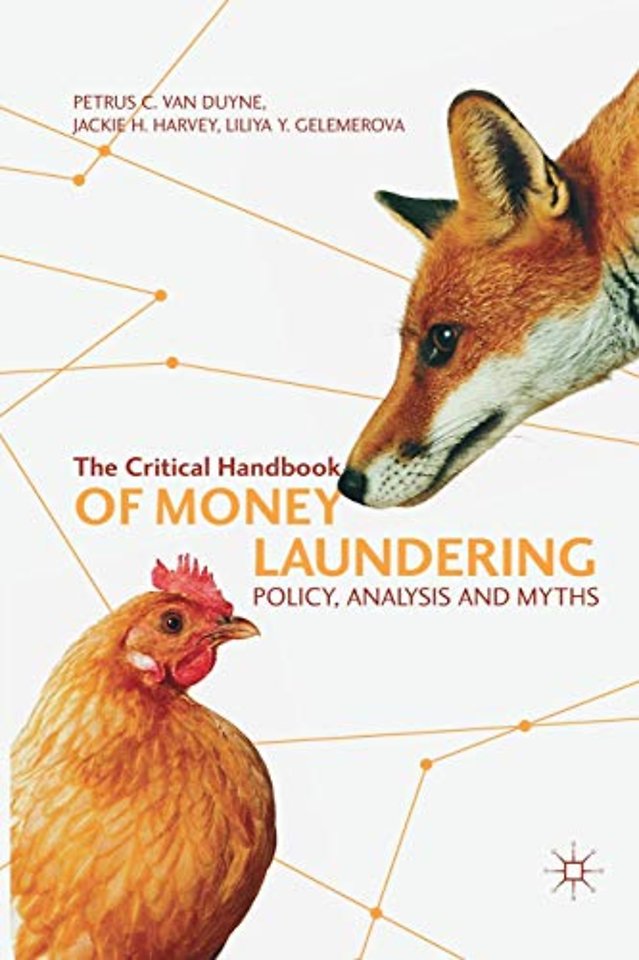
The Critical Handbook of Money Laundering
Policy, Analysis and Myths
Specificaties
Paperback, blz.
|
Engels
Palgrave Macmillan |
e druk, 2020
ISBN13: 9781349706648
Rubricering
Juridisch
:
Levertijd ongeveer 9 werkdagen
Gratis verzonden
Samenvatting
The overarching aim of this book is to bring order to the subjects of money laundering and of the anti-money laundering frameworks that have been written over the past thirty years. It provides scholars, practitioners and policy makers with a guide to what is known of the subject thus far. The book examines critically the underlying assumptions of research and of policy-making in the field and offers a systematic review of the most important policy and academic literature on the subject.
Specificaties
ISBN13:9781349706648
Taal:Engels
Bindwijze:paperback
Uitgever:Palgrave Macmillan
Verschijningsdatum:31-8-2020
Hoofdrubriek:Economie
Inhoudsopgave
Table of contents 1. Money-laundering: a global issue and scarce knowledge1.1. Introduction: why this book?1.2. Where did the anti-money laundering narrative start?1.3. A sense of urgency and accumulation of knowledge1.4 . Conclusion
2. Methodology 2.1. Introduction2.2. The meaning and limitations of probing FATF reports2.3. Official sources and their validity2.3.1. The Mutual Evaluation Reports2.3.2. The annual reports and strategic documents2.4. The academic literature and the march of the economists2.5. The nature of enquiry: Review and protocol development2.6. The initial systematic scoping of relevant literature2.6.1. Searching for existing reviews of money laundering literature2.6.2. Scoping search across the money laundering landscape2.6.3. Search terms definition for the structured review2.7. Structured review output and theme development2.7.1. Emergent themes and the narrative in literature review2.7.2. Sorting our database2.8. Conclusion
3. Historical overview 3.1. Introduuction3.2. The first steps of the crime money approach3.3. Next step: the criminalisation of money laundering in the US3.4. With the BSA strengthening, the taxman was always near3.5. Globalisation by exportation of US legislation3.6. The FATF and its extending reach3.6.1. The development of the informal anti money laundering club3.7. Regulating the extension of the FATF3.8. Organising the FATF: the unfolding shape and structure3.9. The rise of the compliance industry and compliance costs. 3.10. Cost estimations and the compliance market3.11. Conclusion
4. Concepts, assumptions and consequences4.1. Introduction4.2. The need for precision4.3. Defining laundering: observation or conclusion?4.4. Defining in legislative and policy making setting4.4.1. Criminal law formulations4.4.2. Defining from the perspective of policy making 4.5. ‘All crime’ or a catalogue of offences and national criminal law 4.6. Assumptions and threats of laundering (in a behavioural approach)4.7. Conclusion
5. Learning more about the FATF: Knowing the tree by its fruits5.1. Introduction5.2. FATF tasks and its fulfilment5.3. Herding the Member States and enforcing compliance5.4. The legitimacy of sanctioning5.5. Approximating the identity of the FATF5.6. Educational publications: typologies5.7. The FATF in its global network5.8 . Conclusion
6. The legal studies literature 6.1. Introduction: legal foundations and legal laundering research6.2. Interest and harm6.3. Proportionality and subsidiarity6.4. Scope and lex certis6.5. Sanctioning countries6.6. Recovery of assets and restorative justice6.7. Conclusion
7. Economists’ consensus: models and estimates7.1. Introduction: the concerns of economists7.2. Contribution from the conceptual studies7.2.1. Definition7.3 Presumed rationality, regulation and the cost benefit debate7.4. The vexed topics of efficiency, effectiveness and micro-economics7.5. The macro-economic models employed7.6. The micro-economic models7.7. Critics of the regime7.8. Conclusion
8. Behaviour and impact ‘on the ground’8.1. Introduction 8.2. The actions of the states and the persuasiveness of the‘ club’8.2. Joining the club and adhering to the rules; enforcement and mutual evaluation8.3. The regulated sector and reasons for compliance8.3.1. Costs of compliance8.3.2. ‘Persuading’ compliance by other means8.3.3. The apparent benefits of the risk based approach8.4. Impact on the criminals: evidence of changing behaviour?8.5. Conclusion
9. “What is all this good for?” A layman’s question 9.1. Introduction: questions from a tabula rasa9.2. “What is all this good for?” Duality of aims and knowledge sources9.2.1. Integrity and uncertainty9.2.2. Crime reduction: the external criterion9.2.3. Comparison with the Mutual Evaluation Reports fourth round9.2.4. The AML supremacy9.3. The National Risk Assessment Dome9.4 . Conclusion
10. Back to the essence and the future10.1. A legal axiom and the ‘least effort principle’10.2. Conceptual opaqueness10.3. The FATF repressive drone and the independent judiciary10.4. Dissuasion and restorative justice10.5. Outside of the Dome 10.6. New horizons
2. Methodology 2.1. Introduction2.2. The meaning and limitations of probing FATF reports2.3. Official sources and their validity2.3.1. The Mutual Evaluation Reports2.3.2. The annual reports and strategic documents2.4. The academic literature and the march of the economists2.5. The nature of enquiry: Review and protocol development2.6. The initial systematic scoping of relevant literature2.6.1. Searching for existing reviews of money laundering literature2.6.2. Scoping search across the money laundering landscape2.6.3. Search terms definition for the structured review2.7. Structured review output and theme development2.7.1. Emergent themes and the narrative in literature review2.7.2. Sorting our database2.8. Conclusion
3. Historical overview 3.1. Introduuction3.2. The first steps of the crime money approach3.3. Next step: the criminalisation of money laundering in the US3.4. With the BSA strengthening, the taxman was always near3.5. Globalisation by exportation of US legislation3.6. The FATF and its extending reach3.6.1. The development of the informal anti money laundering club3.7. Regulating the extension of the FATF3.8. Organising the FATF: the unfolding shape and structure3.9. The rise of the compliance industry and compliance costs. 3.10. Cost estimations and the compliance market3.11. Conclusion
4. Concepts, assumptions and consequences4.1. Introduction4.2. The need for precision4.3. Defining laundering: observation or conclusion?4.4. Defining in legislative and policy making setting4.4.1. Criminal law formulations4.4.2. Defining from the perspective of policy making 4.5. ‘All crime’ or a catalogue of offences and national criminal law 4.6. Assumptions and threats of laundering (in a behavioural approach)4.7. Conclusion
5. Learning more about the FATF: Knowing the tree by its fruits5.1. Introduction5.2. FATF tasks and its fulfilment5.3. Herding the Member States and enforcing compliance5.4. The legitimacy of sanctioning5.5. Approximating the identity of the FATF5.6. Educational publications: typologies5.7. The FATF in its global network5.8 . Conclusion
6. The legal studies literature 6.1. Introduction: legal foundations and legal laundering research6.2. Interest and harm6.3. Proportionality and subsidiarity6.4. Scope and lex certis6.5. Sanctioning countries6.6. Recovery of assets and restorative justice6.7. Conclusion
7. Economists’ consensus: models and estimates7.1. Introduction: the concerns of economists7.2. Contribution from the conceptual studies7.2.1. Definition7.3 Presumed rationality, regulation and the cost benefit debate7.4. The vexed topics of efficiency, effectiveness and micro-economics7.5. The macro-economic models employed7.6. The micro-economic models7.7. Critics of the regime7.8. Conclusion
8. Behaviour and impact ‘on the ground’8.1. Introduction 8.2. The actions of the states and the persuasiveness of the‘ club’8.2. Joining the club and adhering to the rules; enforcement and mutual evaluation8.3. The regulated sector and reasons for compliance8.3.1. Costs of compliance8.3.2. ‘Persuading’ compliance by other means8.3.3. The apparent benefits of the risk based approach8.4. Impact on the criminals: evidence of changing behaviour?8.5. Conclusion
9. “What is all this good for?” A layman’s question 9.1. Introduction: questions from a tabula rasa9.2. “What is all this good for?” Duality of aims and knowledge sources9.2.1. Integrity and uncertainty9.2.2. Crime reduction: the external criterion9.2.3. Comparison with the Mutual Evaluation Reports fourth round9.2.4. The AML supremacy9.3. The National Risk Assessment Dome9.4 . Conclusion
10. Back to the essence and the future10.1. A legal axiom and the ‘least effort principle’10.2. Conceptual opaqueness10.3. The FATF repressive drone and the independent judiciary10.4. Dissuasion and restorative justice10.5. Outside of the Dome 10.6. New horizons
Anderen die dit boek kochten, kochten ook
-
 Henry Meijer€ 39,50
 -
Susanne van Der Velden€ 34,99
-
Rini van Solingen€ 20,00
-
Peter Antonioni€ 29,99
-
Thomas Erikson€ 14,99
-
Paul Schenderling€ 25,00




Net verschenen
Rubrieken
- aanbestedingsrecht
- aansprakelijkheids- en verzekeringsrecht
- accountancy
- algemeen juridisch
- arbeidsrecht
- bank- en effectenrecht
- bestuursrecht
- bouwrecht
- burgerlijk recht en procesrecht
- europees-internationaal recht
- fiscaal recht
- gezondheidsrecht
- insolventierecht
- intellectuele eigendom en ict-recht
- management
- mens en maatschappij
- milieu- en omgevingsrecht
- notarieel recht
- ondernemingsrecht
- pensioenrecht
- personen- en familierecht
- sociale zekerheidsrecht
- staatsrecht
- strafrecht en criminologie
- vastgoed- en huurrecht
- vreemdelingenrecht