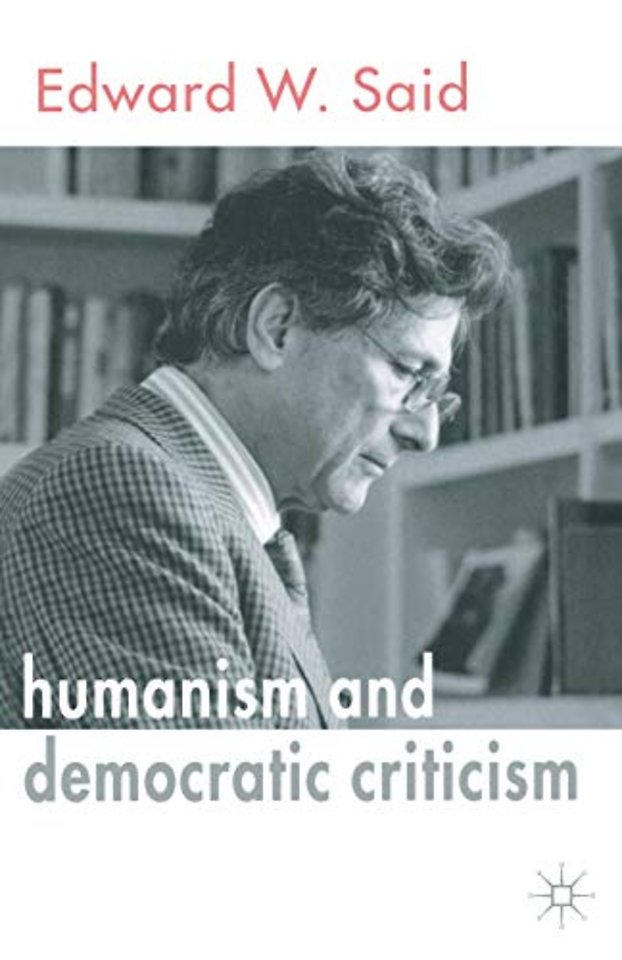
Humanism and Democratic Criticism
Samenvatting
Traditional humanistic education has been under assault for many years. In this, his final book, Edward Said argues that a more democratic form of humanism - one that aims to incorporate, emancipate, and enlighten - is still possible. Proposing an enhanced dialogue between cultural traditions as a strategy for revitalizing the humanities, Said contends that words are vital agents of historical and political change and that reading teaches people to continually question, upset, and reform. By considering the emerging social responsibilities of writers and intellectuals in an ever more interconnected world and pointing out that the canonized thinkers of today were yesterday's revolutionaries, Said makes a persuasive case for humanistic education and a more democratic form of criticism.
Specificaties
Inhoudsopgave
Net verschenen
Rubrieken
- aanbestedingsrecht
- aansprakelijkheids- en verzekeringsrecht
- accountancy
- algemeen juridisch
- arbeidsrecht
- bank- en effectenrecht
- bestuursrecht
- bouwrecht
- burgerlijk recht en procesrecht
- europees-internationaal recht
- fiscaal recht
- gezondheidsrecht
- insolventierecht
- intellectuele eigendom en ict-recht
- management
- mens en maatschappij
- milieu- en omgevingsrecht
- notarieel recht
- ondernemingsrecht
- pensioenrecht
- personen- en familierecht
- sociale zekerheidsrecht
- staatsrecht
- strafrecht en criminologie
- vastgoed- en huurrecht
- vreemdelingenrecht