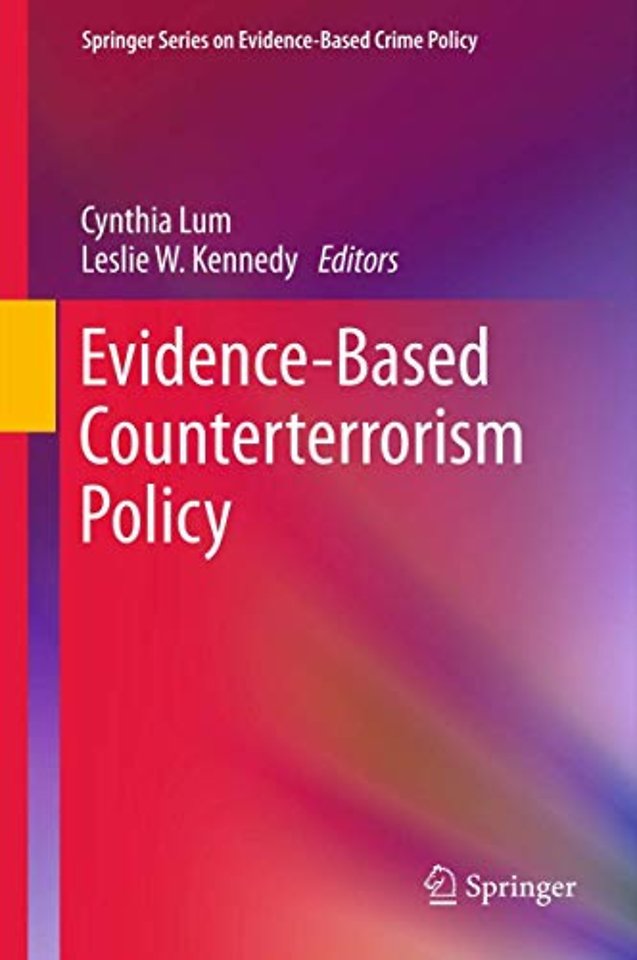
Evidence-Based Counterterrorism Policy
Samenvatting
In the past eight years, there has been a massive increase in government spending on counterterrorism intervention development and implementation. Given this increase, there are two evidence-based policy questions that are important to address:
Is there evidence that any of these programs are effective – in other words, can they be shown to be linked to reducing terrorism, terrorist recruiting, or to improving the response and management of terrorist events?
Do these interventions have secondary or collateral effects that may be costly, harmful, illegal, beneficial, or otherwise?
As Lum and Kennedy discovered in an evaluation research on counterterrorism interventions, only a minuscule number of empirical studies of terrorism exist and there is an almost complete absence of evaluation research on counter-terrorism strategies. This is startling given the enormous increases in the development and use of counter-terrorism programs, as well as spending on counter-terrorism activity. Even more disconcerting was the nature of the evaluations we did find; some programs were shown to either have no discernible effect on terrorism or lead to increases in terrorism. The emphasis of the need for empirical research in evaluating interventions and informing policy cannot be overstated, and is the primary goal of Evidence-Based Counterterrorism Policy.
Specificaties
Inhoudsopgave
Anderen die dit kochten, kochten ook
-
 Glenn de Randamie (Typhoon)€ 22,99
 -
Jos de Groot€ 24,99
-
Marianne Heemskerk€ 29,95
-
Bram Schaper€ 24,99
-
Dieter Möckelmann€ 16,95
-
John Macionis€ 66,95





Net verschenen
Rubrieken
- aanbestedingsrecht
- aansprakelijkheids- en verzekeringsrecht
- accountancy
- algemeen juridisch
- arbeidsrecht
- bank- en effectenrecht
- bestuursrecht
- bouwrecht
- burgerlijk recht en procesrecht
- europees-internationaal recht
- fiscaal recht
- gezondheidsrecht
- insolventierecht
- intellectuele eigendom en ict-recht
- management
- mens en maatschappij
- milieu- en omgevingsrecht
- notarieel recht
- ondernemingsrecht
- pensioenrecht
- personen- en familierecht
- sociale zekerheidsrecht
- staatsrecht
- strafrecht en criminologie
- vastgoed- en huurrecht
- vreemdelingenrecht