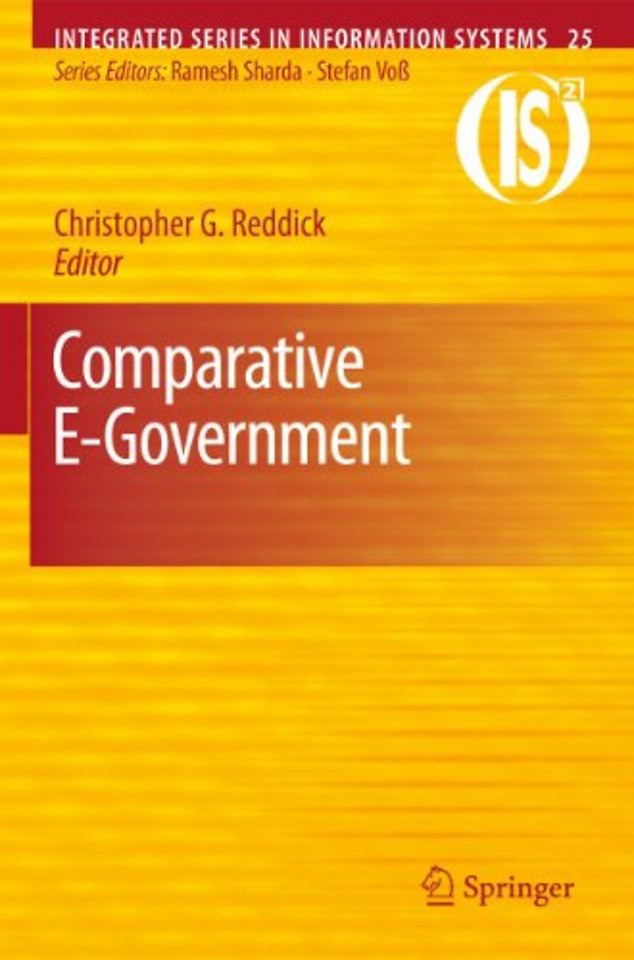
Comparative E-Government
Samenvatting
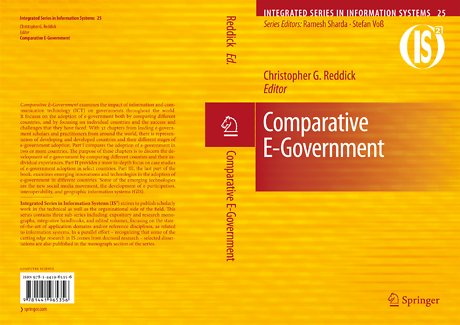
Comparative E-Government examines the impact of information and communication technology (ICT) on governments throughout the world. It focuses on the adoption of e-government both by comparing different countries, and by focusing on individual countries and the success and challenges that they have faced.
With 32 chapters from leading e-government scholars and practitioners from around the world, there is representation of developing and developed countries and their different stages of e-government adoption. Part I compares the adoption of e-government in two or more countries. The purpose of these chapters is to discern the development of e-government by comparing different counties and their individual experiences. Part II provides a more in-depth focus on case studies of e-government adoption in select countries. Part III, the last part of the book, examines emerging innovations and technologies in the adoption of e-government in different countries. Some of the emerging technologies are the new social media movement, the development of e-participation, interoperability, and geographic information systems (GIS).
Specificaties
Inhoudsopgave
Net verschenen
Rubrieken
- aanbestedingsrecht
- aansprakelijkheids- en verzekeringsrecht
- accountancy
- algemeen juridisch
- arbeidsrecht
- bank- en effectenrecht
- bestuursrecht
- bouwrecht
- burgerlijk recht en procesrecht
- europees-internationaal recht
- fiscaal recht
- gezondheidsrecht
- insolventierecht
- intellectuele eigendom en ict-recht
- management
- mens en maatschappij
- milieu- en omgevingsrecht
- notarieel recht
- ondernemingsrecht
- pensioenrecht
- personen- en familierecht
- sociale zekerheidsrecht
- staatsrecht
- strafrecht en criminologie
- vastgoed- en huurrecht
- vreemdelingenrecht