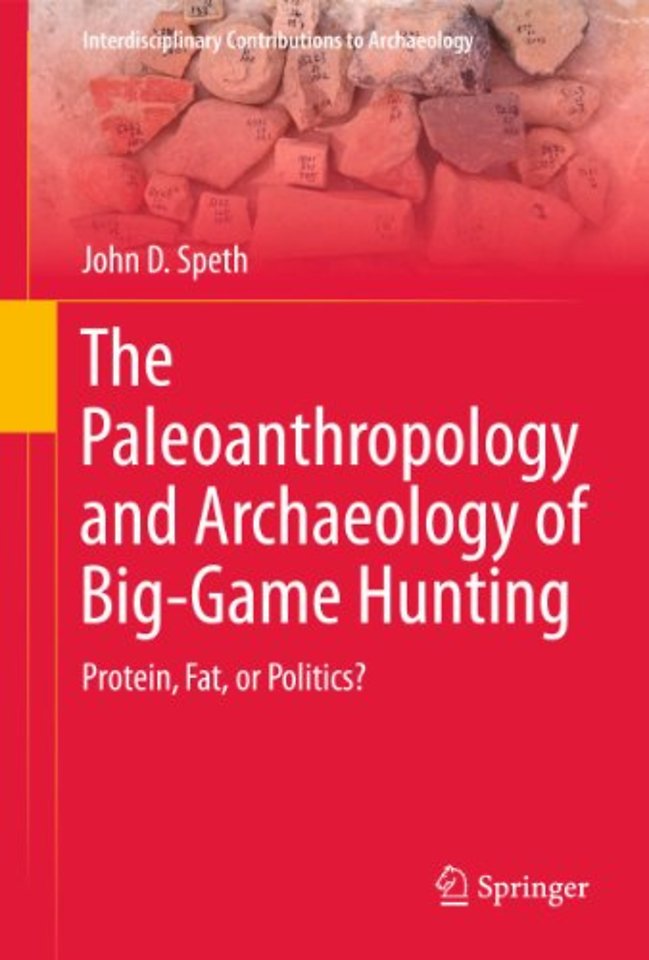
The Paleoanthropology and Archaeology of Big-Game Hunting
Protein, Fat, or Politics?
Samenvatting
Since its inception, paleoanthropology has been closely wedded to the idea that big-game hunting by our hominin ancestors arose, first and foremost, as a means for acquiring energy and vital nutrients. This assumption has rarely been questioned, and seems intuitively obvious—meat is a nutrient-rich food with the ideal array of amino acids, and big animals provide meat in large, convenient packages. Through new research, the author of this volume provides a strong argument that the primary goals of big-game hunting were actually social and political—increasing hunter’s prestige and standing—and that the nutritional component was just an added bonus.
Through a comprehensive, interdisciplinary research approach, the author examines the historical and current perceptions of protein as an important nutrient source, the biological impact of a high-protein diet and the evidence of this in the archaeological record, and provides a compelling reexamination of this long-held conclusion.
This volume will be of interest to researchers in Archaeology, Evolutionary Biology, and Paleoanthropology, particularly those studying diet and nutrition.
Specificaties
Inhoudsopgave
Net verschenen
Rubrieken
- aanbestedingsrecht
- aansprakelijkheids- en verzekeringsrecht
- accountancy
- algemeen juridisch
- arbeidsrecht
- bank- en effectenrecht
- bestuursrecht
- bouwrecht
- burgerlijk recht en procesrecht
- europees-internationaal recht
- fiscaal recht
- gezondheidsrecht
- insolventierecht
- intellectuele eigendom en ict-recht
- management
- mens en maatschappij
- milieu- en omgevingsrecht
- notarieel recht
- ondernemingsrecht
- pensioenrecht
- personen- en familierecht
- sociale zekerheidsrecht
- staatsrecht
- strafrecht en criminologie
- vastgoed- en huurrecht
- vreemdelingenrecht