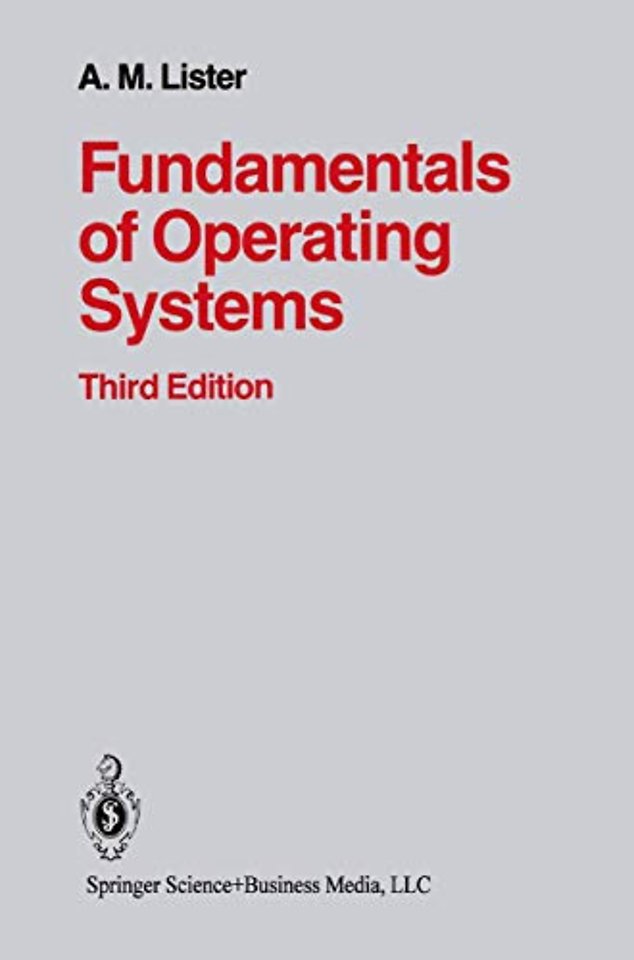
Fundamentals of Operating Systems
Samenvatting
An operating system is probably the most important part of the body of soft ware which goes with any modern computer system. I ts importance is reflected in the large amount of manpower usually invested in its construction, and in the mystique by which it is often surrounded. To the non-expert the design and construction of operating systems has often appeared an activity impenetrable to those who do not practise it. I hope this book will go some way toward dispelling the mystique, and encourage a greater general understanding of the principles on which operating systems are constructed. The material in the book is based on a course of lectures I have given for the past few years to undergraduate students of computer science. The book is therefore a suitable introduction to operating systems for students who have a basic grounding in computer science, or for people who have worked with computers for some time. Ideally the reader should have a knowledge of prorramming and be familiar with general machine architecture, common data structures such as lists and trees, and the functions of system software such as compilers, loaders, and editors. I t will also be helpful if he has had some experience of using a large operating system, seeing it, as it were, from the out side.
Specificaties
Inhoudsopgave
Net verschenen
Rubrieken
- aanbestedingsrecht
- aansprakelijkheids- en verzekeringsrecht
- accountancy
- algemeen juridisch
- arbeidsrecht
- bank- en effectenrecht
- bestuursrecht
- bouwrecht
- burgerlijk recht en procesrecht
- europees-internationaal recht
- fiscaal recht
- gezondheidsrecht
- insolventierecht
- intellectuele eigendom en ict-recht
- management
- mens en maatschappij
- milieu- en omgevingsrecht
- notarieel recht
- ondernemingsrecht
- pensioenrecht
- personen- en familierecht
- sociale zekerheidsrecht
- staatsrecht
- strafrecht en criminologie
- vastgoed- en huurrecht
- vreemdelingenrecht