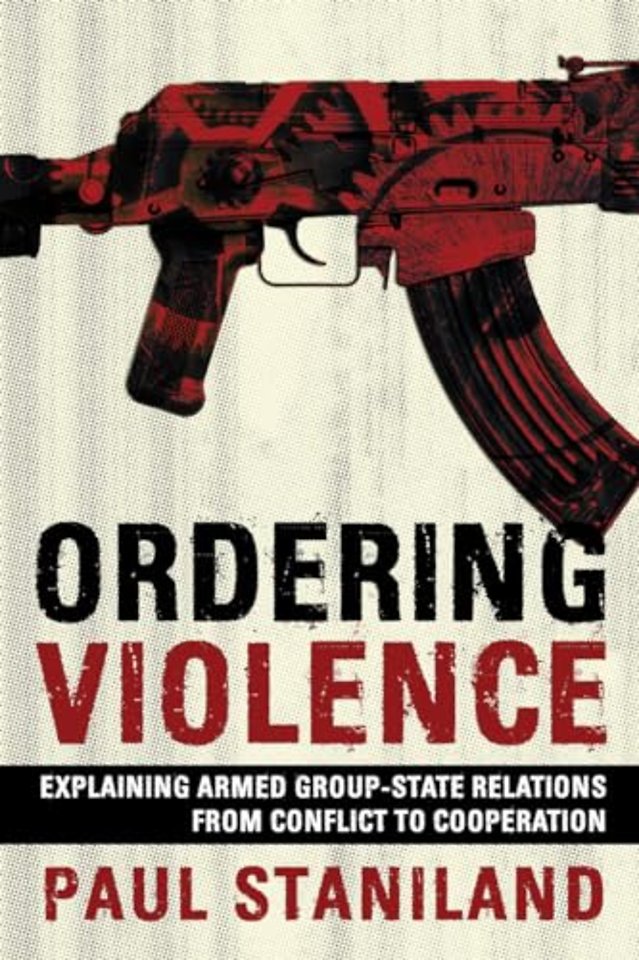
Ordering Violence – Explaining Armed Group–State Relations from Conflict to Cooperation
Samenvatting
In Ordering Violence, Paul Staniland advances a broad approach to armed politics 'bringing together governments, insurgents, militias, and armed political parties in a shared framework' to argue that governments' perception of the ideological threats posed by armed groups drive their responses and interactions.
Staniland combines a unique new dataset of state-group armed orders in India, Pakistan, Burma/Myanmar, and Sri Lanka with detailed case studies from the region to explore when and how this model of threat perception provides insight into patterns of repression, collusion, and mutual neglect across nearly seven decades. Instead of straightforwardly responding to the material or organizational power of armed groups, Staniland finds, regimes assess how a group's politics align with their own ideological projects.
Explaining, for example, why governments often use extreme repression against weak groups even while working with or tolerating more powerful armed actors, Ordering Violence provides a comprehensive overview of South Asia's complex armed politics, embedded within an analytical framework that can also speak broadly beyond the subcontinent.
Specificaties
Vaak samen gekocht

Anderen die dit boek kochten, kochten ook
-
 Marion Matthijssen€ 27,90
 -
Jacobus de Voragine€ 39,90
-
Leah Hazard€ 24,95
-
Victor D. Cha€ 26,99
-
Helena Andre€ 25,07
-
Cees Banning€ 29,50






Net verschenen
Rubrieken
- aanbestedingsrecht
- aansprakelijkheids- en verzekeringsrecht
- accountancy
- algemeen juridisch
- arbeidsrecht
- bank- en effectenrecht
- bestuursrecht
- bouwrecht
- burgerlijk recht en procesrecht
- europees-internationaal recht
- fiscaal recht
- gezondheidsrecht
- insolventierecht
- intellectuele eigendom en ict-recht
- management
- mens en maatschappij
- milieu- en omgevingsrecht
- notarieel recht
- ondernemingsrecht
- pensioenrecht
- personen- en familierecht
- sociale zekerheidsrecht
- staatsrecht
- strafrecht en criminologie
- vastgoed- en huurrecht
- vreemdelingenrecht