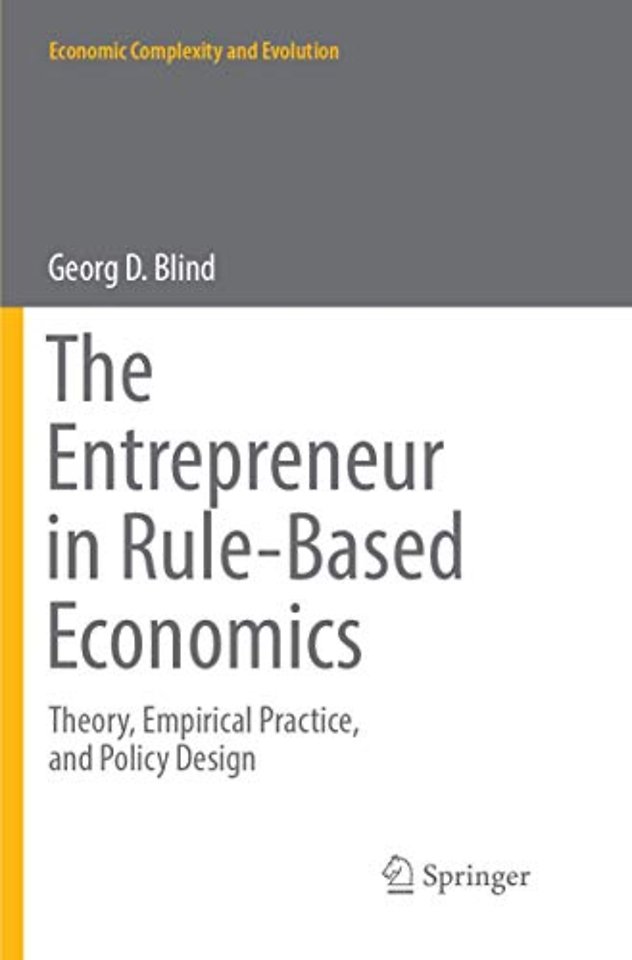
The Entrepreneur in Rule-Based Economics
Theory, Empirical Practice, and Policy Design
Samenvatting
This volume brings together three areas of interest: the rule-based approach, the entrepreneur, and Japan as an empirical application. It highlights the advantages of the rule-based approach for economic analysis by linking different methodological underpinnings. Using these, the author exemplifies how rule-based economics allows a systematic analysis of the entrepreneur as the key figure in bringing about economic change and diversity. The book includes an empirical methodology for applied research in rule-based economics, which it puts to the test in an empirical study of entrepreneurship in contemporary Japan. The choice of entrepreneurship and Japan showcases the integrative power that rule-based economics brings to further breaking a theoretical deadlock and to analytically capturing a very particular economy investigated very little so far. By offering a body of new and original research, the monograph shows how the idea of entrepreneurship as a rule helps to resolve the Schumpeter-Kirzner divide and to develop an empirical approach to the determinants of entrepreneurial activity.
Specificaties
Inhoudsopgave
Net verschenen
Rubrieken
- aanbestedingsrecht
- aansprakelijkheids- en verzekeringsrecht
- accountancy
- algemeen juridisch
- arbeidsrecht
- bank- en effectenrecht
- bestuursrecht
- bouwrecht
- burgerlijk recht en procesrecht
- europees-internationaal recht
- fiscaal recht
- gezondheidsrecht
- insolventierecht
- intellectuele eigendom en ict-recht
- management
- mens en maatschappij
- milieu- en omgevingsrecht
- notarieel recht
- ondernemingsrecht
- pensioenrecht
- personen- en familierecht
- sociale zekerheidsrecht
- staatsrecht
- strafrecht en criminologie
- vastgoed- en huurrecht
- vreemdelingenrecht