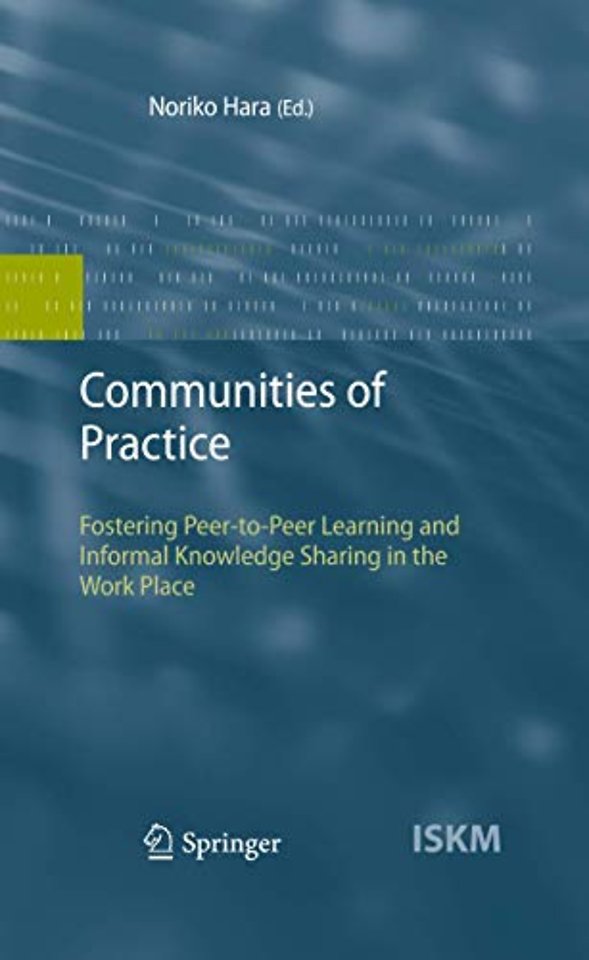
Communities of Practice
Fostering Peer-to-Peer Learning and Informal Knowledge Sharing in the Work Place
Samenvatting
1.1 Introduction Each year corporations spend millions of dollars training and educating their - ployees. On average, these corporations spend approximately one thousand dollars 1 per employee each year. As businesses struggle to stay on the cutting-edge and to keep their employees educated and up-to-speed with professional trends as well as ever-changing information needs, it is easy to see why corporations are investing more time and money than ever in their efforts to support their employees’ prof- sional development. During the Industrial Age, companies strove to control natural resources. The more resources they controlled, the greater their competitive edge in the mark- place. Senge (1993) refers to this kind of organization as resource-based. In the Information Age, companies must create, disseminate, and effectively use kno- edge within their organization in order to maintain their market share. Senge - scribes this kind of organization as knowledge-based. Given that knowledge-based organizations willcontinuetobeadrivingforcebehindtheeconomy, itisimperative that corporations support the knowledge and information needs of their workers.
Specificaties
Inhoudsopgave
Net verschenen
Rubrieken
- aanbestedingsrecht
- aansprakelijkheids- en verzekeringsrecht
- accountancy
- algemeen juridisch
- arbeidsrecht
- bank- en effectenrecht
- bestuursrecht
- bouwrecht
- burgerlijk recht en procesrecht
- europees-internationaal recht
- fiscaal recht
- gezondheidsrecht
- insolventierecht
- intellectuele eigendom en ict-recht
- management
- mens en maatschappij
- milieu- en omgevingsrecht
- notarieel recht
- ondernemingsrecht
- pensioenrecht
- personen- en familierecht
- sociale zekerheidsrecht
- staatsrecht
- strafrecht en criminologie
- vastgoed- en huurrecht
- vreemdelingenrecht