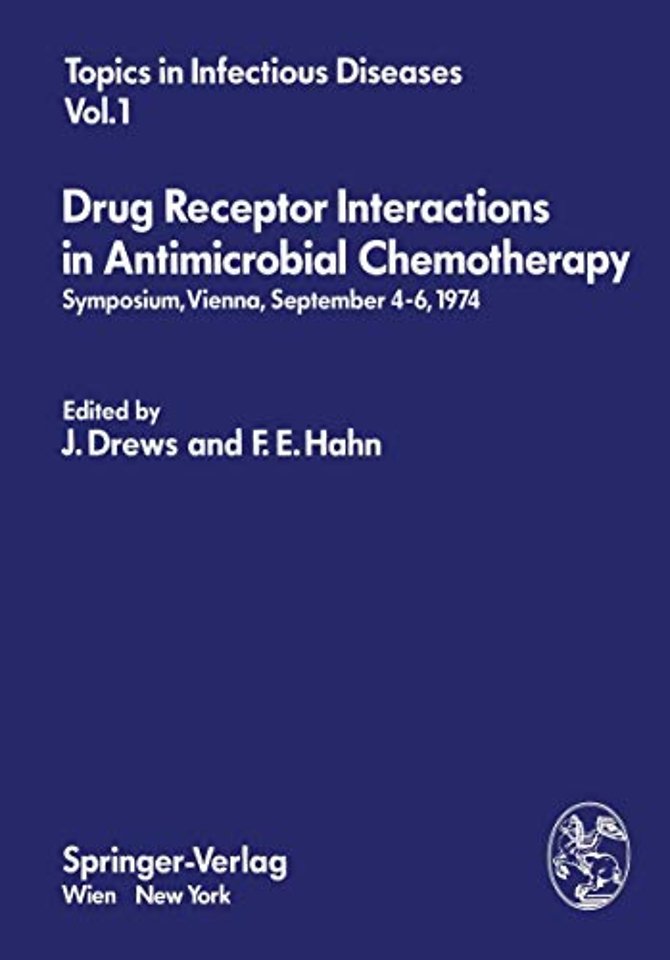
Drug Receptor Interactions in Antimicrobial Chemotherapy
Symposium, Vienna, September 4–6, 1974
Samenvatting
The concept of chemotherapy as originated by Paul Ehrlich is based on the premise that antiparasitic drugs must have two properties: they must first bind to specific structures of the parasite which Ehrlich called chemoreceptors. Subsequent to their attachment to the chemoreceptor and by virtue of this binding they must possess the capacity to kill the parasite. Since the host which is to be cured of an invading parasite also contains a large number of chemoreceptors, that have the potential to bind toxic compounds, the task of the chemo therapist is to identify chemoreceptors of the parasite which are . not represented in the host and to design drugs which bind selectively to them~ In this context, Ehrlich called· for "the complete and exhaustive knowledge of all the different chemoreceptors of a certain parasite" as a "sine qua non for success in chemotherapy". Paradoxically and in spite of the fact that chemotherapy has become a very advanced and successful therapeutic discipline,few of its tri umphs have been achieved by following Ehrlich's original precepts. On the contrary, in the overwhelming majority of cases, effective drugs have been discovered without any knowledge of their chemoreceptors, and these drugs themselves have conversely been used as tools to study the nature of the chemoreceptors involved. In other words: chemother apy, notably antibacterial chemotherapy, has been successful without ever living up to the fundamental standards put forward by Paul Ehr lich.
Specificaties
Inhoudsopgave
Net verschenen
Rubrieken
- aanbestedingsrecht
- aansprakelijkheids- en verzekeringsrecht
- accountancy
- algemeen juridisch
- arbeidsrecht
- bank- en effectenrecht
- bestuursrecht
- bouwrecht
- burgerlijk recht en procesrecht
- europees-internationaal recht
- fiscaal recht
- gezondheidsrecht
- insolventierecht
- intellectuele eigendom en ict-recht
- management
- mens en maatschappij
- milieu- en omgevingsrecht
- notarieel recht
- ondernemingsrecht
- pensioenrecht
- personen- en familierecht
- sociale zekerheidsrecht
- staatsrecht
- strafrecht en criminologie
- vastgoed- en huurrecht
- vreemdelingenrecht