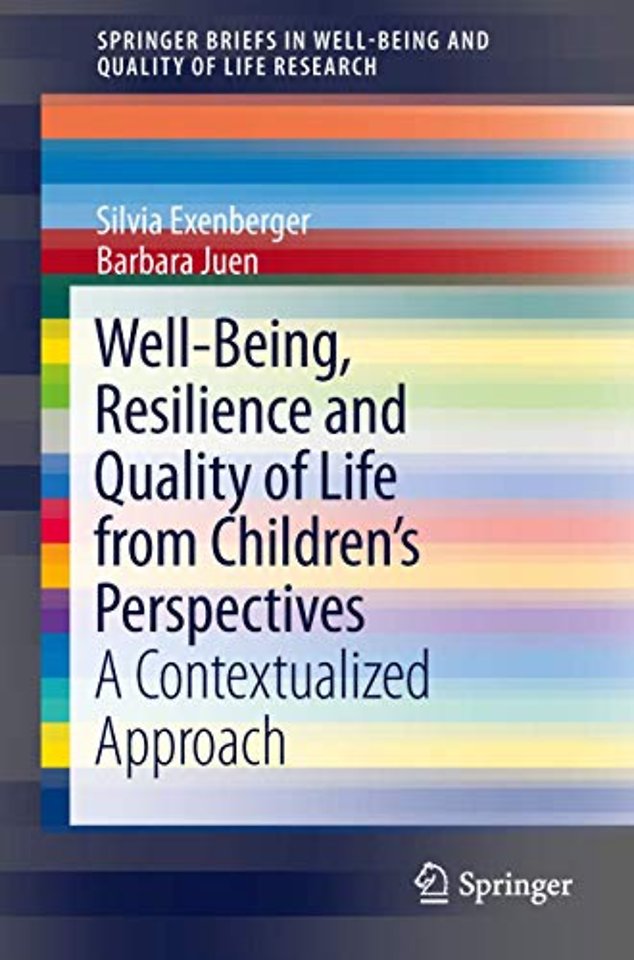
Well-Being, Resilience and Quality of Life from Children’s Perspectives
A Contextualized Approach
Samenvatting
This book explores the broad view on child well-being and the quality of life research. It starts with a discussion of the origin of the social indicator movement and a review of literature on the concepts of quality of life, (subjective) well-being and resilience. It then discusses the force of culture on child development, and shows how two prototypical environments favor either the independent or interdependent self-model. After an exploration of the shifts and changes in the child well-being indicator movement and trends of child well-being measurements, the book turns to research on Tsunami-affected children. The first part of the study gives these children and their caregivers a voice, formulating in their words what constitutes child well-being for them in the given circumstances. The concepts provided are processed in detail, contrasted, and then made into indicators. The second part of the study describes the introduction of a child well-being index based on these indicators. The book ends with four main conclusions reflected in a theoretical model of contextualized child well-being indicators.
Specificaties
Inhoudsopgave
Anderen die dit kochten, kochten ook
-
 Hugo Reitsma€ 21,99
 -
Marianne Heemskerk€ 29,95
-
Glenn de Randamie (Typhoon)€ 22,99
-
Jos de Groot€ 24,99
-
Bram Schaper€ 24,99
-
Lammert Kamphuis€ 18,99





Net verschenen
Rubrieken
- aanbestedingsrecht
- aansprakelijkheids- en verzekeringsrecht
- accountancy
- algemeen juridisch
- arbeidsrecht
- bank- en effectenrecht
- bestuursrecht
- bouwrecht
- burgerlijk recht en procesrecht
- europees-internationaal recht
- fiscaal recht
- gezondheidsrecht
- insolventierecht
- intellectuele eigendom en ict-recht
- management
- mens en maatschappij
- milieu- en omgevingsrecht
- notarieel recht
- ondernemingsrecht
- pensioenrecht
- personen- en familierecht
- sociale zekerheidsrecht
- staatsrecht
- strafrecht en criminologie
- vastgoed- en huurrecht
- vreemdelingenrecht